

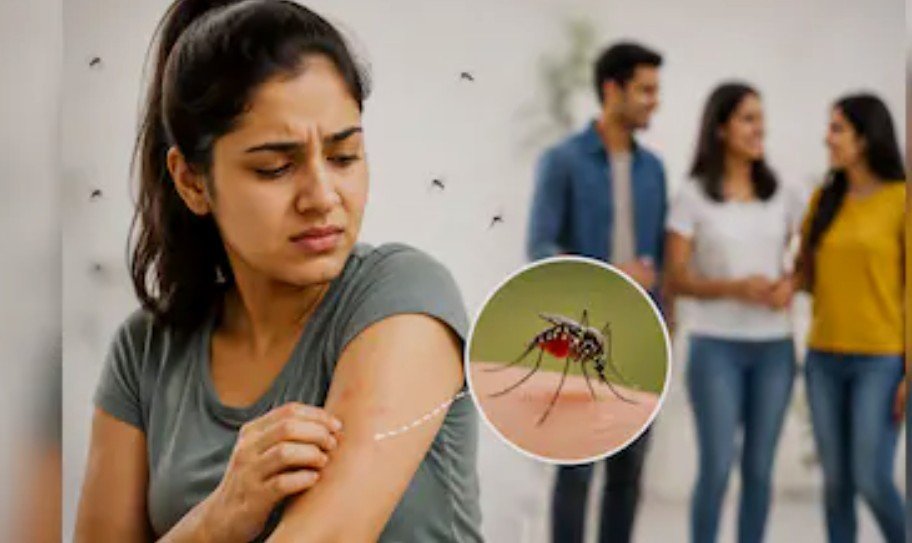
If you think mosquitoes bite you more than others, it could be that you’re a favorite of a particular mosquito species, but not necessarily every mosquito likes you. A new study has revealed the surprising fact that different mosquito species are attracted to different people.
Researchers at Florida International University (FIU) conducted this study on 119 people. They included three mosquito species known to spread serious diseases in humans. The researchers examined how these three species are attracted to human odor and different chemical signals emitted by humans.
The study included Aedes aegypti, Aedes albopictus, and Culex quinquefasciatus. These three species play a role in spreading different diseases, including dengue, Zika, yellow fever, and West Nile. The results were surprising. All three species disliked the same people. Each species “reads” human body odor in its own way and, based on that, decides which person to approach.
In fact, the human body can emit over a thousand different volatile organic compounds. Scientists still don’t fully understand many of these. These chemicals form part of our natural scent and may serve as a signal for mosquitoes.
The study revealed that Aedes aegypti was more attracted to people whose skin contained lower levels of certain volatile chemicals and who were not applying any additional perfume. This species also showed a slight preference for men. This mosquito is more active during the day. Meanwhile, Aedes albopictus, also known as the Asian tiger mosquito, was more attracted to certain ketones and plant-like odorous chemicals naturally released from the skin. This species is also active during the day. The third species, Culex quinquefasciatus, showed even more distinct preferences. This mosquito is typically more active at night and relies heavily on recognizing the microbiome, the community of bacteria, fungi, and other microorganisms present on human skin.
The preferences of a third species, Culex quinquefasciatus, turned out to be even more unique. This mosquito is typically more active at night and relies heavily on recognizing the microbiome, the community of bacteria, fungi, and other microorganisms present on human skin.
Our skin is constantly populated by millions of microorganisms. These microbes influence the way our skin smells. The study found that certain bacterial families may encourage mosquitoes to approach humans, while others may provide signals that repel them.
The study was published in the scientific journal iScience. The research team was led by FIU neurogeneticist Matthew DeGennaro, while the research was co-led by PhD student Kaylee Marrero. According to the researchers, the results could help develop new ways to prevent mosquito-borne diseases in the future.