

India’s electoral bonds laundry: ‘Corrupt’ firms paid parties, got cleansed
From PM Modi’s BJP to the opposition Trinamool Congress, parties gained from donations that activists say carry the stink of coercion and quid pro quo.
It was a quick chain of events. On November 10, 2022, India’s Enforcement Directorate – the country’s premier agency tasked with tackling financial corruption – arrested P Sarath Chandra Reddy, an entrepreneur in the southern city of Hyderabad, on allegations of involvement in a liquor scam in New Delhi [a].

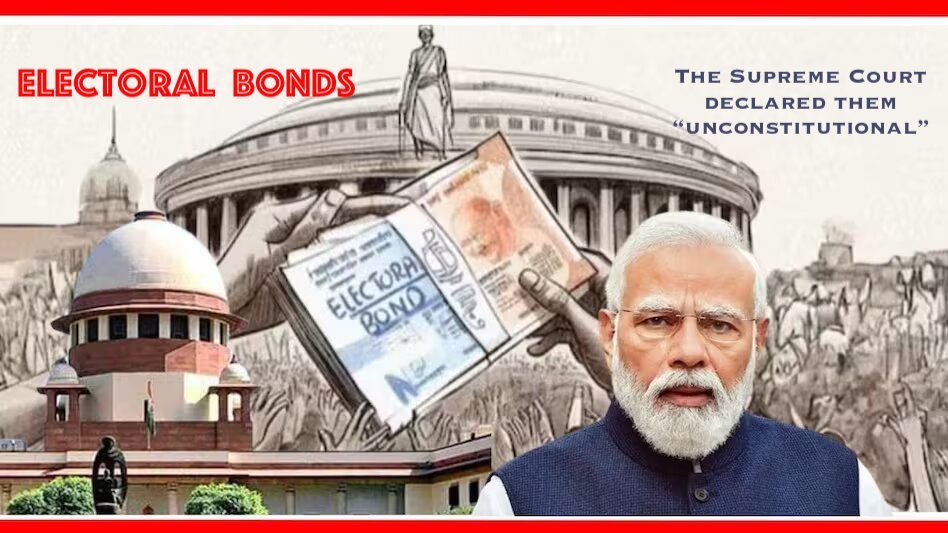
Five days later, Aurobindo Pharma, a company in which Reddy is a director, bought electoral bonds worth 50 million rupees ($600,000). Until the Supreme Court declared them “unconstitutional” last month, these bonds – introduced by Prime Minister Narendra Modi’s government in 2017 – were an opaque mechanism for businesses, individuals and organisations to donate funds to political parties.

All of those bonds bought by Aurobindo Pharma went to Modi’s Bharatiya Janata Party (BJP), which encashed them on November 21. Just seven months later in June 2023, Reddy turned a state witness – known as an approver in India. And in November 2023, Aurobindo Pharma – which has not responded to Al Jazeera’s questions on its donation pattern – gave 250 million rupees ($3m) more to the BJP through electoral bonds.
That’s just one of a series of revelations that have emerged from a giant data dump by the State Bank of India (SBI), which oversaw the electoral bond scheme [b], after being forced to release all information about the project by the Supreme Court over repeated hearings this past month.
[b] https://www.aljazeera.com/news/2024/2/15/what-are-electoral-bonds-the-secret-donations-powering-modis-bjpAnd the disclosures, say transparency activists, are worrying: Multiple private firms, reeling from investigations by India’s law enforcement agencies, funnelled funds worth millions of dollars through the electoral bonds[c] to a range of parties in power, an analysis of the data published by India’s Election Commission reveals. Many of them saw the government’s attitude towards them change after the donations, while some even won praise from sitting ministers.
[c] https://www.aljazeera.com/news/2024/2/16/check-on-quid-pro-quo-will-indias-electoral-bonds-ban-hurt-modiAs the nation’s 960 million voters gear up for a crucial national election, the revelations have deepened fears that the electoral bond mechanism enabled a quid-pro-quo setup between companies and political parties, creating a stink of extortion and corruption.
The latest data made public by the election commission include unique serial numbers per bond that finally allow mapping of the donors to the receiving parties, which was managed after a string of “no-nonsense” raps for the SBI from the top court, petitioners told Al Jazeera.
All of the top 10 corporate donors – from pharma to construction companies – who were being probed by the central law enforcement agencies in the last five years, paid the BJP in some measure, accumulating over 13 billion rupees ($15.5m), the dataset revealed.
But Zafar Islam, a national spokesperson for the BJP, said that’s no evidence of any wrongdoing. “We have the most members in the parliament and elected members in several state assemblies. That’s why we have gotten the highest donations on merit,” he said. “It is very unfair to cast any quid-pro-quo doubts here.”
And while the BJP was by far the largest beneficiary of the scheme – getting a total of 60 billion rupees ($720m) over seven years – a range of other political groups, including regional parties that rule different states, were also major recipients of this funding. Many electoral bond donors also won lucrative government deals.
“There are companies who have gotten large government contracts, and either before or after the deal, they have given funds to the ruling parties, whether at the centre or at the state level,” says Anjali Bhardwaj, co-convener of the National Campaign for People’s Right to Information, referring to the findings.
The pattern, she said, indicates two possibilities: “Extortion, where agencies were actively set after someone to extract money, or [the agencies were probing] straight allegations of corruption, which were put in cold storage after a donation was made to the ruling party.”
A lottery king’s gamble
India’s top electoral bond buyer, Future Gaming and Hotel Services Private Limited, run by 63-year-old “Lottery King” Santiago Martin, has faced raids and probes by multiple law enforcement agencies in the last two decades over money-laundering, funds embezzlement and frauds.
Martin, who was born in India’s Andaman and Nicobar Islands in the Bay of Bengal in 1961, worked as a labourer in Myanmar before returning to Coimbatore, in the southern Indian state of Tamil Nadu. There, he built a lottery empire that now spans India and its neighbouring countries.
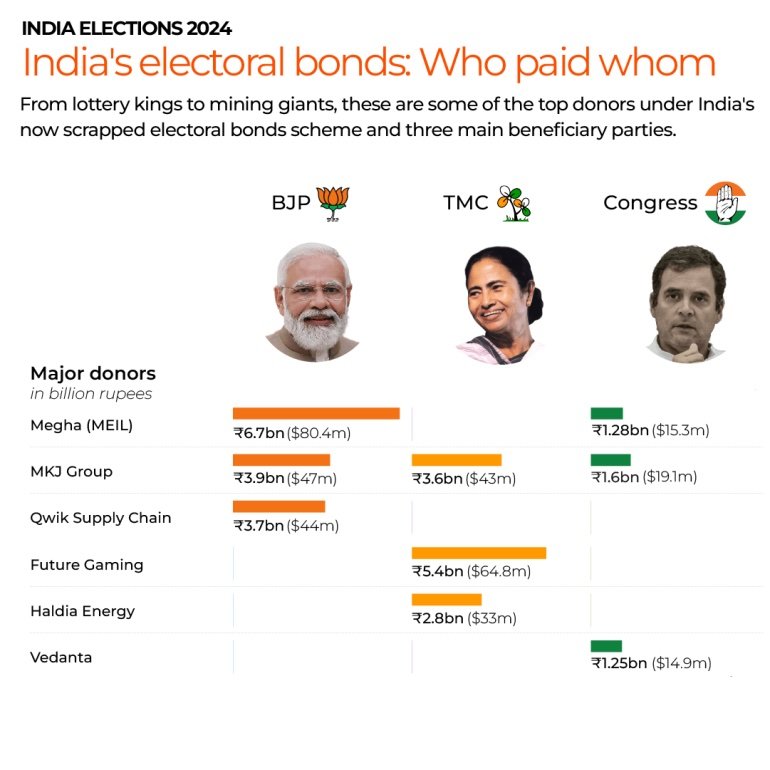
Future Gaming bought bonds worth 13.68 billion rupees ($163m) between October 2020 and January 2024. The largest chunk of Martin’s donations, over 5.4 billion rupees ($64.8m), went to the Trinamool Congress (TMC) that rules West Bengal, one of the few Indian states where lotteries are legal, according to an analysis of the data by Al Jazeera.
Between December 2021 to August 2022, at least three people linked to the TMC won lotteries worth 10 million ($120,000) each, then prompting allegations of fraud by the BJP, which is in opposition in the state.
The TMC, however, denies any wrongdoing. “The BJP sends [enforcement agencies] every week in West Bengal. If there was any substance in their money-laundry allegations, then we would be facing effective investigation,” Saket Gokhale, the national spokesperson of the TMC, told Al Jazeera.
The second biggest chunk, nearly 5 billion rupees ($60m), was donated to the Dravida Munnetra Kazhagam (DMK) party that rules Tamil Nadu. The lottery business was criminalised by the state government two decades ago, but it continues to operate illegally. The donations started racking up for the DMK only after it came to power in the state in May 2021. The DMK has not responded to Al Jazeera’s questions on the revelation.
Then, in October 2021, Future bought bonds worth 500 million rupees for BJP ($6.6m) – and again for the same amount in January 2022. In all, the firm donated a billion rupees ($13.3m) to the BJP.
But Future’s use of electoral bonds did not help it secure its future.
In April 2022 – after it had donated to the BJP – the financial crime agency seized the company’s assets and later raided the company’s properties. That pattern of seizures and raids has continued. Future Gaming has not responded to Al Jazeera’s questions on its donation patterns.
That the company continued to face the heat from investigative agencies after its donations to the BJP is, to the country’s governing party, evidence that there is no link between probes by law enforcement agencies and donations from corporates.
“Agencies will continue to do their job and they are independent to pursue their own cases as per evidence,” claimed Islam of the BJP. “The government is not pursuing any case – the BJP is not doing it.”
But Bhardwaj, the transparency activist, said that without an “independent investigation” into the electoral bonds, it would be premature to suggest that any party or corporate donor was clean.
Unlikely benefactor
While Future’s corporate donations to the BJP might not have softened the gaze of law enforcement on its operations, another unexpected firm has seen a change in its fortunes coinciding with its use of electoral bonds to boost the ruling party’s coffers.
Before becoming India’s largest publicly listed real estate firm, the DLF group often looked towards Congress leaders for help in difficult times. Founded in 1946, the group witnessed a meteoric rise in the 1980s, under the chairmanship of Kushal Pal Singh, when it envisioned projects to transform Gurgaon, a dusty and rural suburb of New Delhi, into a futuristic satellite town.
Singh has recounted multiple instances when late Congress leader Rajiv Gandhi, who was prime minister between 1984 and 1989, came to his rescue, including in evading arrests, in his autobiography, Whatever the Odds: The Incredible Story Behind DLF.
“Gurgaon would never have happened had it not been for Rajiv,” wrote Singh.
In 2012, the relationship faced political scrutiny after a bureaucrat in the state of Haryana – where Gurgaon is based – then ruled by the Congress, cancelled a land deal between the DLF group and Robert Vadra, the son-in-law of the Gandhi family. Vadra married Priyanka Gandhi, daughter of Rajiv and Sonia Gandhi, in 1997.
The official was transferred by the government. The events became campaign fodder for the BJP, which alleged that the controversy exposed corruption by the Gandhi family.
Then a prime ministerial candidate, Modi speaking at a rally in Haryana ahead of polls in 2014, said: “They were born with a golden spoon, whereas I grew up selling tea on railway platforms. [Rahul Gandhi] has a well-known lineage, whereas I am honest,” he said.
In 2014, the BJP won a thumping majority in the national election on an anticorruption campaign – and also came to power in Haryana for the first time.
However, nine years later in April 2023, the BJP government in Haryana informed the Punjab and Haryana High Court that “no regulations/rules have been found violated” in the DLF-Vadra land deal.
Between October 2019 and November 2022, the DLF group bought electoral bonds worth 1.7 billion rupees ($20.4m). These bonds were donated entirely to the BJP.
DLF did not respond to Al Jazeera’s requests for comment on its pattern of donations and their timing.
“It is important for a completely independent investigation into this with a court-monitored team for these allegations to lead to prosecution,” said Bhardwaj.
Saurav Das, an information rights activist based in New Delhi, agreed: “End [goal] should be accountability – both for the parties that benefitted from this scheme through extortion and for companies that chose to play along for exchange of favours. Real change will require political action and public engagement.”
Give and get
Other instances too show what transparency activists say point to attempts at influencing policy through donations.
Among the county’s top donors are several construction companies, including Hyderabad-based Megha Engineering and Infrastructure Limited (MEIL). The construction giant has won government projects worth several billion dollars, including the world’s biggest lift-irrigation project in the southern state of Telangana inaugurated in June 2019, two months after the firm started buying bonds.
Between April 2019 and January 2024, the group bought electoral bonds worth over 12 billion rupees ($144m). Of those, 1.5 billion rupees ($18m) went to the Bharat Rashtra Samithi (BRS), which ruled Telangana state from 2014 to 2023. MEIL was awarded the lift-irrigation contract by the government of BRS chief, K Chandrashekar Rao.
On October 13, 2019, the income tax department — which comes under the central government of the BJP — searched [d] residences and guest houses associated with the company in 15 cities across India, probing “malfunctioning accounts” – which refers to accounts that investigators fear are being used by companies to evade taxes.
[d] https://www.deccanchronicle.com/nation/current-affairs/121019/income-tax-dept-raids-at-meil.htmlA raid was also conducted at the residence of T Mathews Varghese – the cashier of the principal opposition party, the Congress – in Kochi, Kerala.
Since then, while the income tax continues, both MEIL and the BJP government have changed their approach to each other.
In fact, MEIL gave 6.7 billion rupees ($80.4m) to the BJP in electoral bonds over the past five years, much of it after the October raid. This made MEIL the single largest donor to any party.
The firm’s bid for the strategic Zoji-la Tunnel in Ladakh near the border with China found applause in parliament from the Indian government’s Transport Minister Nitin Gadkari in March 2022. Defeating bids from international companies, Gadkari said, “Megha’s [MEIL’s] bid saved the government 5,000 crore rupees [$60m].”
But the company came up against other challenges. In October 2023, a few weeks before elections in Telangana, where the firm is based, the Medigadda barrage of the lift-irrigation project partly collapsed – and the contract became a political flashpoint in the state.
When the political winds in Telangana changed – so did MEIL’s donation pattern. In the run-up to the state elections in 2023, the group bought more bonds under its subsidiary, Western UP Power Transmission Company Limited, and donated a majority to the favourite – according to opinion polls, the Congress party – amounting to nearly one billion rupees ($13.3m), an analysis by Al Jazeera found. The donations also made the MEIL group among the Congress’s top donors.
In December 2023, Congress was elected [e] to power in Telangana. MEIL has not responded to Al Jazeera’s request for comment.
[e] https://www.aljazeera.com/news/2024/2/17/after-gains-against-modi-indias-congress-party-slips-what-went-wrongLike the BJP, the Congress rejected suggestions that the donations would have any influence over its decisions. A senior state leader who spoke to Al Jazeera on condition of anonymity insisted that “corporates donating to us did so because we have a good track record of governance”.
But Commodore (retired) Lokesh Batra, a 77-year-old transparency campaigner who was one of the petitioners before the Supreme Court who sought the lifting of the veil of opacity over electoral bonds, said such claims by political parties mean little. The scheme itself, he suggested, was designed to facilitate influence-peddling by corporates with resources.
“The dataset is reeling with evidence suggesting quid-quo-pro understanding here,” Batra said. “This is corruption at large. Anyone with money could directly influence the government’s policies.”
Das, the New Delhi-based activist, said the electoral bond scheme effectively legalised what was once clandestine corruption through cash exchanges.
“The scheme emerged as a channel for tainted funds, underscoring the government’s failure to restrict avenues for corruption,” he said. “It served as a channel for political funding for those industries that cannot generate black money fast enough due to the very nature of their business.”
‘Instructions from the government’
While much of the criticism of electoral bonds has centred on donations they brought to the BJP, West Bengal’s Trinamool Congress – a powerful opponent of the BJP – was the second-biggest beneficiary of the scheme, accumulating over 16 billion rupees ($192m).
And Future, the lottery firm, was not its only big benefactor.
On June 25, 2020, IFB Agro Limited, a Kolkata-based spirit maker and seafood distributor, was forced to shut down its facility in West Bengal’s Noorpur after more than 150 armed men vandalised the distillery. The next day, the company wrote to the National Stock Exchange about the attack, adding that the police appeared to be “helpless”, and pleas for intervention from Chief Minister Mamata Banerjee and her cabinet were in vain.
The next day, officials from the state government authority that tracks the evasion of goods and service tax payments, searched [e] the company’s Noorpur facility. The company started buying electoral bonds.
[e] https://twitter.com/KBanerjee_AITC/status/1277609304330248192/photo/1In 2022, the company bought bonds worth 400 million rupees ($4.8m), as per its stock exchange filings, which one of its executives later said were purchased “as per our instructions from the government” – in an apparent allusion to the Trinamool Congress government, though he did not name them specifically.
“This is something that we as a company must say that we have not done before but are being made to do,” the executive had informed [f] in a meeting, responding to a shareholder. “And as a result of this, we are investing outside the state.”
[f] https://www.ifbagro.in/assets/images/investor_relations/IFB%20Agro%20Industries%20Limited.mp4The company bought bonds worth 920 million rupees ($11m) and donated 420 million ($5m) to the Trinamool Congress.
Gokhale, TMC’s national spokesperson, said that IFB Agro executives might have made those comments “under pressure from the terrorism of the central enforcement agencies under the BJP government”, without offering any evidence to back that claim.
IFB Agro also donated smaller amounts to other parties: 63 million rupees ($756,000) to the Biju Janata Dal, which rules Odisha state; 350 million rupees ($4.2m) to the Rashtriya Janata Dal, a regional party influential in Bihar, and 50 million rupees to the Congress ($600,000).
The company did not respond to Al Jazeera’s questions on the suggestions that it was pressured to pay through donations to the TMC.
Like representatives of the BJP and the Congress, Gokhale suggested that the size of the TMC’s donations kitty was the result of its successful politics – nothing more. The party, he pointed out, was in its third straight term [f] in office in West Bengal.
[f] https://www.aljazeera.com/news/2021/5/2/indian-pm-modis-ruling-party-loses-crucial-indian-state-poll“Any corporate that is donating to party have natural tendency to donate to the one likely to succeed,” he said. “You don’t want it to go down a drain. Like you are in a racing track, you will bet on a horse that is likely to win, right?”
Source: Aljazeera, Mumbaitak-Image
Also Read: