

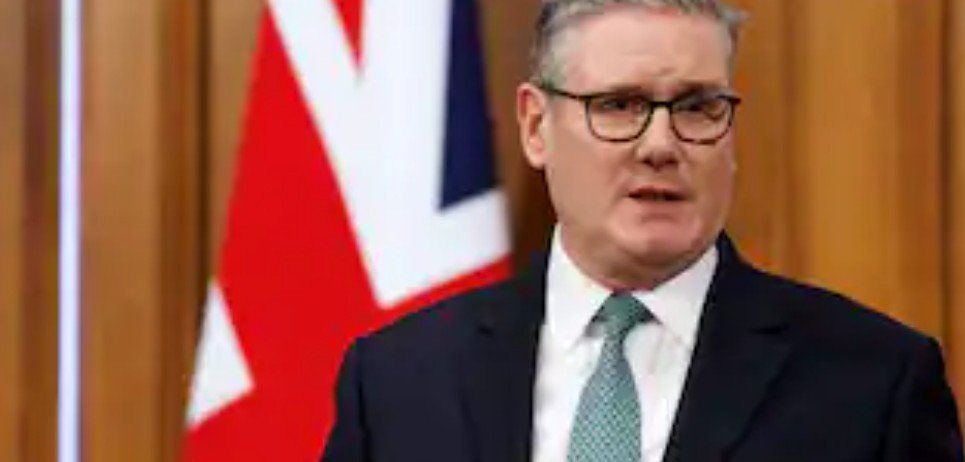
Keir Starmer announced his resignation as Prime Minister of Britain and Leader of the Labour Party on Monday (June 22, 2026). He also set a deadline for the selection of his successor, stating that a new leader would be chosen by mid-July. He will remain in office as caretaker Prime Minister until a new Labour leader is elected. He pledged his full support to the new leader. The victory of Starmer’s rival, Andy Burnham, in a key by-election last week, set the stage for his resignation.
For several days, uncertainty had surrounded Keir Starmer, and there were calls for his resignation. However, he maintained that he would face the challenges. Starmer’s Labour Party had been losing popularity since coming to power with a landslide victory in 2024. MPs within his own party were upset by this and wanted him to step down to prevent further damage to the party. The Labour Party feared that their voters were drifting towards two different parties.
There were fears that the Green Party was attracting Labour’s liberal voters. Nigel Farage’s Reform UK party was challenging the Labour Party on anti-immigration issues. The opposition described Starmer’s tenure as a failure. They alleged that Starmer failed to address fundamental problems such as economic growth and inflation. Living standards were not improving, and the government was constantly making mistakes.
Keir Starmer’s image was damaged
Keir Starmer appointed Peter Mandelson as the UK’s ambassador to the US, a major mistake. Mandelson’s name was linked to the controversial criminal Jeffrey Epstein, which later led to his removal from the post. This controversy severely damaged Starmer’s image. US President Donald Trump also linked the possibility of Starmer’s resignation to issues of immigration and renewable energy.
The Labour Party has not yet chosen a successor to Keir Starmer. However, two names are leading the race. The first is Andy Burnham, who has been Mayor of Greater Manchester since 2017 and recently secured his place in Parliament by winning a special election. During his campaign, he directly challenged Starmer’s leadership. Former Health Secretary Wes Streeting is also in the race, having previously openly criticized Starmer’s style of government.
Starmer becomes the sixth British Prime Minister to leave office prematurely in the last 10 years. Before Starmer, Conservative Party leader Liz Truss served for less than 10 months, while Rishi Sunak held the position for 20 months. Before him, Theresa May became the Prime Minister of the country, who had to lose her chair due to Brexit controversies.