

Across the globe, the implementation of Central Bank Digital Currencies varies significantly. One prominent model, particularly observed in China, demonstrates a potential for pervasive state control that is fundamentally incompatible with India’s democratic values.
Key Characteristics of the Chinese CBDC Model:
- Pervasive Surveillance: Transactions are meticulously tracked and traceable by the state, offering little to no privacy for individuals. This data can be used for extensive monitoring of citizens’ financial behavior.
- Centralized Control: The digital currency system grants the government unprecedented power to freeze accounts, set spending limits, or even block transactions based on social or political criteria.
- Lack of Anonymity: The concept of anonymous cash transactions is largely eliminated, replaced by a system where every financial interaction leaves a digital footprint accessible to authorities.
- Integration with Social Control: There are concerns about its potential integration with broader social credit systems, where financial behavior could influence access to services or freedoms.
In China 🇨🇳 no digital ID means no food.
— Resist CBDC (@Resist_CBDC) September 24, 2025
“Control the food, control the people.”
– Henry Kissinger, mentor to Schwab
Agenda 2030 only happens with Digital ID already in place. This is the hill to die on. Can’t be repeated enough.
pic.twitter.com/Vl4APqmw0K
Possible Misuse of a CBDC – The China Case
A CBDC managed by a central bank could be misused if it falls into the wrong hands and lacks proper protections. For instance, the Chinese Communist Party (CCP) aims to replace all cash in China with their digital renminbi. If this occurs, a digital currency might enable the CCP to monitor every purchase, increase domestic surveillance efforts, and gain more control over private transactions. With this new ability to see monetary transactions, the CCP could tighten its grip on the people to enforce party rules. This new authority, combined with the CCP’s social scoring system, would give the CCP the power to punish Chinese citizens who act against CCP interests. For example, a Chinese citizen with a low social score might face restrictions on currency access or receive a lower interest rate compared to “good” citizens (as defined by the CCP).

Why This Model Is Unsuitable for India:
India is a vibrant democracy, built on the foundations of individual rights, privacy, and economic freedom. Adopting a CBDC model akin to China’s would fundamentally undermine these principles, transforming a tool for financial progress into an instrument of state oversight. It risks eroding the trust between citizens and the state, stifling innovation, and compromising the very essence of a free society.
India as an experimental model:
“India is pushing towards digitization in a big way. The scale of the country means that once India gets there, the amount of digital innovation here will be greater than anywhere else in the world,” Bill Gates said.
“China is the model for many nations.” – Klaus Schwab

The State Bank of India (SBI) has faced public backlash and regulatory scrutiny concerning its operations, particularly in relation to the Reserve Bank of India (RBI)-backed Central Bank Digital Currency (CBDC) and other digital payment systems. This has manifested in several ways, including customer complaints about UPI transaction limits and penalties imposed by the RBI for compliance failures.
People have lost faith in SBI.
— Venisha G Kiba (@KibaVenisha) March 12, 2024
SBI has hurt its own image.
The govt is destroying our democracy.
–MP Gaurav Gogoi Ji pic.twitter.com/IFZswnDXDF
One significant instance of public backlash against SBI involved complaints regarding Unified Payments Interface (UPI) transaction limits. Anupam Mittal, CEO of People Group and a judge on “Shark Tank India,” publicly criticized SBI on X (formerly Twitter) in August 2024. He stated that since July 20, merchants were encountering “UPI limit errors” specifically for SBI-linked UPI payments, a problem he noted was not occurring with other banks. Mittal highlighted that this issue not only erodes confidence in UPI but also negatively impacts India’s economic growth given the high volume of transactions and SBI’s significant market share . This incident underscores public frustration when digital payment systems, especially those as widely adopted as UPI, experience disruptions.
Congrats @UPI_NPCI for continuing to redefine digital payments. Much needed innovation 🙌🏼 Would also help if we can hold banks to performance. Since July 20th merchants are seeing errors like ‘uve reached the upi limit set by ur bank’ for @TheOfficialSBI UPI. Not happening with… https://t.co/QlKNWwj8yt
— Anupam Mittal (@AnupamMittal) August 16, 2024
The RBI has been actively promoting its retail CBDC, the e-rupee, since its pilot launch in December 2022. Despite efforts to boost adoption, including incentivizing banks to use CBDC for employee compensation and linking it with UPI, the e-rupee has struggled to gain mainstream traction compared to the highly successful UPI. While the RBI aimed for one million daily CBDC transactions by the end of 2023, and briefly achieved this with bank employee salary disbursements, daily transactions dropped significantly by June 2024. This struggle for adoption, even with RBI’s push, indicates a public preference for established digital payment methods like UPI, which SBI is a major participant in. The public’s reluctance to fully embrace CBDC, partly due to concerns like the lack of interest returns on CBDC wallets and the widespread convenience of UPI, indirectly contributes to the perception of challenges within the broader digital payment ecosystem that includes SBI.
In the future, technical difficulties could emerge in diverse ways
SBI has faced direct regulatory action from the RBI. In May 2025, the RBI imposed a monetary penalty of ₹1.73 crore (approximately $207,000 USD) on SBI for various compliance violations . These violations included issues in loan disbursals, customer protection in unauthorized electronic transactions, and improper handling of current accounts. Specifically, SBI failed to credit customers’ accounts within 10 working days of being notified of unauthorized electronic banking transactions and did not compensate affected customers within the stipulated 90-day period. The bank also breached regulatory norms by issuing a bridge loan against pending government receivables and violated rules regarding the opening and maintenance of certain current accounts. While the RBI clarified that these penalties relate strictly to compliance deficiencies and do not question the legitimacy of transactions or contracts with customers, such actions from the central bank can impact public trust and perception of the institution.
The RBI continues to expand the scope of CBDC pilots, exploring new use cases like programmable payments for farmers and cross-border transactions. SBI has been involved in these pilots, for instance, launching a pilot program on August 16, 2024, in Odisha and Andhra Pradesh to help tenant farmers access agricultural credit using programmable CBDC. While these initiatives aim to improve financial inclusion and efficiency, the broader public sentiment regarding digital currencies and the operational challenges faced by banks like SBI in implementing these new technologies remain critical factors in their success and public acceptance.
India’s Central Bank Digital Currency (CBDC), the Digital Rupee
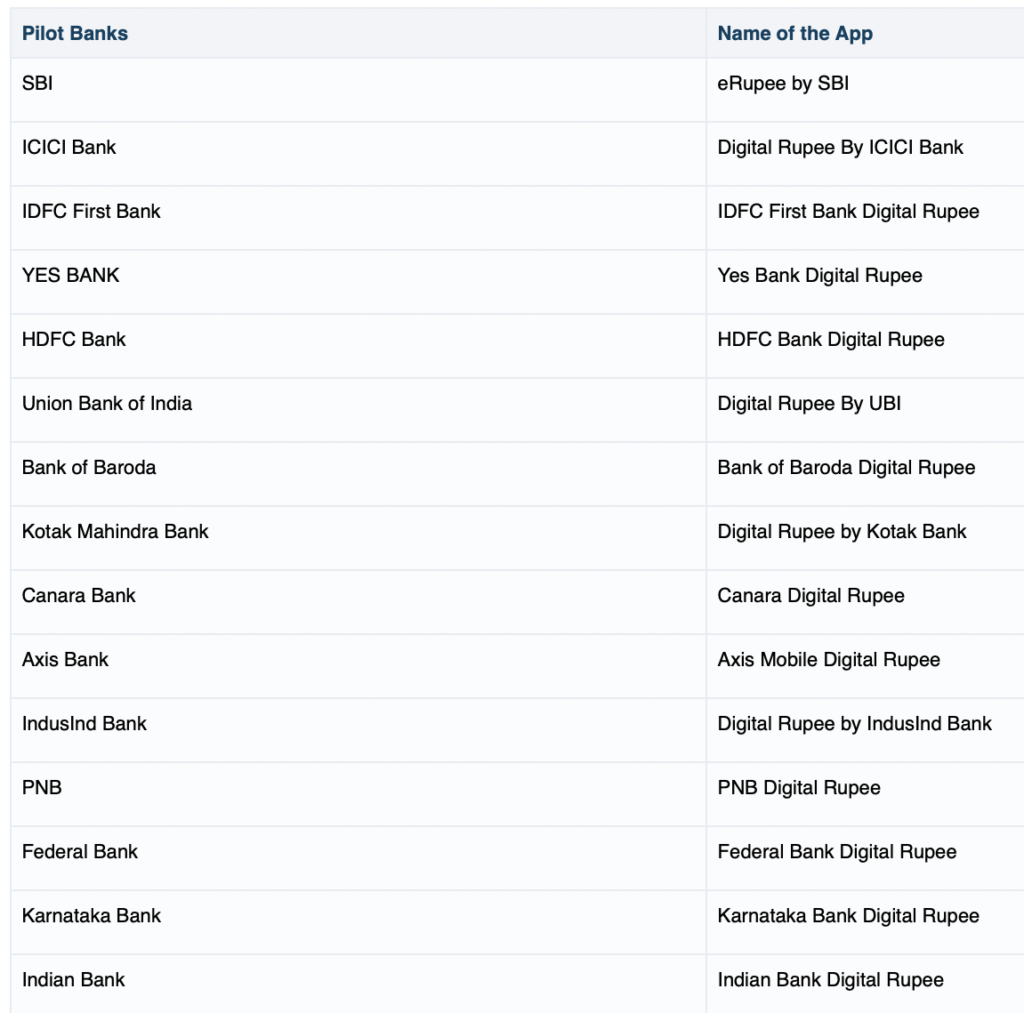
Digital Rupee is the electronic version of our currency which can be used to carry out transactions or store value digitally, similar to the manner in which currency notes can be used in physical form. It is currently in pilot mode to test and explore the uses/ features/ technology and applications of Digital Rupee. Currently, the pilot is ongoing with 15 banks – SBI, ICICI Bank, Yes Bank, IDFC First Bank, Bank of Baroda, Union Bank of India, HDFC Bank, Kotak Mahindra Bank, PNB, Canara Bank, Axis Bank, IndusInd Bank, Federal Bank, Karnataka Bank and Indian Bank.
Trump signs an Executive Order Banning Central Bank Digital Currencies
“Agencies are hereby prohibited from undertaking any action to establish, issue, or promote CBDCs within the jurisdiction of the United States or abroad”
On January 23, 2025, former President Donald Trump issued an Executive Order titled “Strengthening American Leadership in Digital Financial Technology.” This order outlines the Trump administration’s policy on digital assets, blockchain technology, and related technologies, with a significant focus on banning the issuance or promotion of any Central Bank Digital Currency (CBDC) within the United States.
📸 FLASHBACK: Trump credits @VivekGRamaswamy for first alerting him to the dangers of CBDC, a Central Bank Digital Currency
— News Nomad 🗞 (@The_Nomad_News) January 23, 2025
This is not the first Executive Order that appears to be influenced by Vivek’s platform. pic.twitter.com/jrUByqCdqp
Prominent voices have highlighted the threats posed by CBDC
Former Republican presidential candidate, and entrepreneur, Vivek Ramaswamy views Central Bank Digital Currencies (CBDCs) as a significant threat to individual liberty, financial privacy, and the potential for government overreach, advocating for their prohibition due to concerns about surveillance, control over transactions, and the erosion of financial freedom.
FLASHBACK: Vivek Ramaswamy warns US citizens that CBDCs are bad news
— The Conservative Alternative (@OldeWorldOrder) January 23, 2025
"Central Bank Digital Currencies, I think, are a mechanism for enforcing a Social Credit System. China actually pioneered it."pic.twitter.com/sqhm4M27Aa https://t.co/S27cwCWPTL
U.S. Health Secretary Robert F. Kennedy Jr. is a vocal opponent of Central Bank Digital Currencies (CBDCs), viewing them as “instruments of control and oppression” that could lead to invasive surveillance and restrictions on financial freedom. He has vowed to end efforts to move toward a CBDC if elected president and has championed Bitcoin as a decentralized alternative that promotes liberty and transparency.
Florida Governor Ron DeSantis, who have raised alarms about the potential for a digital dollar to be used to implement social agendas or restrict certain purchases, such as firearms or gasoline. He has specifically cited China’s digital yuan, which is linked to an extensive social credit system, as an example of how a CBDC could be used to monitor and control citizens
Australian Senator Ralph Babet’s Call on Freedom
• Discusses the potential impact of exceeding the carbon limit on buying and selling.
• Urges resistance to CBDC and digital ID.
Senator Alex Antic, a Liberal Senator for South Australia, has been a vocal critic of the Australian government’s push towards a national digital identity system. His stance is clearly demonstrated through his legislative actions and voting record.
Digital ID = Control
Ref:
- Shark Tank judge Anupam Mittal makes an SBI complaint to RBI on UPI. [ https://timesofindia.indiatimes.com/technology/tech-news/shark-tank-judge-anupam-mittal-makes-an-sbi-complaint-to-rbi-on-upi/articleshow/112560868.cms ]
- RBI slaps ₹1.73 crore penalty on SBI for violations in loan disbursals, customer protection. [ https://www.fortuneindia.com/personal-finance/banking/rbi-slaps-173-crore-penalty-on-sbi-for-violations-in-loan-disbursals-customer-protection/123021 ]
- India: RBI to credit officers’ reimbursements into CBDC wallets. [ https://coingeek.com/india-rbi-to-credit-officers-reimbursements-into-cbdc-wallets/ ]
- India CBDC trial has more than five million users, no rush for launch. [ https://www.globalgovernmentfintech.com/india-cbdc-trial-more-than-five-million-users-no-rush-for-launch/ ]
- RBI Slaps Rs 2.72 Crore Penalty On SBI, Jana Bank For Rule Violations. [ https://www.outlookmoney.com/news/rbi-slaps-rs-272-crore-penalty-on-sbi-jana-bank-for-rule-violations ]
- RBI to test CBDC by crediting a portion of allowances to its officers’ digital wallets. [ https://m.economictimes.com/news/economy/policy/rbi-to-test-cbdc-by-crediting-a-portion-of-allowances-to-its-officers-digital-wallets/articleshow/116749730.cms ]
- E-rupee in circulation grows to ₹1,016 crore; RBI explores cross-border CBDC pilots. [ https://www.thehindu.com/business/e-rupee-in-circulation-grows-to-1016-crore-rbi-explores-cross-border-cbdc-pilots/article69632789.ece ]
- RBI to review digital banking regulations, expand lending interface and CBDC pilots. [ https://m.economictimes.com/news/economy/policy/rbi-to-review-digital-banking-regulations-expand-lending-interface-and-cbdc-pilots/articleshow/121494735.cms ]
- Central Bank Digital Currencies in India: The Future of Money or a Failing Experiment? [ https://www.fticonsulting.com/insights/articles/central-bank-digital-currencies-india-future-money-failing-experiment ]
- Reserve Bank of India, Digital Rupee – FAQs. (January 2025)
- ACI Worldwide, “Inside Real-Time: India” (last accessed March 2024)
- Investopedia “Digital Money: What It Is, How It Works, Types, and Examples” (March 2025)
- Coin Desk, “India’s Digital Rupee Crossed a Million Transactions in 1 Day With Some Help From Banks” (March 2024)
- Reuters, “India’s digital currency transactions top 1 mln/day in Dec -sources” (January 2024)
- IMF Report, “India’s Digital Payments Landscape” (August 2024)
- https://commons.wikimedia.org/wiki/File:Digital_Rupee.png
Also Read: