

Money and power play a huge role in our country. With the help of money, these influential people commit serious crimes and get away with it while living a life of luxury. It’s been known for years that the police, for money, are becoming sycophants of influential people and consorting with thugs and ruffians. But now, with the help of money and power, influential people are not only using the police as their sycophants as before, but have even begun influencing court decisions. Whether it’s the Disha Salian case or the Sushant Singh Rajput case, the proceedings have revealed a similar pattern of corrupt police officers and some court judges to the public. But in Disha Salian’s case, her father, Satish Salian, continued the proceedings through his lawyer, Nilesh Ojha, and then the case was taken away from the Mumbai Police and handed over to the CBI because the court’s honest judges felt that what had happened in the case was deeply flawed. Given this, it now seems that if Ravindra Patil’s case escalates, Salman Khan, who has been living a life of luxury despite the blackbuck poaching and hit-and-run cases, will be forced to spend his days behind bars. Let’s find out who Ravindra Patil was and what his Salman Khan connection was.
Ravindra Patil was a resident of Satara, Maharashtra, and came from a similar family. He later joined the Mumbai Police as a constable. He was the former official police bodyguard of actor Salman Khan. His association with Salman Khan dates back to the infamous 2002 hit-and-run case, in which Patil was the prime witness and complainant.
When Salman Khan began receiving threats from the underworld, the actor appealed to the Mumbai Police for protection. Due to Ravindra Patil’s special commando training, the Mumbai Police deployed him as a police bodyguard for Salman Khan’s security.
On the night of September 28, 2002, Salman Khan’s Land Cruiser collided with a bakery in Bandra. In the accident, a man sleeping on the sidewalk (Noorullah Mehboob Sharif) was killed and four others were injured. Ravindra Patil was present in the car at the time and filed the first FIR in the case.
Ravindra Patil consistently stated in his statements that Salman Khan was driving the car at the time of the accident and was drunk. He even warned him to slow down, but the actor ignored them.
A Mumbai sessions court convicted Salman Khan of culpable homicide and other charges and sentenced him to five years in prison.
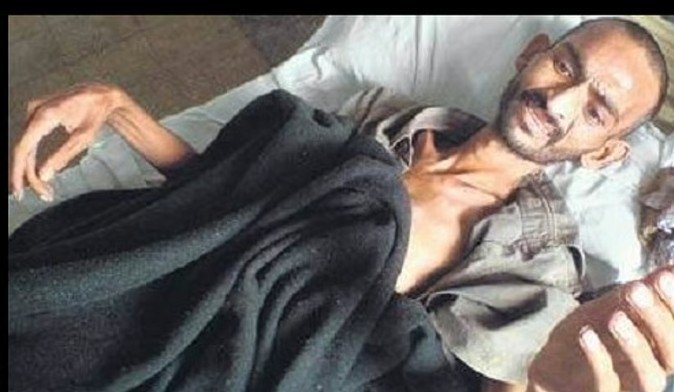
Following this high-profile case, Ravindra Patil faced immense psychological and social pressure to change his statement. He was dismissed from service and imprisoned for his absence from court proceedings. He later developed severe tuberculosis (TB) and died on October 4, 2007, in extreme poverty and obscurity, at the age of 30, in a government hospital.
Following the Mumbai Sessions Court’s decision, Salman’s lawyers challenged the decision in the Bombay High Court. Ravindra Patil was the most important and only eyewitness (approver) in the case, who was present in the car at the time of the accident.
Prosecution’s Argument: Patil had stated in his original FIR and initial statements that Salman Khan was driving the car himself. He also stated that Salman was drunk and had been warned to drive slowly, but Salman did not listen.
Defense’s Argument: Salman’s lawyers called Patil’s statements unreliable. They argued that in the first FIR, Patil had made no allegations of Salman being drunk or driving fast.
These details were not written down; these were added later.
Bombay High Court’s legal conclusion (December 2015): Unfortunately, Ravindra Patil passed away in 2007 due to tuberculosis. The Sessions Court had convicted Salman based on his earlier statements, but the Bombay High Court dismissed this on technical grounds and acquitted Salman Khan in the case. The court stated that since Patil had passed away, the defense did not have the opportunity to cross-examine him in the Sessions Court, making his statement incontrovertible.
In 2015, during the final stages of the trial court proceedings, Salman Khan’s family driver, Ashok Singh, suddenly appeared in court and took the blame.
Defense Argument: Ashok Singh testified that he, not Salman, was driving the car on the night of September 28, 2002. He argued that the car’s tire suddenly burst, jamming the steering, and causing the car to go out of control and climb onto the footpath. He also said that he himself went to the police station immediately after the accident, but the police refused to record his statement.
Prosecution Argument: The public prosecutor called Ashok Singh a “false and fabricated witness.” He questioned that if Ashok Singh was driving the car, why did he remain silent for 13 years and why did he not approach any other legal agency first? The prosecution argued that witnesses reported the victims’ body parts trapped under the car’s wheels, while Ashok claimed he did not see anyone below.
Courts’ Stand: The Mumbai Sessions Court completely rejected Ashok Singh’s testimony and ordered action against him for misleading the court and giving false testimony. However, the Bombay High Court later held on the technicality that the defence witness had been produced in time under criminal procedures, but overall, Salman Khan was acquitted due to lack of evidence (Beyond Reasonable Doubt).
Currently, this legal battle has not stopped, but is pending in the Supreme Court after the Maharashtra government challenged the Bombay High Court’s decision.