

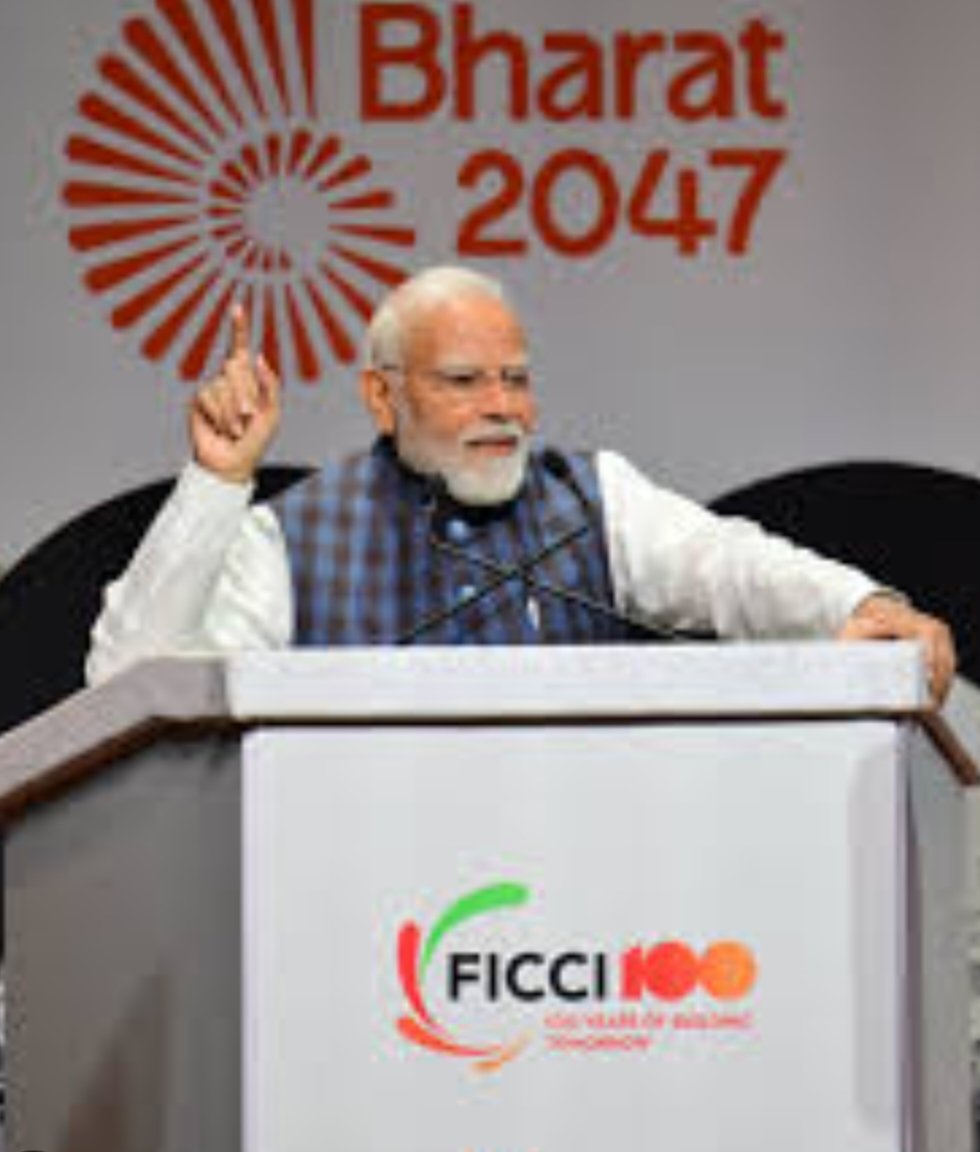
Addressing the FICCI Centenary Conference (Annual General Meeting) held in New Delhi on November 19, 2026, Prime Minister Narendra Modi asked industrialists sharp and direct questions about job creation and increasing employee salaries. This issue has also sparked heated debate in the country’s politics.
Prime Minister Modi held a mirror to the industry, stating the following:
Tax exemption versus salaries and employment: PM Modi reminded that the government reduced corporate tax from 30% to 22% and made annual income up to ₹12 lakh tax-free under the new tax regime. He directly asked industrialists, “I waived income tax up to ₹12 lakh, but have you increased your employees’ salaries? Have you increased the number of employees?” No.”
Taking a dig at the attitude of industrialists: He quipped that the industrial world’s hunger is so great that no matter how much you feed them, they are never satisfied. He further said that the attitude of companies is like this: “Modi ji, you do it, we’ll take care of it. This is how it will work.”
Appeal for Partnership with the Government: The Prime Minister clarified that the responsibility for the country’s development does not lie solely with the government. Tax exemptions have increased the purchasing power of ordinary people, generating demand in the market; therefore, industries should also pass on these benefits to employees in the form of new jobs and better salaries.
Following the Prime Minister’s statement, political rhetoric between the opposition and the ruling party has intensified:
Congress Attack: Congress leaders Jairam Ramesh and Rahul Gandhi called the PM’s statement an “admission” of the government’s economic policies. The opposition says that Congress has long raised the issue that despite the corporate tax cut, private investment, employment, and wages have not increased.
Government’s Stand: Meanwhile, supporters and the government side believe that PM Modi has made the corporate sector aware of its social and economic responsibility by advocating for the interests of the common middle class and employees.