

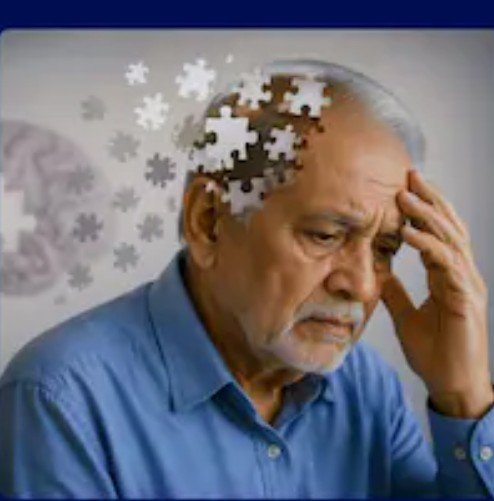
As we age, forgetting where we put our glasses, suddenly not remembering someone’s name, or leaving our keys somewhere is quite common. We often laugh it off as “the effects of aging.” But it becomes a matter of concern when this forgetfulness becomes a daily headache and changes the entire behavior of the elderly in the house.
The elderly population in India is rapidly increasing. According to one estimate, more than 8.8 million elderly people in our country are living under the shadow of dementia or Alzheimer’s. Therefore, it is crucial for family members to understand that not every forgetfulness is simply a sign of old age; sometimes it is a sign of a brain disease.
It may take some time for older people to remember old things, but they eventually do. But if a person forgets something that happened just five minutes ago, forgets a doctor’s appointment, or starts repeating the same question over and over, it’s a warning sign. This means the brain isn’t able to retain new information.
The elderly population in India is rapidly increasing. According to one estimate, more than 8.8 million elderly people in our country live under the shadow of dementia or Alzheimer’s. In such a situation, it’s crucial for family members to understand that not every forgetfulness is simply a sign of old age; sometimes it’s a sign of a mental illness.
If a mother who has been cooking delicious meals for the entire family without measuring for years suddenly starts forgetting her own special recipes, gets confused with spices, or finds operating the TV remote or washing machine a puzzle, don’t take this as normal forgetfulness. Inability to perform daily tasks is a serious sign.
Anyone can make small financial mistakes. But if the wise elder in the house suddenly forgets to pay the electricity or water bill, makes significant mistakes in bank transactions, or suddenly starts spending money in strange places, then understand that the brain’s planning and decision-making abilities are being affected.
Taking a wrong turn while driving or walking is common. But forgetting the way to a local market you’ve been using for 20 years, or getting lost in your own neighborhood, is a serious matter. This is not a simple memory impairment at all.
Sometimes, someone’s name gets stuck on their tongue, but they can be remembered after a while. But if they struggle to find the right words during conversation, leave sentences incomplete, or even fail to understand simple things, this could be a sign of mental changes.
If a person suddenly starts making rash decisions, going out in the sun wearing thick woolen clothing, or engaging in reckless behaviors they’ve always avoided, it’s a clear sign that their ability to distinguish between right and wrong is diminishing.
A person who previously enjoyed sitting in the neighborhood park and actively participating in religious ceremonies or relatives’ gatherings suddenly begins to live alone. When the brain’s function decreases, a person becomes hesitant to interact with others and becomes withdrawn.
Memory loss doesn’t always have to be a sign of Alzheimer’s. Sometimes, severe depression, a severe vitamin B12 deficiency, thyroid disease, lack of sleep, or medication side effects can also cause memory loss.
The good news is that most of these problems are treatable. The simple point is that if you suddenly notice a significant change in an elderly person’s daily routine or their speech patterns, don’t dismiss it as simply old age. Get a neurologist’s evaluation done at the right time to prevent the disease from progressing.