

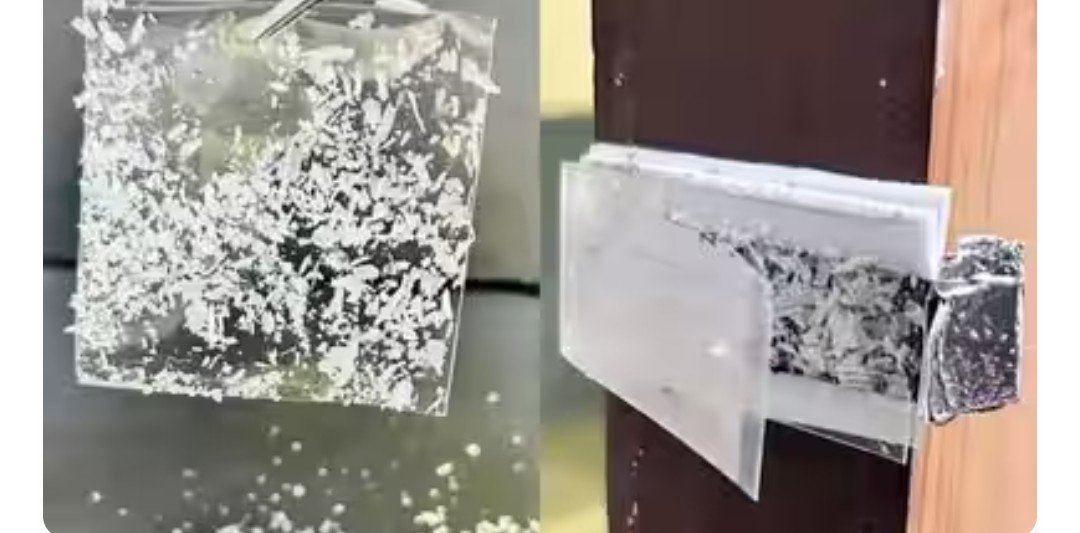
Who would have thought that garlic peels, which are now considered kitchen waste and thrown into the trash, would now be used to generate electricity? Indian researchers have discovered a method in which organic waste can generate electricity. The unique feature of this technique is that it doesn’t require the use of chemical cells or heavy batteries to generate electricity from organic waste. This futuristic technology could make household waste or bio-waste a useful resource in the future.
This unique technique was developed by researchers Manas Tiwari and Deepak Bharti of the Malaviya National Institute of Technology, Jaipur. It utilizes the triboelectric effect.
Under this technique, when two different objects rub together, electrons are exchanged, generating charge. This technique has been successfully demonstrated in an experiment.
Testing also demonstrated the successful operation of a door security sensor using garlic peels.
To test this technology, crushed garlic peels were used as the positive layer and a plastic sheet as the negative layer. Technically, this is called a triboelectric nanogenerator.
When friction occurs between these two layers or surfaces, electricity is generated. This electricity can be used as a cell for various purposes.
According to reports, testing found that a single layer of garlic peels can generate a shock of approximately 210 volts, while using two layers can generate a current of up to 400 volts. Although the current flowing through them is very subtle, it is sufficient to power small appliances.
The special feature of this testing was that even after being stored for six months and using them 200 times continuously, the garlic peels remained capable of generating electricity.
With this technology, various sensors used in homes can be powered for extended periods using biowaste like garlic peels.
Researchers also tested a self-powered sensor powered by garlic peels by fitting it between a door and a doorframe. In this testing, the voltage spike generated when the two surfaces separated as the door opened allowed the sensor to function without a battery.
With this experiment, Indian researchers have opened the door to eco-friendly energy for the future. This technology can solve two major problems: generating electricity without harming the environment and disposing of household biowaste.
However, there is still a long way to go before this technology can be put to use. Scientists are now studying why the power output stopped increasing after two layers, so that they can explore the possibilities of generating even better energy from other biowastes.