

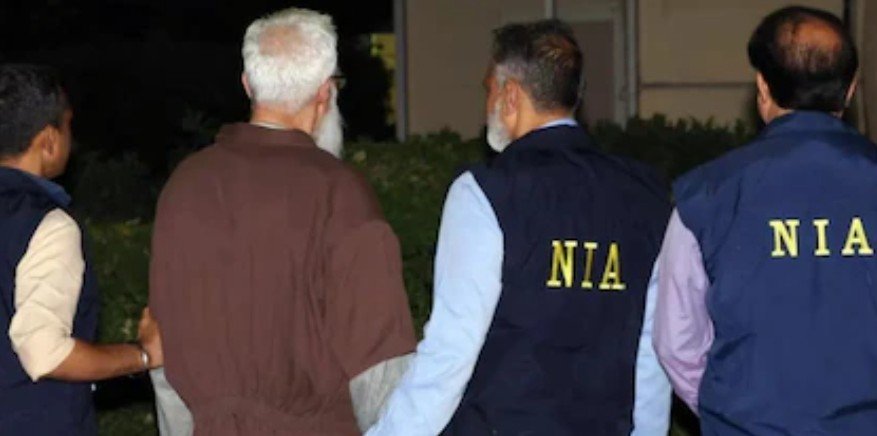
India brought back 274 fugitives from 36 countries between 2019 and 2026, the Home Ministry announced on Tuesday (August 4, 2026). These fugitives include terrorists, gangsters, financial and drug traffickers, and those accused of murder, rape, and those fleeing under POCSO (Prevention of Money Laundering) Act (PMLA).
The Ministry also reported that assets worth ₹17,874 crore belonging to fugitive criminals were seized between 2019 and 2026 amid strict enforcement of the Prevention of Money Laundering Act (PMLA).
The report states that ₹18,762 crore has been repatriated in cases involving economic offenders who fled India. It also states that a total of 40 Red Corner Notices were issued in 2022, 100 in 2023, 107 in 2024, 112 in 2025 and 182 so far in 2026. Of these, Red Corner Notices have been issued against 501 fugitive criminals in the last three years. According to Home Ministry data, out of 274 fugitives brought back to India since 2009, a total of 45 fugitives were brought back till July 2026, while 70 were brought back in 2025, 43 in 2024, 37 in 2023, 40 in 2022, 23 in 2021, seven in 2020 and nine in 2019.
It is noteworthy that all these fugitive criminals were involved in crimes including fraud, financial fraud, terror activities, anti-India activities, narco-terror, financial crimes, terrorist activities, anti-national activities, narco-terror, organized crime, gangsterism, extortion, murder, robbery, violent crimes, sexual crimes, rape, POCS, drug trafficking, NDPS, illegal trade, counterfeit currency, cyber crime, human trafficking, and kidnapping. Of these 274 fugitives, 62 were involved in cases related to murder, robbery, and violent crimes; the remaining 53 were involved in sexual crimes, rape, and POCS; 45 were involved in other criminal activities. 42 were involved in organized crime, gangsterism, and extortion, and 18 were involved in human trafficking and kidnapping. The remaining 15 were involved in terror activities, narco-terrorism, 16 in drugs, 12 in counterfeit currency, cyber crime, and smuggling. Nine fugitive criminals were wanted for fraud and financial crimes.
The Home Ministry stated that India’s extradition efforts faced legal and judicial hurdles, including the principles of double punishment and double criminality, which often resulted in the rejection of extradition requests. Furthermore, the process was hampered by a lack of coordination between the Home Ministry and various departments. Sharing information about fugitives, tracking their whereabouts, and issuing Red Corner Notices was also slow. The Home Ministry stated that previous governments lacked the political will to bring back fugitives. The Modi government has made the extradition of fugitives a national priority.