

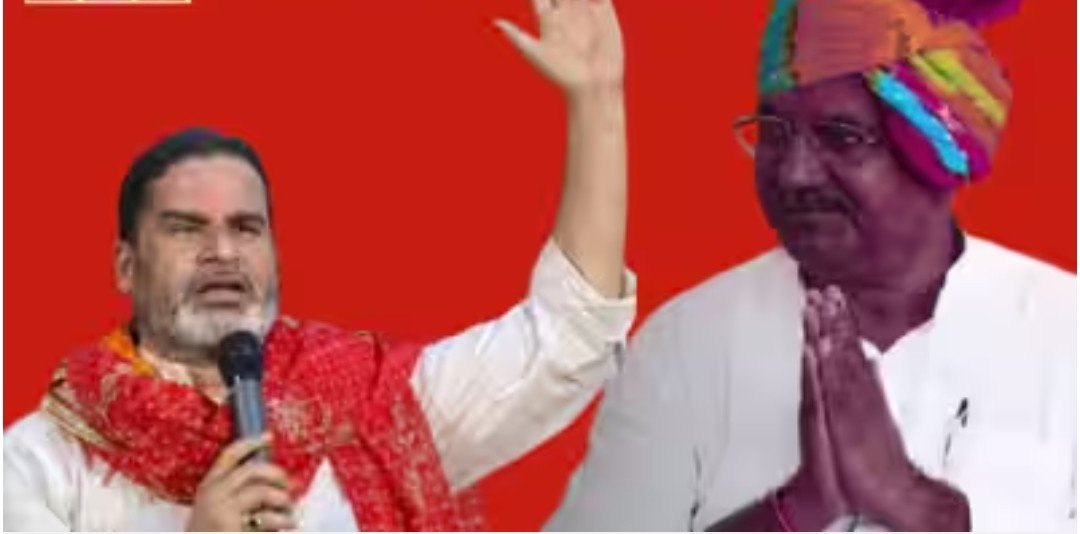
The BJP has suffered defeat in the Bankipur and Datia assembly by-elections. Of the three assembly by-elections, only BJP candidate Satish Patel won in Manjalpur, Gujarat. This is a significant setback for the BJP. However, the results and vote share also send a significant message to the traditional major opposition parties.
The BJP’s biggest setback came in the Bankipur seat, which the saffron party has won every time since the seat was created in 2008. The party has never received less than 59% of the total votes in this Patna assembly constituency, but its impressive run has now ended. Prashant Kishor of the Jan Suraj Party won by nearly 19,000 votes. Interestingly, Prashant Kishor’s Jan Suraj Party failed to win any seats in the Bihar elections. Meanwhile, the RJD has never been strong in Bankipur.
Another interesting point is the vote share in Bankipur. Prashant Kishor secured over 48% of the vote, while the BJP’s vote share in the 2025 state elections has dropped to 34% this time.
Message from BJP’s defeat in Bankipur
The defeat in Bankipur sends several messages to the BJP. First, the setback in one of its safest seats in Bihar, with a significant upper-caste Hindu population and won four times by BJP President Nitin Naveen, serves as a warning to the party.
According to caste and community-wise estimates by political parties in Bihar, Bankipur comprises 14% Kayastha; 12% Muslim; 9% Chandravanshi (Kahar), who are EBC; 9% Baniya; 9% Dalit; 8% Bhumihar; 8% Brahmin; 7% Rajput; 5% Kurmi; and 3% Kushwaha.
While these are estimates by political parties, they reveal the resentment of a significant (37%) population of the so-called upper castes.
This setback for the world’s largest political party, the BJP, could have several aspects. First, the BJP candidate was changed at the last minute. Second, the BJP’s choice of Samrat Chaudhary (a Kushwaha) as Chief Minister had already sparked signs of resentment among the upper castes.
This has put the BJP in a difficult position in post-Nitish Kumar Bihar. The upper castes are indicating they are willing to consider alternatives if their demands are not met.
Although the upper castes are not currently shifting to the RJD, any attempt to meet their demands could reduce the party’s OBC and EBC votes, as Nitish Kumar was the leader who held Bihar’s so-called upper castes, OBCs, and EBCs together. However, the BJP may find some solace in the fact that votes have shifted to Prashant Kishor, a Brahmin, who currently lacks organizational strength.
By-elections don’t set trends, but they are a big beacon, and the same constituency could reverse the trend in the Lok Sabha elections, provided national issues don’t force the BJP’s core voters to vote against it.
This clearly highlights the ongoing turmoil in the country. However, it’s too early to say anything with certainty.
The UGC bill, the NEET paper leak, which likely impacted the upper castes the most, and the recent Gen Z protests also influenced this election.
The Gen Z protests included protesters from all sections of society, and the BJP believed it received votes from all these sections, but the situation has now changed.
In Datia, Madhya Pradesh, Congress candidate Ghanshyam Singh has become MLA for the third time. This time, he won by 6,016 votes. However, the setback suffered by the BJP in Datia is not as severe as in Bankipur. This is because, despite the BJP’s landslide victory in the state, the Congress won the Datia seat in 2023 as well.
It’s true that Datia isn’t a Congress stronghold. Since 1990, the BJP has won Datia four times, and the Congress three times. In 1998, the Samajwadi Party won the seat because veteran Congress leader Rajendra Bharti had joined the party. Bharti won again in 2023 as a Congress candidate.
Losing two out of three by-elections may be bad news for the BJP, but there’s nothing much to celebrate for the opposition either. Support in Bankipur hasn’t shifted from the BJP to its traditional rival, the RJD. Instead, voters have sided with Prashant Kishor. In fact, the RJD’s vote share has declined from nearly 30 percent in last year’s assembly elections to just over 11 percent.