

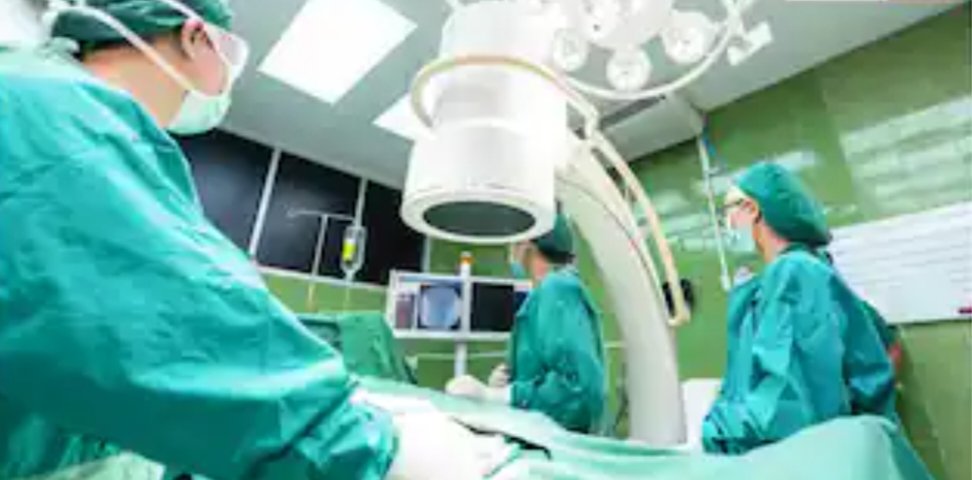
Doctors at Lucknow’s Sanjay Gandhi PGI (SGPGI) have saved a young woman’s life by performing a complex surgery. A 20-centimeter tumor in the patient’s abdomen and the largest vein in the body attached to it posed a challenge. Along with removing the approximately two-kilogram tumor, the doctors also removed the affected portion of the body’s main vein, the IVC (Inferior Vena Cava). A new vein was then created from a cow’s heart membrane and implanted into the body. The kidney veins were also connected to the new system. Now, both of the young woman’s kidneys are functioning normally.
27-year-old Divya Verma, a resident of Simaria Bazaar, Hanumanganj, Padrauna, Kushinagar, had been searching for treatment for the past year. She consulted several hospitals for her growing abdominal tumor, but doctors refused to perform the surgery, citing the risk to her life. She then went to the Urology Department of SGPGI.
Professor Sanjay Surekha, urologist and kidney transplant specialist in the Department of Urology, explained that the patient had come to the institute in a state of despair and distress. After several tests, it was revealed that she had a tumor measuring over 20 centimeters in the right side of her abdomen. It was severely entangled with the IVC, the body’s largest vein. This vein carries blood from the legs, kidneys, liver, and intestines to the heart. The tumor was also connected to the veins supplying blood to the kidneys. Therefore, simply removing the tumor was not possible. During the surgery, the affected parts of the IVC and kidney veins also had to be removed.
The doctors first removed the approximately two-kilogram tumor. After removing the affected part of the IVC, a new vein was created from bovine pericardium, a cow’s heart membrane. For this, a special graft manufactured abroad, costing approximately 50,000 rupees, was used. The doctors created a new IVC by creating an 8×4 cm pipe-like graft from the membrane. The vein from the left kidney was connected to the new IVC, and the vein from the right kidney was connected to the gonadal vein. The woman is being given special medications to prevent blood clots in the new vein.
The team of doctors who performed the surgery stated that this operation was not routine. A ruptured IVC could have caused massive bleeding, potentially fatal. Removing the kidney veins posed a risk of kidney failure. A blood clot in the new vein could have resulted in swelling in the legs and a life-threatening situation if the clot reached the lungs. Due to these risks, other hospitals had refused to perform the operation. Assistant Professors Dr. Arpan Yadav, Dr. Ashish Ranjan, Dr. Prakhar, and Dr. Devanshu from the Department of Urology performed the surgery. Professor Shantanu Pandey’s team from the CVTS Department and Professor Tapas Singh, Professor Divya, and Professor Sandeep Sahu from the Department of Anesthesia assisted.