

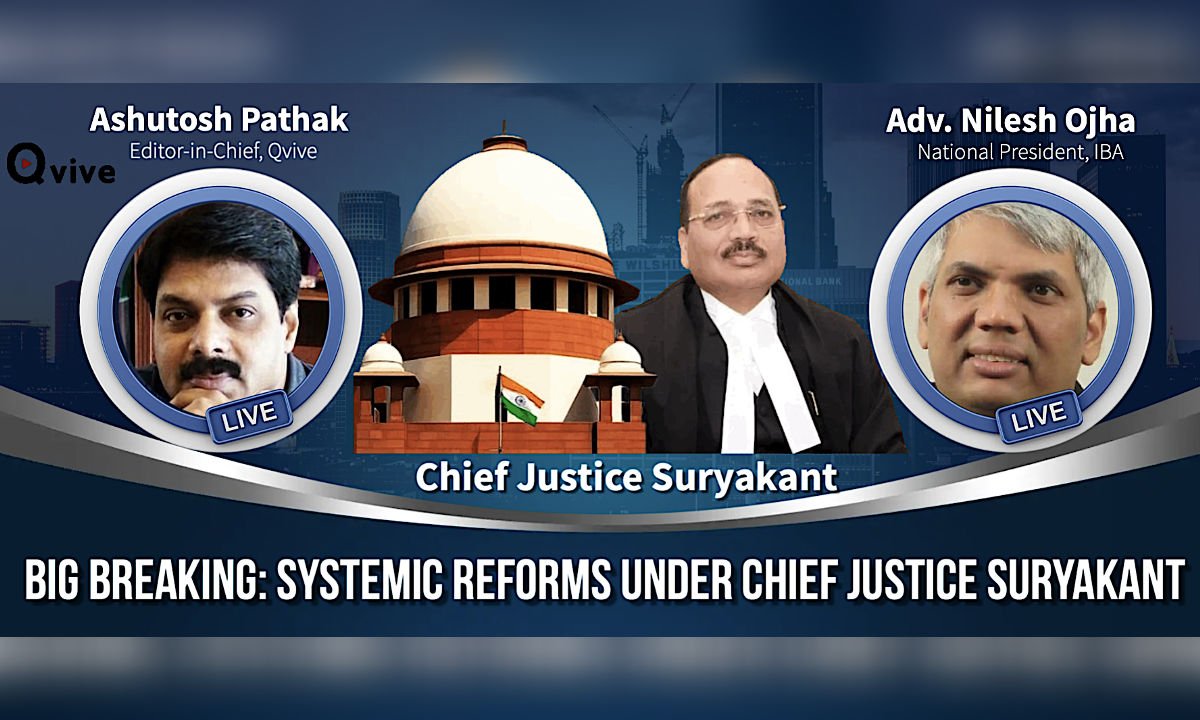
In a landmark address delivered on Constitution Day, Chief Justice Suryakant has unveiled a bold proposal for a National Judicial Policy, aimed at ensuring a singular, uniform interpretation of the Indian Constitution across all 25 High Courts and various benches of the Supreme Court. This initiative has been hailed as a courageous and unprecedented step towards bringing consistency and predictability to India’s justice system.
During a widely discussed Constitution Day speech, Chief Justice Suryakant articulated a clear roadmap for the judiciary, emphasizing the critical need for all judicial bodies to operate in a “same symphony, in the same tune.” He highlighted that divergent interpretations of the same constitutional principles by different courts can undermine public confidence and create uncertainty for citizens seeking justice.
“This is a historic moment for the Indian judiciary,” stated Senior Advocate Nilesh Ojha during a recent segment of ‘India Debate’. “Chief Justice Suryakant has diagnosed the problem as an expert doctor and also told the treatment for it. No one has dared to propose such a sweeping reform till date.”
The proposed National Judicial Policy seeks to eliminate inconsistencies in judicial pronouncements, thereby providing the common citizen with more predictable legal outcomes. Justice Suryakant’s vision is to foster a cohesive judicial framework where the rule of law is applied uniformly, ensuring fairness and clarity for all.
Legal experts and commentators have widely praised Chief Justice Suryakant for his foresight and determination to address a long-standing challenge within the Indian legal system. The move is expected to streamline judicial processes, reduce litigation complexity, and significantly enhance public trust in the judiciary.
The proposal marks a pivotal moment for the Indian legal landscape, setting a new standard for judicial leadership focused on systemic reform and the welfare of the common citizen. Further details on the implementation and framework of the National Judicial Policy are anticipated to be announced in due course.
Let’s break down the main points that emerged from this important dialogue.
1. Equal Justice for Everyone
- Central to Justice Suryakant’s vision is the principle of Article 14 of the Indian Constitution, which states that everyone is equal before the law. This aims to level the playing field, meaning that whether someone is wealthy or a common person, they deserve equal access to justice.
- He highlighted past challenges where judges prioritised favouritism or personal connections, and stated that moving forward, justice must always be based on established laws rather than connections or status.
2. Stricter Accountability for Judicial Decisions
- Justice Suryakant stressed that judges must adhere to the law rigorously. For example, if a High Court makes a ruling, other judges are required to follow it unless there is a compelling reason not to do so.
- There’s also a clear message of accountability for judges: if a judge fails to apply the law, they may face serious consequences, including contempt of court.
3. Reforming Police and Public Prosecutor Practices
- Justice Suryakant expressed the need for police officers and public prosecutors to act correctly and swiftly in protecting victims, particularly in sensitive cases like domestic violence or serious crimes. There are already provisions that hold these officials accountable if they fail to act according to the law.
- This means if they do not file an FIR (First Information Report) when required, they could face a variety of punishments. This shift aims to empower victims and ensure the legal system supports them effectively.
4. Promoting Transparency and Trust in the Judiciary
- The Chief Justice aims to foster a sense of trust in the judiciary. The development of consistent laws and guidelines will empower judges to act not just as enforcers but as advocates for justice.
- Suryakant’s leadership is seen as a beacon of hope that will reform the judiciary and enhance the righteousness of legal rulings, making the process less subject to manipulation.
Justice Suryakant’s reforms signal a pivotal moment in India’s judicial history. By advocating for a unified approach to justice, ensuring equality before the law, imposing accountability on judges and law enforcement, and fostering a culture of transparency, he aims to make the legal system more accessible and just for all individuals. Anyone navigating the legal landscape in India can look forward to a more reliable and just judicial system, reinforcing the belief that justice should be blind to wealth and status.
Through these changes, there is hope that citizens will gradually see a transformation in how justice is served in India, marking a significant step towards a fairer society.
Watch Ashutosh Pathak and Senior Advocate Nilesh Ojha on India Debate.
Also Watch: