

Highlights:
- India approves first dengue vaccine for age 4 to 60 years. UHO recommends caution
- Delhi High Court Flags Safety Issues in HPV Vaccine rollout drive
- Another failed vaccine on the anvil: Gates partners with SII to develop TB vaccine
Website: https://uho.org.in
By Dr. Amitav Banerjee, Chairperson of the Universal Health Organisation (UHO)
India approves first dengue vaccine for age 4 to 60 years. UHO recommends caution.
The Drug Controller General of India (DGCI), has granted market authorization to Takeda Biopharmaceuticals India’s QDENGA (TAK-003), making it the first dengue vaccine to be approved in the country.
The vaccine has been approved for the prevention of dengue disease in individuals aged 4 to 60 years. QDENGA is a live-attenuated tetravalent vaccine designed to provide protection against all four dengue virus serotypes and is administered as a two-dose regimen, with doses given three months apart.
According to the company, the vaccine can be administered irrespective of whether an individual has had a previous dengue infection and does not require pre-vaccination screening. The approval comes as dengue continues to pose a significant public health challenge in India, where reported cases have increased nearly 11-fold over the past two decades. India accounts for nearly one-third of the global dengue burden, although modelling studies suggest the actual number of infections is substantially higher than reported.
According to Takeda, the manufacturer, the vaccine demonstrated an efficacy of 80.2% against virologically confirmed dengue 12 months after the second dose and 90.4% efficacy against dengue-related hospitalisation at 18 months. Follow-up data at 4.5 years showed 84.1% efficacy against dengue-related hospitalisation, while seven-year follow-up demonstrated sustained protection against dengue disease and dengue-related hospitalisation across all four serotypes.
There is no denying that dengue is a major public health problem in India. Earlier seasonal during the monsoons and post monsoons, it has now become perennial. Earlier confined to urban regions, it has now spread to peri-urban and rural areas.
Dengue is caused by a virus which has 4 serotypes. Recovery from infection by one serotype confers long type immunity against that serotype only. Cross immunity against other serotypes is of short duration and after some time infection with another serotype poses the hazard of antibody-dependent-enhancement (ADE). In this the receptors of the weak antibody join hands with the invading virus of a different serotype and instead of protecting, the combination start attacking the body’s own cells. This can lead to serious types of dengue viral infections such as dengue hemorrhagic fever (DHF) with a mortality ranging from 2% to 5%, and dengue shock system (DSS) with mortality ranging from 12% to 44%, depending on access to specialized intensive care centers.
The same dynamics poses challenges in development of vaccines against the dengue viruses. Attempts have been made to make quadrivalent (including all 4 serotypes), vaccines in the past. Unfortunately these have been disastrous due to differential antibody response against the 4 serotypes. Instead of cross protection, weakening antibody response to a particular serotype can lead to ADE if the infection is due to that serotype.
This phenomenon led to the dengue vaccine marketed as Dengvaxia, fiasco in the Philippines in 2015 – 2017.
Dengvaxia consists of an attenuated dengue virus that expresses genes of each of the four types of the virus. The Philippine FDA greenlighted the vaccine in December 2015, based on research funded by Sanofi Pasteur published in a 2014 paper in The Lancet detailing a study among more than 10,000 children in five Asian countries that showed Dengvaxia worked and had a good safety profile. In April 2016, the Philippine government launched a $67 million public school–based immunization program for Dengvaxia.
That alarmed some scientists, because the dengue virus is peculiar: A first infection is rarely fatal, but a second one with a different virus type can lead to much more serious disease, because of what is called antibody-dependent enhancement (ADE), in which the immune response to the first virus amplifies the effect of the second type. Scott Halstead, a retired dengue expert formerly at the Uniformed Services University of the Health Sciences in Be- thesda, Maryland, argued that dengue vaccines could have the same effect, and warned that Dengvaxia should not be given to children never infected with dengue. But a vaccine panel at the World Health Organization (WHO) concluded in 2016 that Dengvaxia was safe for children aged 9 and older.
Nevertheless, the vaccine proved fatal in some who never had dengue infection previously. In September 2018, DOH Undersecretary Enrique Domingo told reporters that 130 vaccinated children had died; 19 of those had dengue, meaning ADE possibly played a role.
Halstead’s concerns proved valid. In November 2017, Sanofi Pasteur announced that the vaccine could indeed exacerbate cases of dengue in children never previously infected, and the Philippines halted the campaign immediately. (WHO now recommends the vaccine beused only after a test to be sure children have had at least one brush with dengue.)
Against this background, while an effective and safe vaccine would be of great public health benefit in our country, we should have a cautious optimism and have a proper real time mon- itoring and surveillance of dengue and a robust adverse events following immunization (AEFI) system in place before launching the vaccine. We lag behind in our monitoring of dengue, the latest figures of dengue cases and deaths in the country is Feb 2026. And we are at the peak of dengue transmission season!
UHO recommends these gaps to be filled and research undertaken by independent Indian scientists to resolve the uncertainties of ADE around the dengue vaccine before mass scale rollout. A decade ago, the WHO had cleared the dengue vaccine for Philippines which led to casualty among children. Hence caution is warranted.
Delhi High Court Flags Safety Issues in HPV Vaccine rollout drive.
Another vaccine besides the dengue quadrivalent vaccine with a dubious past is the HPV vaccine purported to prevent human papilloma virus infection which is linked with cervical cancer. While the dengue vaccine mishap took place in the Phillipines in 2015 – 2017, the HPV misadventure occurred in the states of Gujarat and Andhra Pradesh in 2009 – 2010. In this HPV vaccine trial mislabeled as a demonstration project, 7 girls died. The 72nd Joint Parliamentary Committee investigating the mishap, ruled that the Gates Foundation and the ICMR pushed the vaccine for commercial gains and profit violating all ethical principles. It is of interest to note that the current Health Minister, Shre J P Nadda was one of the members of this committee which submitted its final report to both houses of Parliament on 30 August 2013 indicting the ICMR and the Gates Foundation.
Ignoring the serious lapses in the past, India’s nationwide, free HPV vaccination program for girls aged 14 and above was officially launched on February 28, 2026 in contradiction to issues raised in the 72nd Joint Parliamentary Committee Report in 2013.
Thankfully, the Delhi High Court has taken note of these contradictions.
The Delhi High Court on Wednesday termed the Centre’s decision to roll out American pharma giant Merck’s human papillomavirus (HPV) vaccine Gardasil under the Universal Immunisation Programme (UIP) “a very serious matter”, while hearing a petition flagging previous serious adverse events from the vaccine.
In a petition moved by gynecologist and obstetrician Dr Sujata Mittal and health entrepreneur Jitendra Chouksey, Senior Advocate Gyanendra Kumar, along with advocate Rohit Kumar, pointed out that an earlier attempt at rolling out the HPV vaccine in 2009 with clinical trials conducted in Gujarat and Andhra Pradesh had led to several reports of death in 2010 in a village in Khammam district in AP.
Chief Justice D K Upadhyaya and Justice Tejas Karia, addressing the government, said, “This is a very serious issue; you get yourself immunised not to get infected. We are not doubting your intentions, but it is a serious issue concerning all girl children, women at large…This is a very important issue…Vaccination is a good scheme, but if there are adverse events we need to be cautious.”
The court has requested Additional Solicitor General Chetan Sharma to be briefed by offic- ers in the Ministry of Health and Family Welfare (MoHFW) who are directly involved in the current rollout of the vaccine, and assist the court with the issue. It issued notice to the min- istry, Indian Council of Medical Research (ICMR) and Central Drugs Standard Control Or- ganisation (CDSCO), and has sought their responses to the issues raised in the public inter- est litigation (PIL). The High Court will hear the case again on July 29.
The petitioners’ counsels also requested that the data on adverse events be presented be- fore the court.
The UHO which has been expressing concerns on the uncertainties and hazards of the HPV vaccine, finds it encouraging that the judiciary has taken cognizance of the uncertainties and past misadventure of HPV vaccine in our country.
Another failed vaccine on the anvil: Gates partners with SII to develop TB vaccine.
The Serum Institute of India (SII) signed a landmark agreement with the Gates Medical Re- search Institute (Gates MRI) to manufacture the novel tuberculosis (TB) vaccine candidate tuberculosis (TB) vaccine candidate M72/AS01E. If approved, it would be the first new TB vaccine introduced in more than a century.
The candidate is currently in late-stage Phase 3 clinical trials, with 20,000 participants en- rolled across South Africa, Kenya, Malawi, Zambia, and Indonesia. Results are anticipated in late 2028.
Under the agreement, Gates MRI will transfer the necessary technology and know-how for large-scale antigen production. SII expects to invest over US$100 million in manufacturing readiness and capacity-building ahead of trial results to ensure rapid global deployment. GSK will continue supplying the AS01E adjuvant.
The World Health Organization (WHO) estimates that if this vaccine is approved, it could prevent 76 million new TB cases and save 8.5 million lives over a 25-year period.
UHO has some reservations on these optimistic projections. How can one predict so many lives saved before a vaccine is developed without testing its efficacy? We have BCG vaccine against TB for almost a century and it had made little impact on control of TB in our country. TB is a complex disease where infection does not equal to disease. The TB bacterium may life dormant for decades in a person and disease may occur only when there is immune suppression like HIV infection, malnutrition, alcoholism and old age. Only 5%-10% of those infected with TB ever develop the disease in their lifetime.
The immune response to TB is also complex. How does one explain that even after carrying the natural antigen for years there is no immunity. Most likely host factors like good nutrition and control of alcoholism and HIV, together with early and adequate treatment with anti-TB drugs for those who develop the disease will save many more lives at lesser expense than the vaccine. When the latent period of infection to disease is decades how can one ascertain the efficacy of the vaccine by 2028 as claimed by the manufacturers? The public statement on the development of a new TB vaccine seems more a sales pitch than serious science.
Additional points from Dr Maya Valecha, MD (Obstetrics and Gynecology)
- We have always said that Mathematical models are not reliable for policy deci-sions.
- For maximum 55 deaths sometimes and majority falling below 30 or even 20 deaths, (Except Kerala), without going in to the details of socio-ecinomic conditions of these persons who died, even approving a vaccine without the local study is not safe. So not only mass scale roll out, which probably govt is not doing, approval is also contraindicated. Approval means marketing and doctors and peple will start us- ing.
- I don’t know if we can say that Delhi High court flags the safety issue. It has taken note and ask for the answer from those in charge. It is being celebrated all around as if the case is won. And even if the case is won, Majority of girls are vaccinated by large number of camps, individual doctors.Legal recourse is always too late and most people will not even know it and therefore not implemented.
If we cannot take a single step towards having people’s right to have a say in public health policy framing and implementation, nothing real can be achieved.
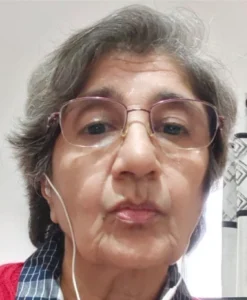
Dr Maya Valecha, Gynecologist, MD,
by training Social and political activists.
Universal Health Organization, Committee member
Improving Public Education on Cervical Cancer: Dr. Maya Valecha’s Insights
The weekly newsletters bring the updates on the science, battered and bruised during the pandemic, legal updates and impact of activism for a just society, across the world. These are small steps to promote Transparency, Empowerment and Accountability – the ethos of the UHO.
Announcement: Membership & endorsements to the UHO invited: https://uho.org.in/member.php
Also Read:
Universal Health Organisation (UHO) Weekly Newsletter – 17 JULY 2026