

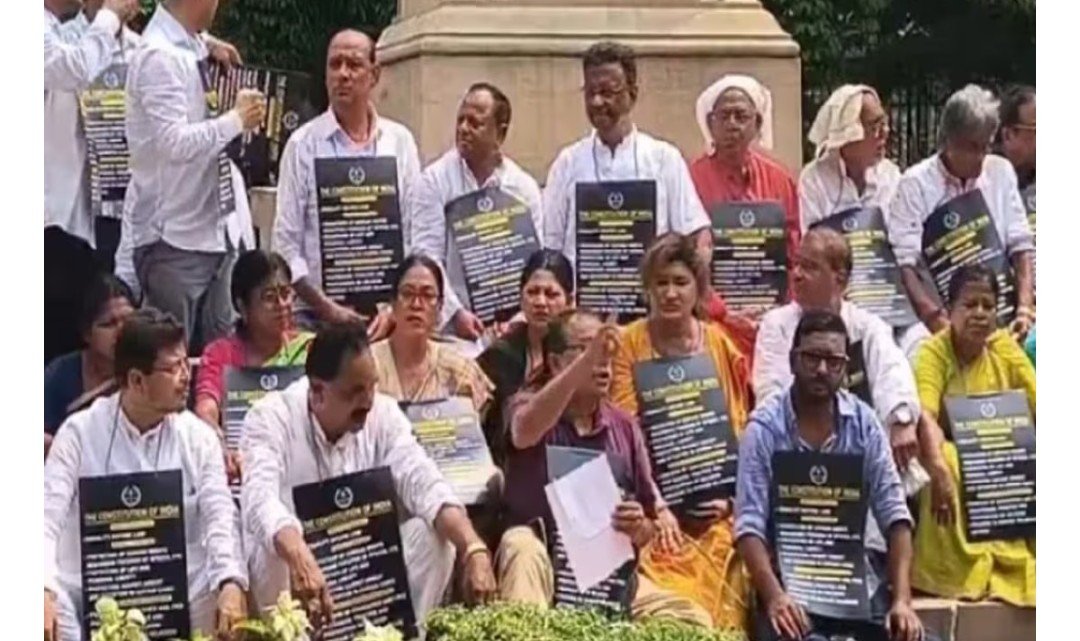
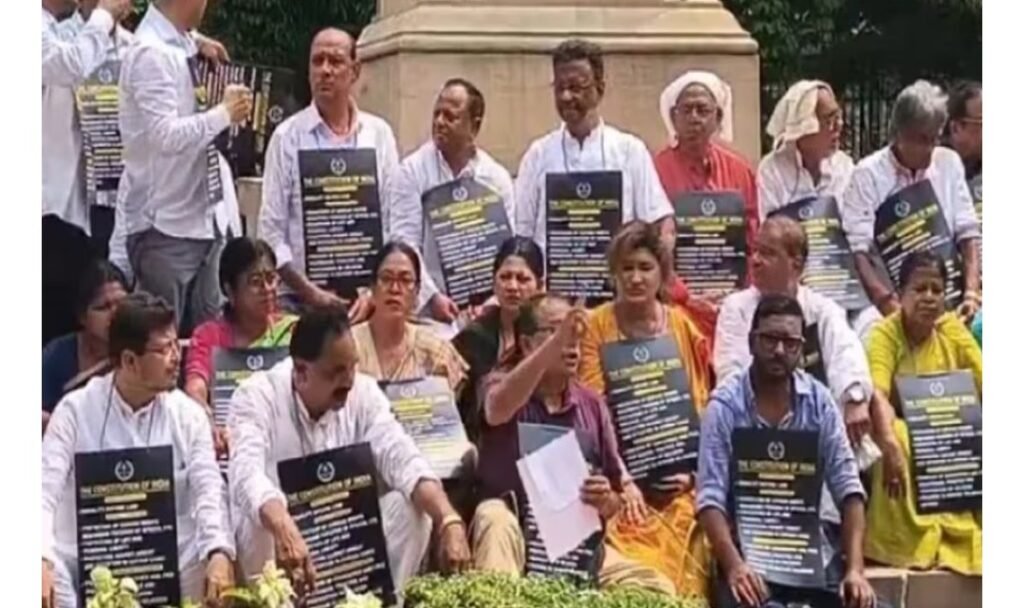
The Trinamool Congress suffered a crushing defeat in the recent West Bengal Assembly elections. Following this defeat, the TMC organized a massive protest against the BJP-led Suvendu Adhikari government in West Bengal, protesting the widespread post-election violence and the removal of vendors from railway stations. This was the TMC’s first major, coordinated protest after being ousted from power after 15 consecutive years. The protest included Shobhandeb Chattopadhyay, Nayana Banerjee, Kunal Ghosh, and Ritabrata Banerjee. The Mamata Banerjee-led TMC party had hoped to reassert its former strength by raising issues related to public participation through this movement. However, with only 35 of its 80 MLAs attending the event, the TMC’s position appeared to be weakening rather than strengthening. The success of the protest has fueled speculation in political circles about potential divisions within the organization.
Shovandeb Chattopadhyay, considered the party’s choice for the post of Leader of the Opposition, defended the TMC’s Maha Dharna, dismissing speculation of internal strife. He stated that many MLAs could not attend the event due to organizational responsibilities and other practical reasons. Chattopadhyay stated that approximately 35 MLAs were present at today’s event. Many MLAs were busy with party workers in post-election violence-affected areas, and therefore could not attend. Furthermore, the program was announced only a day in advance, making it difficult for MLAs living in remote areas to reach it.
This protest is also considered significant because it took place a day after an important meeting in Kalighat. According to party sources, several MLAs at the meeting stated that the Trinamool Congress cannot reestablish itself through mere strategic meetings and needs to reconnect with the people at the grassroots level.
According to party sources, at a meeting held on Tuesday in the presence of party chief Mamata Banerjee and National General Secretary Abhishek Banerjee, some MLAs expressed concern over the party leadership’s alleged absence from the street protests following the election defeat. Several MLAs reportedly said that holding meetings behind closed doors would not be helpful for a party seeking to regain lost political ground.
The Trinamool Congress’s political identity has long been built on movements. From the Singur and Nandigram movements to the street campaigns against the Left Front government, mass movements have played a significant role in the party’s politics. Trinamool MLAs staged a sit-in protest in front of the statue of B.R. Ambedkar in the Assembly. They protested eviction drives, demolitions of buildings by bulldozers, and alleged post-election violence. Political analysts say the relatively low turnout at the first major protest by Trinamool MLAs since the change of power raises questions about how effectively the party will adapt to the role of opposition party after a long period in power.