

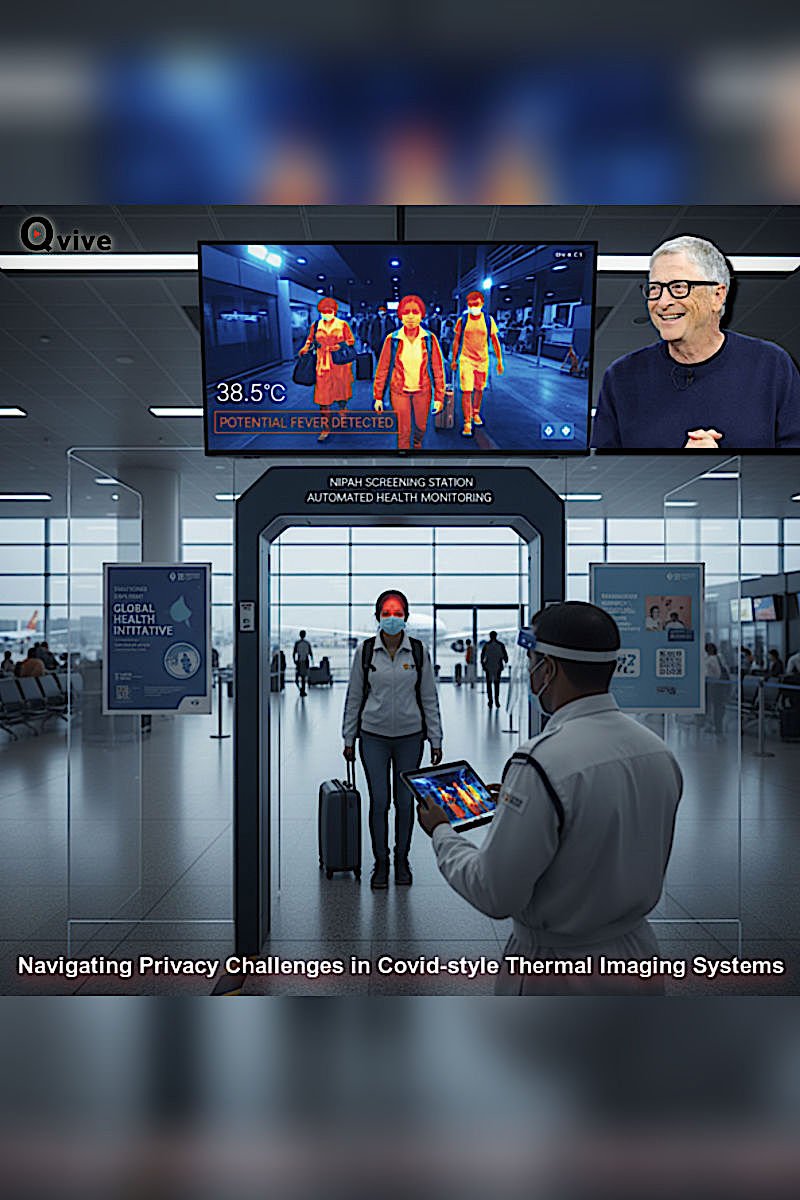
The Next Pandemic is being prepared by Bill Gates: Insights and Implications
One of the reasons why many people believe that the next pandemic is being prepared by Bill Gates is his involvement in the Event 201 simulation. In October 2019, the Gates Foundation, along with the Johns Hopkins Center for Health Security and the World Economic Forum, hosted a simulation exercise that modeled the outbreak of a novel coronavirus. Many people became concerned after the simulation, which seemed to predict the COVID-19 pandemic, suggesting that Bill Gates and others are somehow behind the outbreak.
Could the “Nipah” virus that has popped up in Southern India be the “next pandemic,” according to Bill Gates?
The Dangers of Gain-of-Function Research: A Study of the Nipah Virus
Insights from the molecular biologist’s testimony before the Senate regarding gain-of-function research and its potential risks. Statistics on the lethality of the Nipah virus (60% fatal) and possible outcomes if such pathogens were to be released. The ethical considerations and regulatory needs surrounding high-risk biological research.
Thermal Screening in Indian Airports: From COVID to the Present Nipah Virus
A peer-reviewed study has raised concerns about the accuracy of thermal imaging temperature checks widely used during the COVID-19 pandemic at airports, schools, workplaces, and sports venues. The study, conducted by IPVM and accepted into the Journal of Biomedical Optics, tested seven thermal imaging devices and found that several systems produce inaccurate temperature readings.
Thermal cameras detect infrared radiation to measure surface temperatures from a distance. While originally developed for industrial or military applications, their use expanded dramatically during the COVID-19 pandemic for health screening in airports, workplaces, schools, and other public venues. However, their integration with facial recognition systems and networked data infrastructures transforms them into powerful surveillance tools able to track lots of people together.
The U.S. Food and Drug Administration (FDA) issued a public alert warning that improper use and marketing of thermal imaging systems could result in unreliable temperature measurements, posing potentially serious public health risks. FDA’s chief medical officer, William Maisel, emphasized that while thermal imaging can be a useful tool for detecting elevated temperatures, it is not an effective diagnostic device for COVID-19 and must be used properly to avoid inaccuracies.
Again, governments and organizations are exploring thermal imaging technology to help reopen economies by detecting individuals who may have elevated temperatures, a symptom associated with Nipah virus. However, thermal imaging does not specifically identify Nipah virus; it only measures surface temperatures.
How Thermal Imaging Works:
They identify elevated skin temperatures (EST) that might suggest fever but can also reflect non-COVID-19-related reasons (e.g., pregnancy or medications).
‘Fever detection’ cameras to fight coronavirus? Experts say they don’t work.
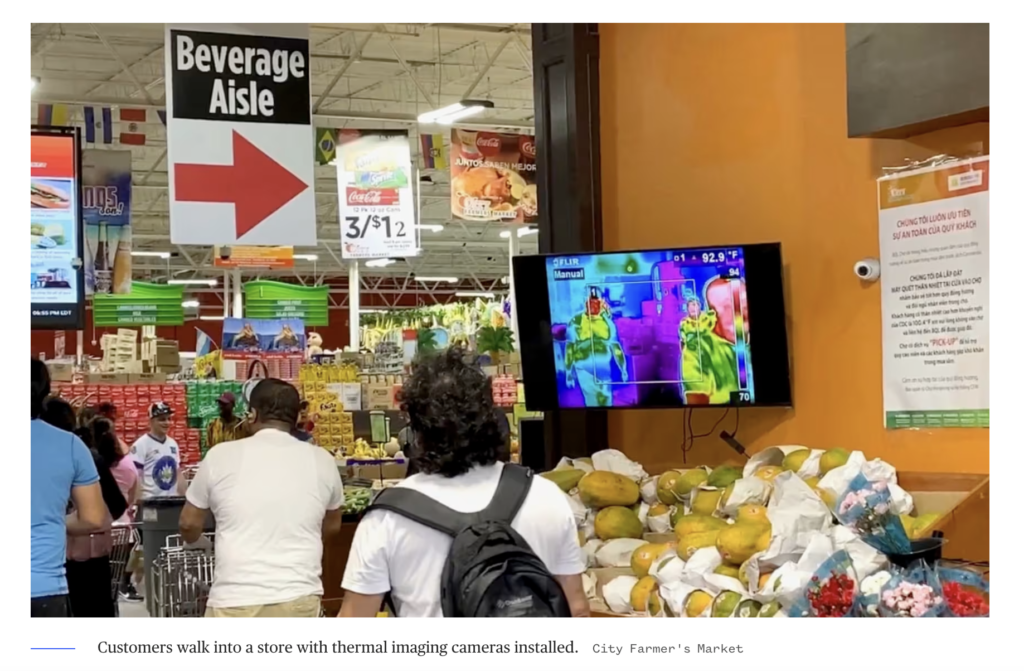
Limitations of the Technology:
Thermal imaging is less reliable in crowded public places due to the movement of numerous people at once, making accurate readings difficult.
Other factors, such as environmental conditions and individual health variations, can affect temperature readings.
FDA specifies that this technology should operate in controlled environments and not be used as a standalone diagnostic tool.
Privacy Issues Raised by Thermal Cameras: The Potential for Mass Surveillance Without Informed Consent
The deployment of thermal cameras, especially in public and semi-public spaces, has raised profound privacy concerns, particularly regarding the potential for mass surveillance without informed consent.
Privacy as a Fundamental Right
Privacy is widely recognized as a fundamental human right in democratic societies. The Universal Declaration of Human Rights (Article 12) and the International Covenant on Civil and Political Rights (Article 17) both affirm the right to privacy against arbitrary interference. In the context of surveillance technologies like thermal cameras, this right is threatened when individuals are monitored or have their biometric data collected without meaningful consent or oversight.
Privacy and Civil Rights Concerns
- Discrimination Risks: Temperature screenings risk falsely identifying individuals as COVID-19 positive, leading to potential discrimination and loss of opportunity.
- Surveillance Expansion: Thermal cameras combined with facial recognition raise concerns of increased surveillance, chilling effects on free expression, and targeting of vulnerable populations.
- Advocacy Positions:
- The Electronic Frontier Foundation (EFF) cautions against widespread public monitoring with thermal cameras.
- The American Civil Liberties Union (ACLU) demands public health justification, transparency, non-coercive practices, and confirmation of fever with clinical-grade devices.
- Long-term Surveillance Fears: Concerns exist that pandemic-related surveillance tools may persist beyond the health crisis.
Informed Consent: Legal and Ethical Foundations
Informed consent is central to ethical data collection practices. It requires that individuals understand what data is being collected about them, how it will be used, who will access it, and what risks are involved. When thermal cameras are deployed covertly or without clear notification—especially when combined with facial recognition—individuals may be unaware that sensitive health data (body temperature) or biometric identifiers are being captured. This lack of transparency undermines autonomy and violates established norms of consent.
Mass Surveillance: Risks Amplified by Technology
Mass surveillance refers to the indiscriminate monitoring of large populations rather than targeted individuals suspected of wrongdoing. Thermal cameras enable this by allowing authorities or private entities to scan crowds quickly for elevated temperatures—a proxy for health status—without individual engagement or opt-in procedures. When paired with networked databases and AI-driven analytics (e.g., facial recognition), these systems can track movements across time and space, creating detailed profiles without explicit permission from those observed.
Technological Limitations Exacerbate Privacy Risks
Thermal imaging accuracy varies with environmental conditions; false positives/negatives are common.Yet once captured—accurately or not—temperature readings can become part of permanent records linked with identity information via facial recognition. This creates risks not only for privacy but also for discrimination if access to services/employment hinges on these flawed metrics.
The use of thermal cameras raises significant privacy issues because it enables mass surveillance without informed consent—a practice at odds with fundamental rights enshrined in international law and ethical frameworks. The risk is amplified when these devices are combined with other identification technologies such as facial recognition, leading not only to potential abuses but also long-term shifts in social norms regarding personal autonomy.
Current Use Cases
| Sector | Examples and Details |
|---|---|
| Airports | Usage in China, Japan, South Korea, Singapore, Canada, India since SARS and swine flu outbreaks; Italy recently adopted; UK and US more cautious or evaluating. |
| Transportation | China employs thermal cameras combined with facial recognition in metros and railways; Dubai police use smart helmets with thermal imaging. |
| Employee Screening | Common in China and South Korea; growing adoption in Brazil, India, and some US companies (e.g., Amazon, Tyson Foods). |
| Public Offices | Some offices (e.g., Brasov, Romania) use thermal cameras for entry control, sometimes denying access based solely on camera readings. |
| Customer/Patient Screening | US businesses and hospitals increasingly use thermal cameras to screen customers and patients (e.g., grocery stores, Wynn Resorts, Tampa General Hospital). |
| Public Surveillance | China extensively uses thermal cameras combined with facial recognition in public spaces; thermal drones and glasses deployed in Asia; limited and controversial use in the US and Europe. |
Regulatory Responses and Guidance
| Region/Country | Regulatory Stance and Key Points |
|---|---|
| United States | EEOC allows temperature checks during COVID-19 but does not differentiate between handheld and thermal scanning. Privacy groups urge caution. |
| France (CNIL) | Prohibits automated thermal camera temperature collection and storage of data; manual temperature checks without recording are allowed. |
| Spain | Views temperature checks as processing sensitive health data; requires informing individuals and allowing objections; lawful basis limited to legal obligation or public health interest, excluding consent or legitimate interest. |
| Italy | Considers body temperature data as personal data; recording only permitted to document access refusals; special COVID-19 legislation provides temporary lawful grounds. |
| Belgium | Taking temperature alone, without recording, is not personal data processing under GDPR. |
| Netherlands | Temperature is personal data; processing requires lawful basis and DPIAs; automated systems controlling access based on temperature are regulated under GDPR. |
| United Kingdom | ICO allows thermal cameras only after Data Protection Impact Assessments (DPIA); use must be necessary, proportionate, and respect reasonable expectations. |
| Czech Republic | Allows processing based on legitimate interests and health data provisions but stresses continual necessity assessment and proportionality. |
| Germany | Some DPAs prohibit thermal imaging for entry screening; investigations underway over GDPR breaches; alternative health measures recommended. |
| Singapore | Encourages use of non-personal data collecting solutions where possible (e.g., no temperature recording or facial images). |
- European Data Protection Board (EDPB): Has not issued specific guidance yet; harmonized guidance may be required due to diverse national approaches.
Ref:
- NBC News. “Fever detection cameras to fight coronavirus? Experts say they don’t work.” [ https://www.nbcnews.com/tech/security/fever-detection-cameras-fight-coronavirus-experts-say-they-don-t-n1170791]
- U.S. Food and Drug Administration. “FDA Alerts Public about Improper Use of Thermal Imaging Devices; Warns Firms for Illegally Offering Thermal Imaging Systems for Sale.” [https://www.fda.gov/news-events/press-announcements/fda-alerts-public-about-improper-use-thermal-imaging-devices-warns-firms-illegally-offering-thermal]
- Ioannou, L. G., et al. “Non-contact infrared thermometry for assessing human internal/core temperature: A comprehensive review and practical checklist.” Temperature (Academic Journal)
- Chapple, Michael. The Official CompTIA Security+ Study Guide (SY0-601). (PRINT)
- https://www.eff.org/deeplinks/2020/04/thermal-imaging-cameras-are-still-dangerous-dragnet-surveillance-cameras
- https://fpf.org/blog/thermal-imaging-as-pandemic-exit-strategy-limitations-use-cases-and-privacy-implications/
- https://www.fox10phoenix.com/news/false-sense-of-security-study-finds-some-thermal-imaging-temperature-checks-show-inaccurate-readings
Also Read: