

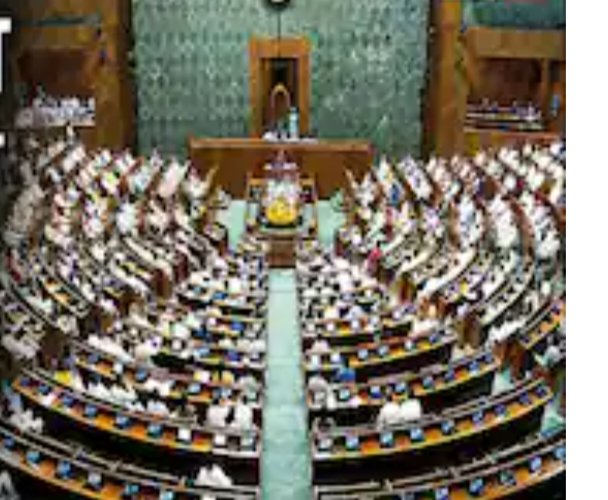
On November 27, 2026, the Union Ministry approved a revised Delimitation Bill. This has brought renewed attention to the body responsible for redrawing electoral constituencies. Delimitation involves setting the boundaries of Lok Sabha and state assembly constituencies and readjusting the allocation of seats based on population across the country’s electoral system.
Under the Delimitation Bill introduced in April 2026, the Commission has three primary members. Its chairperson must be a sitting or retired Supreme Court judge. The second member is the Chief Election Commissioner of India or an Election Commissioner nominated by the CIA. The third is the State Election Commissioner of the relevant state. This arrangement brings national and state election officials into the process.
The April 2026 bill also provides for associate members to assist the Commission. Each state can have a maximum of 10 such members: five Lok Sabha MPs nominated by the Speaker of the Lok Sabha and five MLAs nominated by the Speaker of the State Assembly.
If a state has fewer than five Lok Sabha MPs, all of its MPs can become associate members. They can make suggestions and assist in delimitation, but they cannot vote in the Commission’s meetings or approve its final decision.
According to the Delimitation Act 2002, the Central Government appoints the Commission’s Chairperson. The government constitutes the Commission through a notification in the Official Gazette. The notification may specify the Commission’s tenure and the timeframe for completing its work. These can be amended if necessary. Therefore, it is incorrect to say that the President appoints the Chairperson in consultation with the Election Commission. According to the Act, the responsibility for forming the body lies with the Central Government.
The constitutional framework for delimitation derives primarily from Articles 82 and 170. Article 82 provides for the readjustment of Lok Sabha constituencies, and Article 170 deals with the constituencies of State Legislative Assemblies.
Orders issued by the Commissioner and published in the Official Gazette have the force of law under the Delimitation Act, 2002. Members of Parliament and state legislatures cannot amend these orders. However, judicial review is not entirely barred. On July 23, 2024, in the Kishore Chandra Chhaganlal Rathore case, the Supreme Court held that limited review may be possible in exceptional circumstances. The court may intervene if an order is manifestly arbitrary or violates constitutional provisions.