

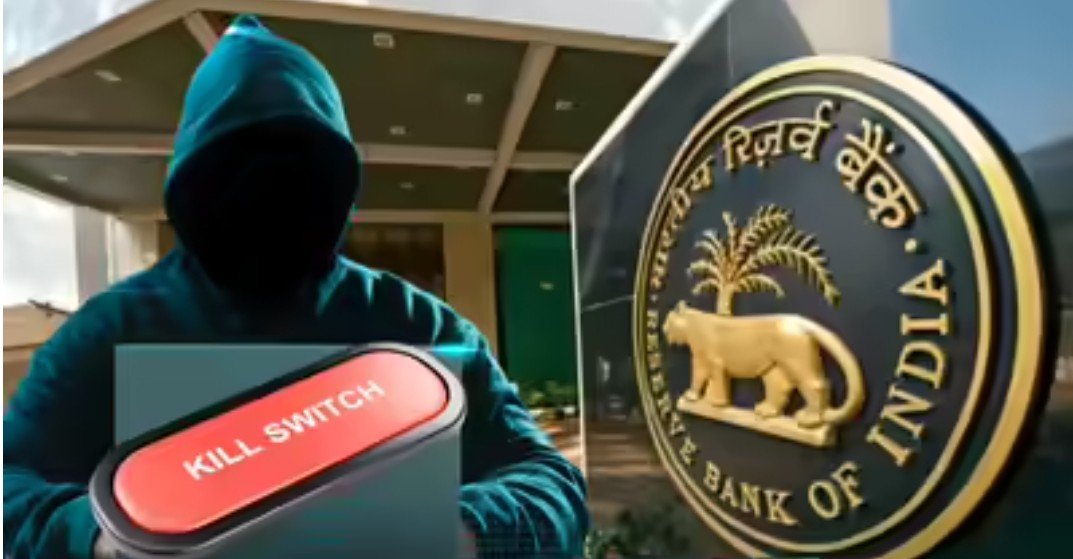
The Reserve Bank of India (RBI) is considering introducing a ‘kill switch’ for all debit transactions, i.e., money deducted from a bank account, to prevent digital fraud. The regulator released its annual report on May 29th. It stated that if a user suspects a transaction, they can immediately use the kill switch to stop it. In fact, the regulator recently suggested that for the first time, large person-to-person UPI transactions could take a shorter processing time to prevent fraud. The kill switch is being planned after that.
The RBI has stated that a ‘switch-on’ and ‘switch-off’ feature will be considered for all digital payment methods. Additionally, a ‘kill switch’ will be introduced that will allow all transactions from the account to be blocked at once. This feature will help build customer confidence and prevent fraud in digital payment transactions.
It’s worth noting that such a feature is already available for card payments for domestic, international, and “tap and pay” transactions. Customers can access this feature by visiting their bank’s website or app. Customers can also set or change a limit for each type of transaction. The RBI stated that this gives customers greater control over their digital payment use. AI will score the risk of digital payments.
The central bank also plans to complete and launch the “Digital Payments Intelligence Platform” (DPIP) this year.
This platform uses AI (Artificial Intelligence) to instantly monitor every online payment in India.
As soon as a payment is made, the system provides real-time information about the risk of fraud or scam in that payment.
An RBI survey revealed that 52 percent of users have adopted digital payments, primarily due to its speed and convenience.
A “kill switch” refers to an emergency button that, when pressed, immediately shuts down any running system or process. For example, factory machines have a large red button that, when pressed during an accident, brings the entire machinery to a standstill within a second. In the digital world, a “kill switch” performs the same function.