

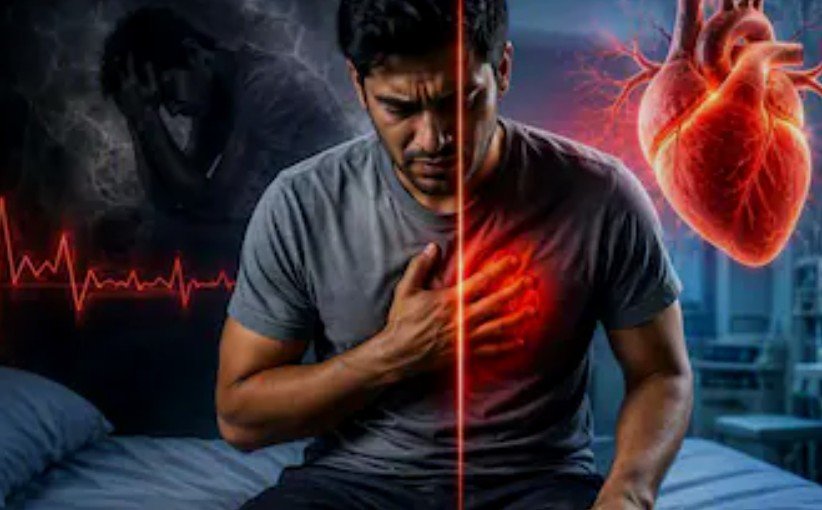
Sudden chest tightness, rapid heartbeat, and difficulty breathing—if someone experiences any of these symptoms at the age of 25-30, the only question that arises in their mind is: Am I having a heart attack or is it just a panic attack?
Dr. Anshul says that when a person experiences extreme stress or fear, the hormone adrenaline increases rapidly in the body. Similarly, many changes occur in the body during a heart attack. Some similar symptoms can be seen in both conditions, such as:
Rapid heartbeat
Excessive sweating
Nausea
Feeling anxious or afraid
Heaviness in the chest
The symptoms of both are similar, which is why people often don’t know whether they are having a panic attack or a heart attack.
Doctors say that people often think that heart attacks only affect the elderly. Therefore, when young people experience chest pain in their 20s or 30s, they attribute it to stress, excessive coffee consumption, or lack of sleep.
In most cases, these fears are unfounded, and the problem is actually related to anxiety or stress. However, this doesn’t mean that young people can’t develop heart disease. Heart problems are increasing among young people these days.
These days, not only the elderly but also young people are at risk for heart disease, due to several factors, such as:
Smoking or vaping
Excessive drug use
Congenital heart rhythm problems
Family history of heart disease
Poor lifestyle
How to differentiate between a panic attack and a heart attack?
Some symptoms of a panic attack and a heart attack are similar, but they can be identified by changes in the body, such as:
Chest pain often occurs after a stressful situation or emotional trigger, and the condition worsens within minutes. In this situation, it may feel like you’re losing control or that something bad is about to happen. Then, after a while, the symptoms subside. If you notice such signs, it’s a panic attack.
In the case of a heart attack, chest pain gradually increases and doesn’t subside easily. Resting or deep breathing doesn’t provide relief. Gradually, the pain of a heart attack can spread to the shoulders, arms, back, neck, or jaw. Cold sweats and changing body positions don’t make much difference. However, walking, climbing stairs, or any physical activity can worsen the pain.