

Karnataka Deputy Chief Minister DK Shivakumar addressed the media upon his return from the World Economic Forum (WEF) in Davos 2026. He shared the upcoming opportunities for the state. His team connected with global business leaders, policymakers, and investors, positioning Karnataka as a prime destination for innovation and economic growth.
Highlights from the Davos Visit
- Investment Commitments
- The delegation secured 45 Memoranda of Understanding (MoUs) with multinational companies, spanning sectors like technology, manufacturing, and renewable energy.
- Notable discussions included partnerships with 65 countries, with a focus on infrastructure, sustainability, and skill development.
- DK Shivakumar emphasized Karnataka’s potential in semiconductors, AI, and green energy, attracting interest from firms like Tesla, NVIDIA, and Siemens.
- Global Collaborations
- Meetings with Swiss, German, and Japanese delegations advanced collaborations in precision engineering, mobility solutions, and smart cities.
- The state’s “Beyond Bengaluru” initiative garnered attention, promoting tier-2 cities like Mysuru and Mangaluru as emerging hubs.
- Focus on Sustainable Development
- Karnataka showcased its renewable energy roadmap, targeting 50% green energy by 2030.
- Discussions with the World Bank explored funding for urban mobility projects, including metro expansions and EV infrastructure.
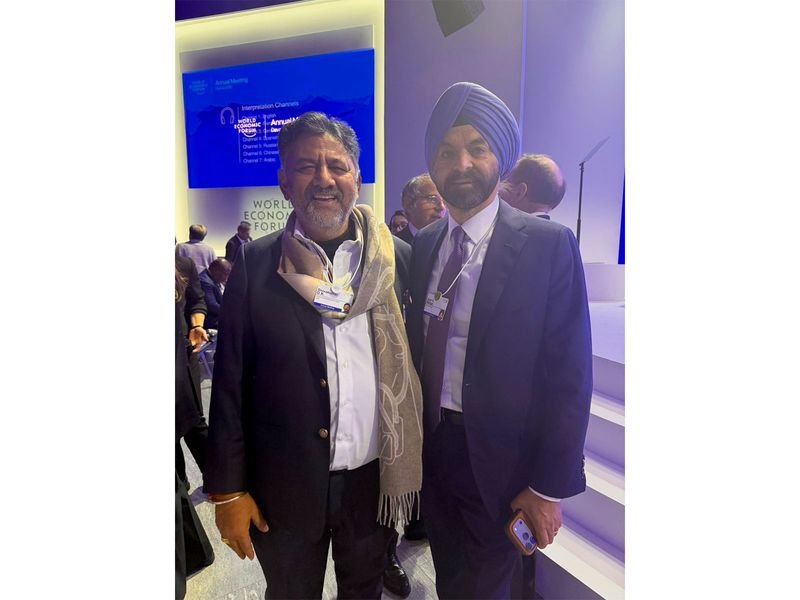
Deputy CM Shivakumar
- “Davos was a platform to reaffirm Karnataka’s role as India’s tech capital. We’re not just attracting investments but also fostering long-term partnerships.”
- “Our youth are our strength. We’re creating 1 million jobs in the next 5 years through these collaborations.”
AI’s Impact on Employment
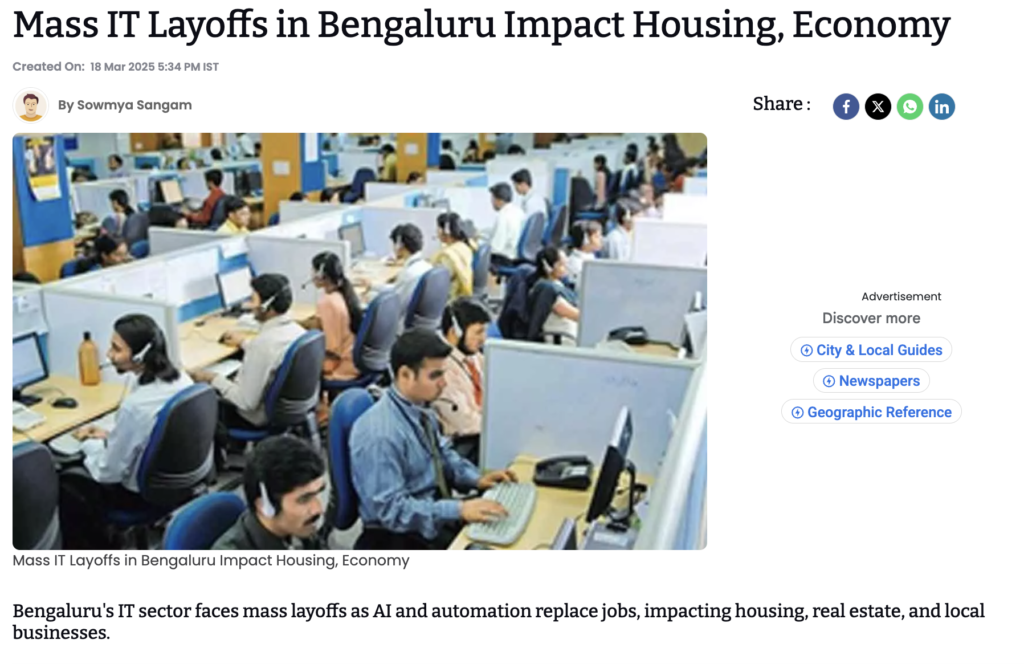
Reports indicate that over 10,000 jobs have been lost in 2025 due to AI advancements, with India’s largest IT services company, Tata Consultancy Services (TCS), announcing plans to cut approximately 12,000 jobs, or 2% of its global workforce, primarily in middle and senior management. While TCS attributes these layoffs to “limited deployment opportunities and skill-mismatch” rather than directly to AI, the broader sentiment in the industry links these changes to the growing influence of AI and automation. Microsoft, another major tech player, has also laid off over 15,000 employees globally in 2025, further underscoring the widespread nature of these workforce adjustments.
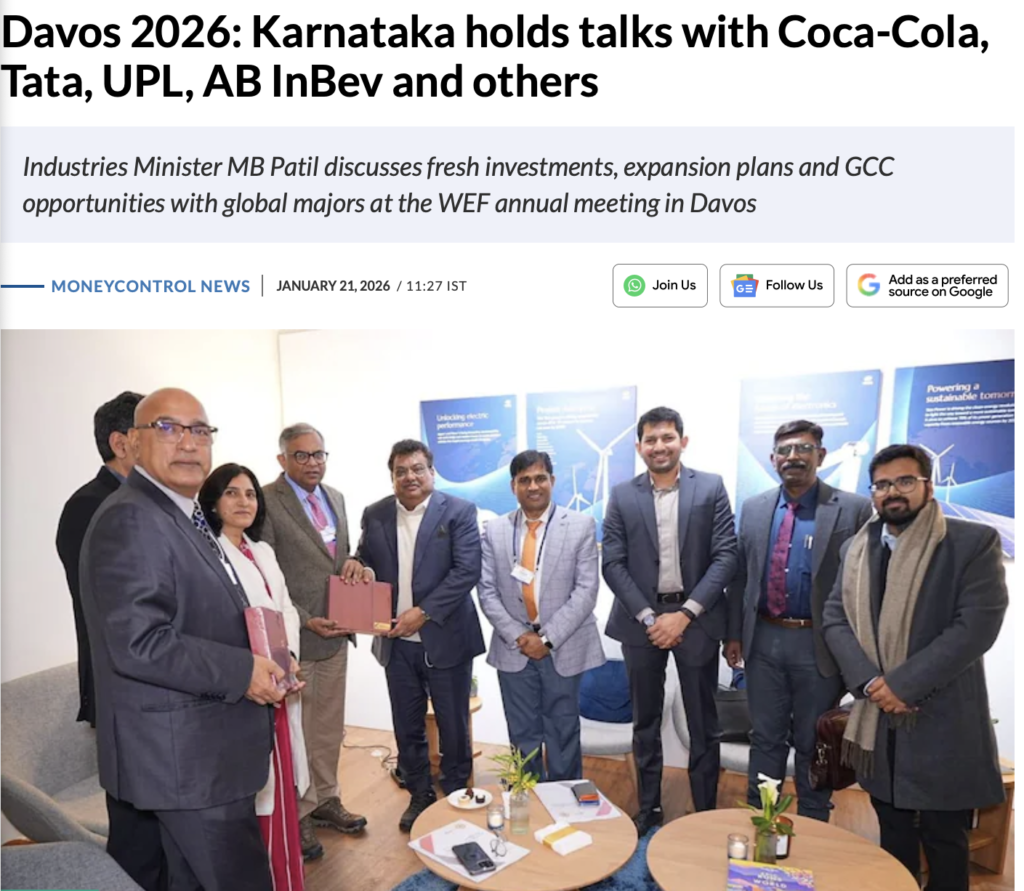
* Menzies Aviation to invest $10M and launch new services in Bengaluru
* UPL, Coca-Cola, AB InBev, NFW Earth, Tata Group discussed Karnataka expansion Ref: Moneycontrol
Challenges and Road Ahead
- Infrastructure gaps in rural connectivity and power supply were acknowledged, with plans to address them through public-private partnerships.
- The government aims to streamline policies to reduce bureaucratic hurdles for investors.
DK Shivakumar’s recent return from the World Economic Forum (WEF) in Davos has sparked a heated debate over the state’s actual gains from the high-profile summit. While the government claims it secured major investments, critics argue that Bengaluru—India’s Silicon Valley—is increasingly falling under the influence of global elites, with little tangible benefit for the common citizen.
While the interaction highlighted collaborations and economic opportunities, it also raised questions about the handling of sensitive information and public accountability.
Ethical and Privacy Concerns
- Transparency in Governance
- Issue: The briefing lacked detailed disclosures about the nature of deals or MOUs signed, raising concerns about public oversight.
- Shouldn’t such high-profile engagements mandate full transparency to ensure public trust?
- Data Privacy Risks
- Issue: References to “smart cities” and digital infrastructure projects did not address data protection measures for citizens.
- How will Karnataka safeguard citizen data in partnerships with global tech firms?
- Conflict of Interest
- Issue: The involvement of private companies in public projects without competitive bidding details could hint at favoritism.
- Were ethical guidelines followed to prevent conflicts of interest?
South Central | "Sometimes you have to take the advice of the Opposition as well," says Karnataka Deputy CM DK Shivakumar as he now decides to go to Davos, after CM and other leaders urge him to be a part of the discussions@DKShivakumar #Davos #WorldEconomicForum pic.twitter.com/nf54DbRpi1
— ET NOW (@ETNOWlive) January 20, 2026
Davos 2026: WEF’s “Mass Destruction” Plans for Humanity?
The WEF, often seen as a congregation of the world’s wealthiest and most powerful figures, has long faced accusations of pushing agendas that prioritize corporate interests over democratic governance. A section of conspiracy theorists and political commentators warn of WEF’s alleged “Great Reset”—a plan to restructure global economies in ways that could erode national sovereignty.
DK Shivakumar’s participation in Davos 2026 has only fueled these suspicions. While the state government touts MoUs worth crores, skeptics question whether these deals truly serve Karnataka or merely expand corporate dominance in sectors like infrastructure, AI, and green energy—areas where WEF-connected organizations have a strong influence.
Insights
- Global Economic Forum Participation
- Karnataka’s delegation actively participated in a global forum (similar to Davos), meeting with over 65 heads of states and 450+ major global companies, business leaders including Donald Trump, Fortune 500 CEOs, and international ministers.
- Discussions centered on investments in sectors such as data centers, clean and renewable energy, aviation, aerospace, electric vehicles, advanced manufacturing, electronics, nano-technology, and artificial intelligence (AI).
- The delegation emphasized Karnataka’s sufficient power supply, clean energy resources, and robust human capital (notably medical professionals and engineers).
- High-profile leaders such as Mark Rutte (NATO Secretary General), finance ministers, and international economists visited and interacted with Karnataka representatives.
- Karnataka’s Strengths and Opportunities
- Karnataka produces a large number of professionals annually: approximately 13,940 doctors, numerous engineers, nurses, and paramedical staff. The highest from a single state, emphasizing its strength in healthcare and medical education.
- There is a focus on developing data centers, clean energy projects (solar, wind, pumped storage, hydrogen), and advanced manufacturing.
- The state hosts major IT companies like Wipro, Infosys, Cognizant, Tata Consultancy Services, and aerospace firms, supporting a thriving technology ecosystem.
- There is significant interest from Swiss and South American companies for investment in Karnataka.
- A focus on expanding the Artificial Intelligence city and creating a business-friendly environment with permanent zones to attract global investors.
- Urban Planning and Mobility
- Karnataka plans to develop a comprehensive 25-year urban mobility plan covering all towns and cities, including mandatory ring roads and mobility grids to reduce traffic congestion and improve infrastructure.
- Emphasis on two-tier and three-tier cities development to prevent overconcentration in large urban centers, promoting vibrant smaller towns to retain youth and freshen minds after work.
- The state is adopting best practices from Japan and Europe, especially in tunnel and transport infrastructure, including elevated corridors and buffered zones to ease traffic.
- Efforts to respect traffic laws and foster a culture of discipline on the roads, ensuring safety and efficiency.
- Infrastructure Development
- Engagements with Japan’s JICA for metro and water projects and tunnel construction have been highlighted.
- Karnataka is engaging with global partners from Switzerland, South America, Japan, and other regions to foster investment and technology exchange.
- Plans for underground cable networks to avoid disruptions and improve city aesthetics, despite some resistance from cable operators due to business concerns.
- Development of parking solutions using stacked parking and lifts to optimize space utilization in urban areas.
- Foreign Direct Investment and Business Environment
- Karnataka is actively promoting FDI, emphasizing clear guidelines, ease of doing business, and reducing bureaucratic delays through targeted meetings with the Chief Minister.
- Investments worth about 11 lakh crore INR are underway, with 50% already grounded, led by global investors and local leaders like M.B. Patil.
- The state aims to leverage its clean energy resources, skilled workforce, and infrastructure to attract more investments.
- There is a conscious decision to avoid signing MOUs hastily, preferring to showcase Karnataka’s strengths and let investors decide.
- Social and Political Context
- The speaker addresses political controversies, notably criticisms by Rahul Gandhi and others regarding the economy, defending Karnataka’s progress and unity.
- He underscores the importance of respecting the constitution, culture, and law, fostering unity among citizens.
- The political discourse acknowledges regional diversities and stresses the role of Karnataka as a model state for development and business.
Bengaluru, Karnataka: On DCM, D. K. Shivakumar in Davos calling investor to Bengaluru, Former DCM and Current BJP MLA, C. N. Ashwath Narayan says, “Davos is not just a place for investment, it's a place to build relationship. See, not necessarily you need not go searching for… pic.twitter.com/it3FozSRJb
— IANS (@ians_india) January 24, 2026
Events and Discussions
| Timeframe | Event/Discussion |
| Early meeting | Interaction with global leaders, business heads, and ministers at the economic forum. |
| Urban planning | Discussion on 25-year mobility plan, infrastructure development including tunnels and roads. |
| Investment talks | Engagements with foreign investors, Swiss delegation, South American companies, and IMF economist. |
| Infrastructure | Adoption of Japanese best practices, JICA collaboration on metro and water projects. |
| Technology focus | Promotion of AI city, nano-technology, clean energy, electric vehicles, and advanced manufacturing. |
| Political discourse | Defending Karnataka’s economic growth amid political critiques and emphasizing national unity. |
| Closing remarks | Emphasis on Karnataka’s strengths, future plans, and call for collaborative governance. |
Quick Recap
| Parameter | Data/Estimate |
| Doctors produced annually | 13,940 |
| Investment volume underway | ₹11 lakh crore (50% grounded) |
| Number of participating countries | 65 heads of state/government |
| Number of companies engaged | 45 companies in bilateral discussions |
| Tunnel infrastructure | 30-40 tunnels over distances (200+ km span) |
| Urbanization projection | 70% of Karnataka’s population in urban areas over next 25 years |
Recommendations and Future Plans
- Prepare and implement a compulsory mobility plan for all towns and cities with ring roads and grids, avoiding waste of time and resources.
- Foster development in 2nd and 3rd tier cities to create vibrant local economies and reduce pressure on major cities.
- Promote ease of doing business by reducing application processes (currently 27-28 steps) to speed up investment inflows.
- Strengthen legal enforcement and road discipline to improve traffic safety and urban mobility.
- Expand infrastructure projects with global partnerships, particularly in metro, tunnels, and water supply.
- Develop permanent business zones and infrastructure to attract and retain global investors.
- Implement innovative parking solutions and underground utilities to enhance urban living standards.
- Encourage public-private partnerships in infrastructure and urban development.
While Karnataka’s global outreach is commendable, ethical governance requires balancing economic growth with privacy and transparency. The government must address these concerns to maintain public confidence.
For now, the question lingers: Is Namma Karnataka becoming a playground for WEF’s globalist vision?
Maharashtra CM Devendra Fadnavis signed MoU with Indian company JSW in Davos, Switzerland 🇨🇭 (which may remain on paper only)
— Veena Jain (@Vtxt21) January 22, 2025
Believe it or not, nowadays this Davos investment summit is nothing but an Holiday trip for Politicians & Govt officials 🙌
pic.twitter.com/1T504i9T5W
Also Read: