

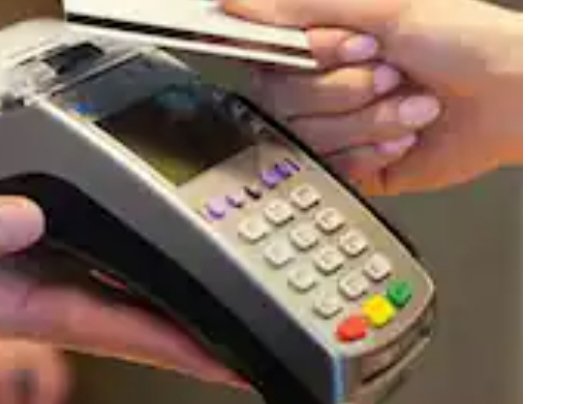
As technology advances, the way people work is also changing. Cash was used for payments, then debit cards and credit cards, and then UPI, meaning the method of payment became easier and easier. Some people still prefer card payments over UPI. However, while previously one had to swipe the debit or credit card in the machine, then enter the PIN and wait. Now, new technology has come into play in which payment is done in just a second by simply taking the card near the machine. This feature is called Tap & Pay, a contactless payment system. People often wonder how money is deducted from their account without touching the card or entering a PIN. Let’s explain how this entire system works and whether your money is truly safe.
The technology behind the Tap & Pay system is called NFC, or Near Field Communication. It works similarly to Bluetooth or Wi-Fi, but with a much shorter range. If you look closely at your card, you’ll see a small Wi-Fi-like mark on it. This mark indicates that your card contains a very fine antenna and a tiny microchip. When the shopkeeper activates the payment machine (POS) by inserting money into it, the machine emits a faint radio frequency signal around itself. As soon as you bring your card or NFC-enabled phone within 2 to 4 centimeters of the machine, the antenna inside the card receives power from the machine’s waves, and the chip is instantly activated. The card then immediately transmits its data to the machine through the air, establishing a connection between the two.
Extreme security measures are taken during this process to prevent anyone from stealing your card number. The card doesn’t send your 16-digit number to the machine, but instead generates a new secret code, a one-time token, for each payment. The machine immediately sends this secret code to your bank’s server. The bank’s computer checks the code correctly and the account balance in just a tenth of a second.
If everything is correct, the bank gives the green light, the machine beeps, and your money is deducted. According to Reserve Bank of India (RBI) regulations, to save time, a PIN is not required for payments up to ₹5,000. However, if the bill is more than ₹5,000, you can tap your card, but the money will only be deducted after you enter your PIN.
Videos often go viral on social media showing a cunning thief carrying a machine and withdrawing money by placing it near people’s pockets. However, this is virtually impossible. First, NFC technology only works when the distance between the card and the machine is less than 4 centimeters and the card is at the correct angle. Secondly, other cards and coins in the wallet can block the signal.
Furthermore, the payment machine is linked to a registered bank account, so a thief cannot use such a machine while concealing their identity. However, for your own satisfaction and complete safety, you can reduce the Tap & Pay limit in your bank’s mobile app or even turn it off when not needed.