

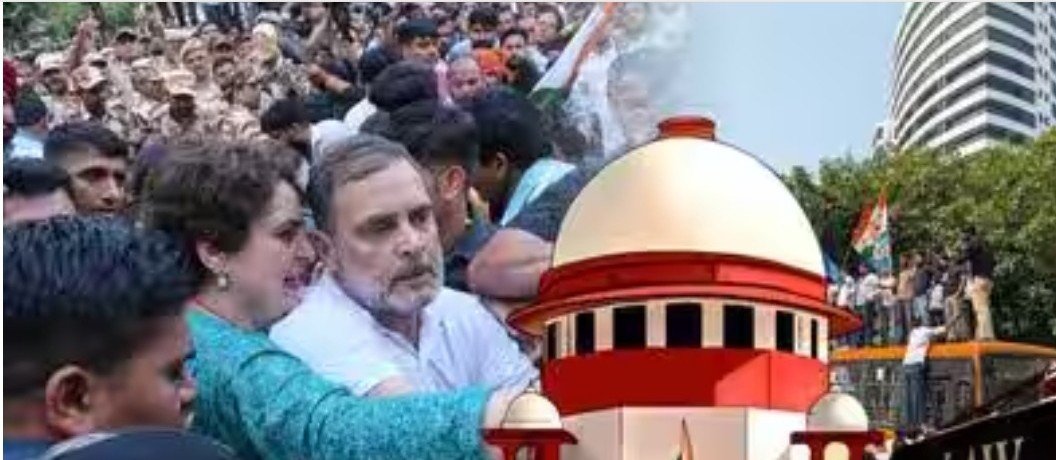
Chief Justice Surya Kant has declined requests from Leader of the Opposition in the Lok Sabha Rahul Gandhi and Congress President Mallikarjun Kharge to meet and submit a memorandum. The Congress leadership wanted to submit a memorandum to the CJI on issues such as the resignation of Chief Election Commissioner (CEC) Gyanesh Kumar, electoral irregularities (‘vote theft’), and the Special Intensive Revision (SIR).
Despite CJI Surya Kant’s refusal to meet Rahul Gandhi, the SIR issue remains a hot topic across the country. Both the ruling party and the opposition are exploiting it in their own ways, and the public is suffering the consequences. Let us examine the legal and moral implications behind CJI Surya Kant’s refusal to meet Rahul Gandhi. Is this move by CJI Surya Kant an honor for the judiciary, or is it simply neglecting its role in this matter by failing to properly perform its duties? Let us examine the key legal and constitutional mechanisms underlying Justice Surya Kant’s refusal to meet with Leader of the Opposition and Congress leader Rahul Gandhi.
1. The Principle of Sub-Judice:The Chief Justice clarified that the issues the opposition leaders wanted to discuss and submit a memorandum on are already pending in the Supreme Court. Under legal decorum, personal discussions between a judge and a political party on any pending matter outside the court are against established ethical norms and judicial integrity.
2. The Principle of Separation of Powers:Under the constitutional scheme, the functions of the judiciary and the executive are divided. The CJI clarified in the letter that the Supreme Court cannot directly interfere in the functioning of institutions like the government or the Election Commission at the administrative level. Such meetings at the administrative level could affect this constitutional balance.
3. Avoidance of Conflict of Interest:The main matter (specifically the Election Commission and the SIR process) about which the opposition wanted to complain is being heard by a bench headed by CJI Surya Kant himself. In such a situation, the judge hearing the case meeting with one of the parties on an administrative basis creates the possibility of a ‘conflict of interest,’ which is why this request was rejected.
4. Administrative vs. Judicial Side:The Chief Justice advised opposition leaders to follow the proper legal and judicial process instead of submitting memorandums at the administrative level. He clarified that if there is a complaint regarding violations of fundamental rights or the electoral process, a formal petition should be filed directly in the Supreme Court under Article 32 of the Constitution, which the Court will hear in a judicial manner.