

Increasing air pollution today is not only an environmental problem but also a major threat to our health. Vehicle exhaust, chemicals from factories, construction dust, and fine particles in the air reach our lungs daily. Consequently, people often wonder whether lungs can recover from pollution damage. Dr. Kuldeep Kumar Grover, Associate Director of the Pulmonology and Critical Care Department at CK Birla Hospital, says the answer depends on the length of time a person has been exposed to pollution, the severity of the damage, and the current state of their lungs.
Dr. Grover explains that when we breathe polluted air, very fine particles like PM 2.5 reach deep into the respiratory system. These particles can reach the tiny air sacs in the lungs and cause inflammation, irritation, and oxidative stress.
Doctors further explain that chronic exposure to pollution weakens the protective layer of the lungs. It can also increase mucus production in the airways. The tiny hair-like structures that clean the lungs, called cilia, gradually become less effective. This can lead to persistent coughing, shortness of breath, wheezing, and frequent respiratory infections. Long-term exposure to pollution also increases the risk of diseases like asthma and chronic obstructive pulmonary disease.
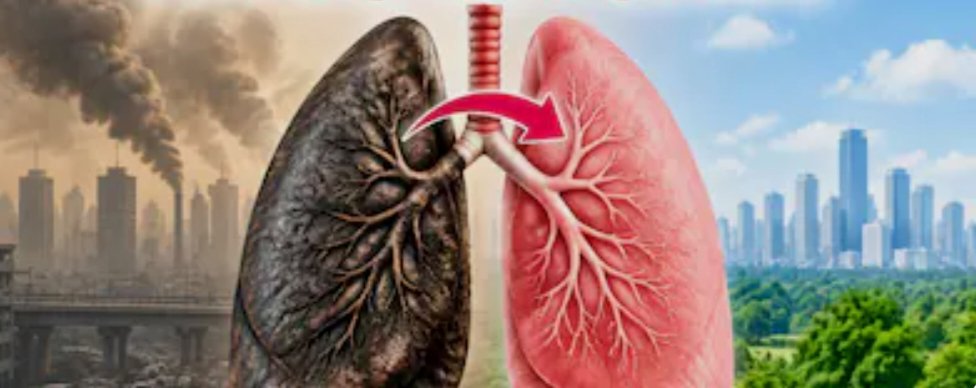
Doctors say that it is often said that pollution can cause lungs to turn from black to pink. However, this is not true; it is simply a myth and a way of expressing one’s own opinion. They say that lungs do not magically change their color, but they do have some capacity to heal themselves. Dr. Grover explains that if exposure to pollution is reduced, lung inflammation can gradually subside over a few months. The inflammation in the airways can be reduced, and the body’s natural cleansing process can be restored.