

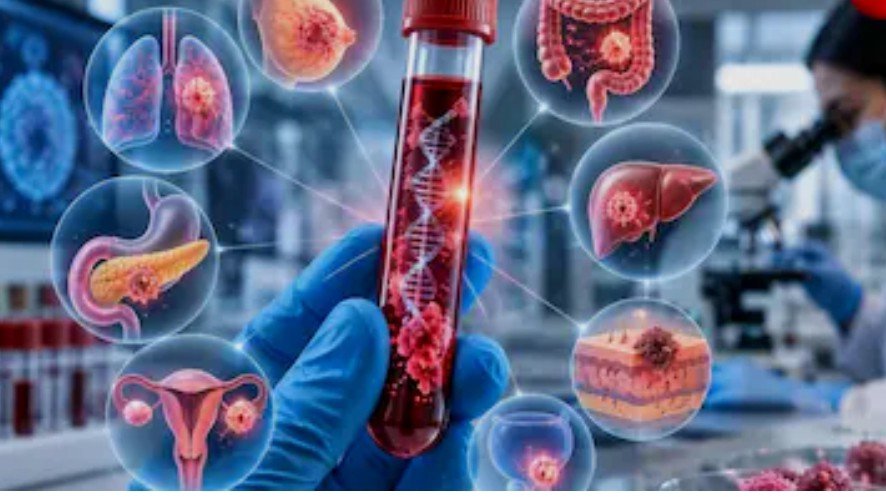
Cancer detection has required numerous different tests. Mammography for breast cancer, Pap smear for cervical cancer, and colonoscopy for colon cancer are common. However, there are many cancers for which no routine screening test exists. Consequently, these cancers are detected only when the patient’s condition becomes critical.
Dr. Kirti Chadha, Chief Scientific and Innovation Officer at Metropolis Healthcare Limited, says that work is progressing rapidly on a technique that can detect early signs of multiple cancers through a single blood test. This is called the Multi-Cancer Early Detection (MCED) test. Recently published research has raised the hopes of doctors and experts.
A study published in September analyzed blood samples from nearly 36,000 people aged 50 and older. The MCED test attempted to identify tiny fragments of DNA released from cancer cells in the blood. This identified signs of 17 types of cancer, including lung, breast, ovary, and colon cancer.
The most important finding of this study was that approximately 75 percent of the cancers detected were for which no routine screening program is currently available. These are the cancers that often appear late, making treatment challenging.
This test detects tumor-related DNA and other biological signals in the blood. If cancer is developing elsewhere in the body, some of its genetic information may be transmitted to the blood. MCED attempts to detect this information.
However, it is important to understand that a positive MCED result does not necessarily mean that a person has cancer. In such cases, further scans, biopsies, or other tests are needed to confirm the diagnosis.
Dr. Kirti says that this technology offers considerable promise, but more research is needed before it can be adopted as a routine cancer screening tool. Currently, no major medical body in the world recommends the MCED test as a routine screening tool.
Furthermore, the potential for false positive results is a concern. This can lead to additional testing, mental stress, and unnecessary expense for the patient.
Several labs and physicians in India are also evaluating the usefulness of the MCED technology. Interest is also growing in India. Experts believe that the types and risks of cancer in the Indian population may differ from those in Western countries. The burden of oral cancer, cervical cancer, and breast cancer is high in India.
Therefore, before any MCED test can be widely adopted, it will be necessary to test its effectiveness and accuracy locally on Indian patients.
The following are the essential cancer screenings today:
1. Mammography: Women are advised to undergo regular mammography for early detection of breast cancer.
2. Pap smear and HPV test: These tests help identify the risk of cervical cancer early.
3. Colonoscopy: Useful for detecting bowel cancer and precancerous tumors.
4. Low-dose CT scan: Used to screen for lung cancer in long-term smokers.
5. PSA test: Used to assess the risk of prostate cancer in men.
6. Skin checkup: Helps in the early detection of skin cancer and melanoma.
7. Family history and genetic testing: Additional screening may be needed if there is a family history of cancer.