

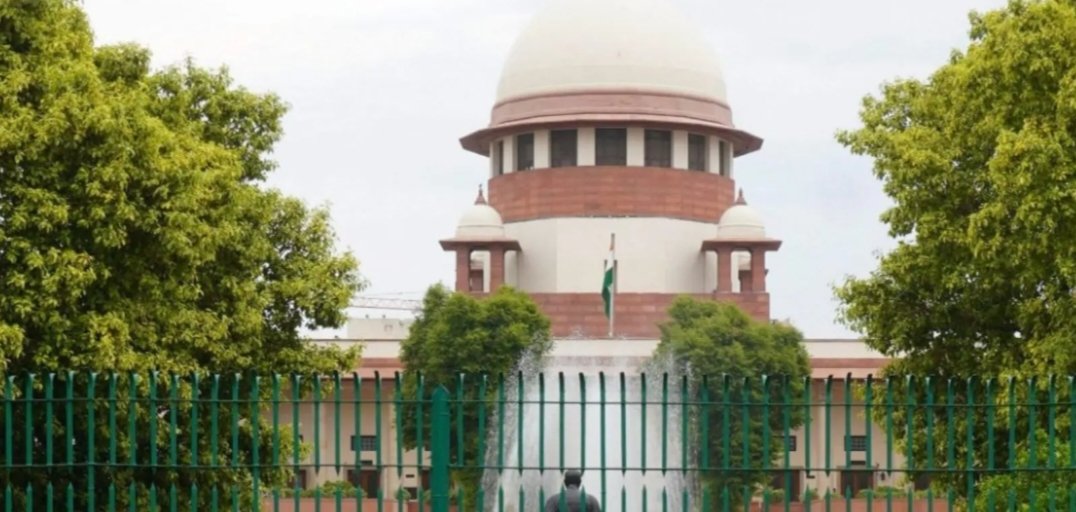
On Thursday, the central government told the Supreme Court that it was forming a special committee to re-examine the University Grants Commission (UGC) regulations of 2026 with the aim of promoting equality in higher educational institutions. Representing the central government, Solicitor General Tushar Mehta told the bench of Chief Justice Surya Kant and Justice Joymalya Bagchi that the government was considering measures to address students’ concerns. The government would strive to ensure that no section of the student community feels marginalized or insecure due to the new UGC rules. It is important to understand why the Supreme Court made this statement and what rule the government introduced that has caused dissatisfaction among students.
The Uttar Pradesh Assembly elections are near. The BJP government doesn’t want to lose this state, which is why it is taking every step cautiously. After the UGC issue was raised during the Bankipur assembly elections in Bihar, the BJP doesn’t want to anger the upper castes. This is why the government has assured the central government of improving the regulations.
The new regulation the government wanted to implement was called the University Grants Commission (Promotion of Equality in Higher Education Institutions) Regulations, 2026. The UGC implemented this regulation on January 13, 2026. The purpose of this regulation was to prevent caste discrimination in universities and colleges and to provide a mechanism for SC, ST, and OBC students to file complaints and seek justice. The provisions established under this regulation are as follows:
Equal Opportunity Center: To assist students from disadvantaged communities and resolve complaints of discrimination.
Equity Committee: To investigate and take action on complaints of discrimination.
Equity Squad: To prevent and monitor discrimination within the institution.
Grievance Redressal: Provision for action on complaints within a stipulated timeframe. These rules place special emphasis on the protection of SC, ST, and OBC students.
When the UGC implemented the new rules, general category students objected, stating that they would violate their rights and misuse the new law. The most significant objection to these rules concerned Rule 3(1)(c). It defines caste discrimination and mentions caste-based discrimination against members of SC, ST, and OBC communities. The main objections raised are as follows:
No Protection for General Category Students: General category students and petitioners argue that if a general category student faces discrimination based on caste, they should have the same right to complain and receive protection.
Misuse of the Law: Those opposing the new rule argue that there are no clear provisions to protect against false complaints. This will increase misuse of the law.
The rules mention all forms of discrimination: The Supreme Court also questioned why ragging was not specifically included as a form of discrimination in the rules. Furthermore, the constitutional validity of provisions related to segregation in hostels, classrooms, and mentorship groups was also questioned.
When the matter of this new UGC rule reached the Supreme Court, on January 29, 2026, the Supreme Court stayed these rules and raised some important questions. The court also issued an order that the 2012 rules should remain in effect until there is clarity regarding the new rules.