

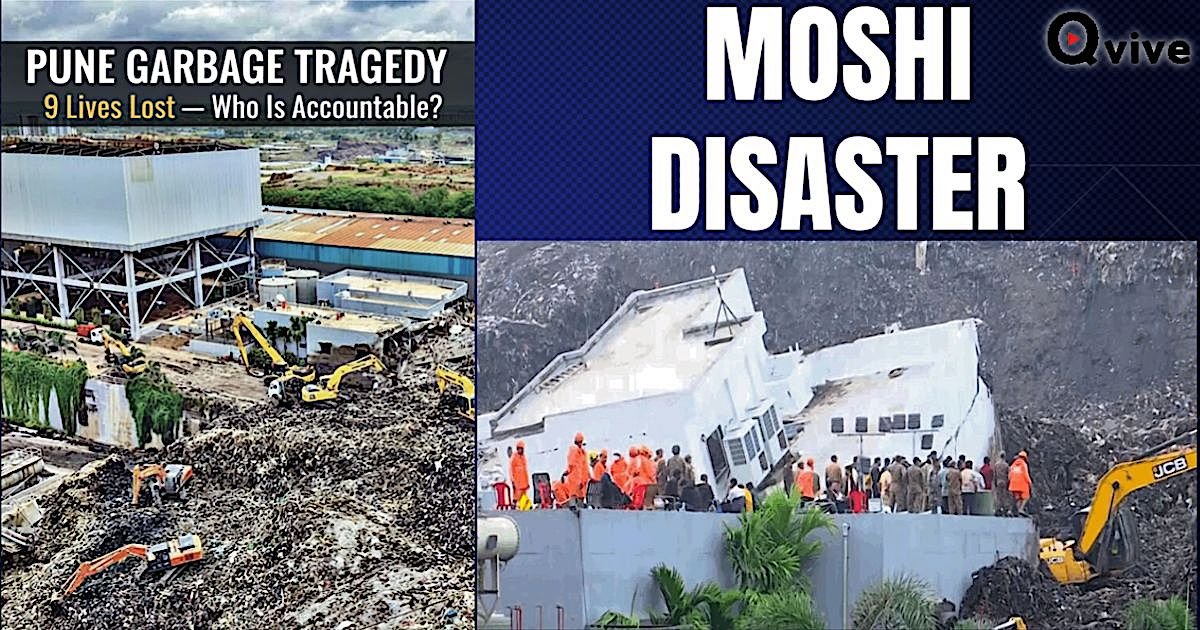
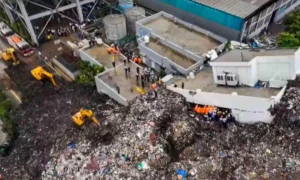
A three-storey administrative building at the Pimpri-Chinchwad Municipal Corporation (PCMC) waste-to-energy facility in Moshi collapsed after a huge mound of accumulated/legacy garbage gave way and struck the building.
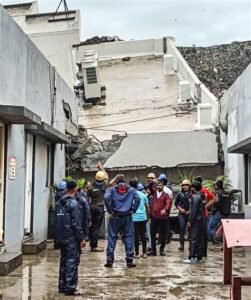
The collapse occurred at around 1:30–1:45 pm on 8 July 2026, during a period of heavy and persistent rainfall.
The garbage mound was reportedly located approximately 30 metres from the administrative building.
Initially, around 18–20 people were reported trapped. A prolonged multi-agency rescue operation followed, involving the NDRF, Army, fire services, police and other agencies.
The final reported death toll was 9 workers, after a rescue operation lasting nearly 84 hours.
When was the facility inaugurated?
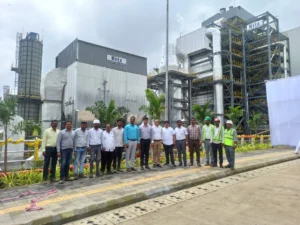
- The Moshi Waste-to-Energy plant was inaugurated by PM Modi in August 2023.
-
The project reportedly cost approximately ₹300 crore and was designed to process about 2.5 lakh metric tonnes of waste annually and generate electricity.
-
The project was developed by Antony Lara Renewable Energy Pvt. Ltd., with engineering, procurement and construction work carried out by a consortium involving Hitachi Zosen India.
What caused the accident?
The immediate reported mechanism was a garbage-mound/landslide-like collapse, rather than the waste-to-energy machinery itself failing.
- Officials said continuous heavy rain may have destabilised the massive mound of legacy waste.
-
Large accumulated waste mound: Years of accumulated legacy garbage were present at the Moshi depot. Reports have described the waste pile as a major factor in the collapse.
-
Weight and instability: PCMC officials suggested that the weight of the garbage, combined with heavy rain, may have produced a landslide-like failure.
-
Building-safety questions: Subsequent reports raised questions about the administrative building’s approval and construction. One report said records indicated approval only for the ground floor while two additional floors had been constructed.
-
Fire-safety questions: PCMC later suspended a senior fire officer and ordered an inquiry over alleged lapses connected with the fire NOC for the building.
-
Responsibility remains an investigative issue: A high-level committee’s preliminary report was submitted to the Maharashtra government in August, examining safety rules, structural stability and the responsibilities of the municipal corporation and contractor.
The larger governance questions
- Why was such a large legacy-waste mound allowed to remain adjacent to an occupied administrative building?
- Was the distance/buffer zone between waste storage and occupied structures adequate?
- Was the building properly approved for all three floors?
- Were structural and geotechnical assessments carried out?
- Was the site adequately assessed before and during the monsoon?
- Were workers adequately warned about the risk of a waste-mound failure?
- Were fire-safety and occupancy requirements properly followed?
- Who was responsible for monitoring the contractor and the site?
- Why was so much of Pimpri-Chinchwad’s waste concentrated at Moshi? Reports say roughly 1,150 tonnes of waste per day was being brought to the facility, prompting renewed calls for decentralised waste processing.
Also Read:
Latest News:
WHO Faces Historic Shake-Up: Funding Crisis, Job Cuts and Leadership Changes