

Highlights:
- FDA, USA committee members on peptides have with conflicts of interest. Same dynamics operate in India’s Vaccine and Food Policies.
- AIIMS Bhopal releases mortality trends in response to RTI. Concerning rise in cancers, heart attacks, strokes and paralysis from 2018 to 2026
- Doctors set bad example, Pizza and Golgappa Party in NICU
Website: https://uho.org.in
By Dr. Amitav Banerjee, Chairperson of the Universal Health Organisation (UHO)
FDA, USA committee members on peptides have with conflicts of interest. Same dynamics operate in India’s Vaccine and Food Policies.
A committee of experts tasked with deciding if the US Food and Drug Administration (FDA) should loosen restrictions on peptides has members who stand to financially benefit from the move, critics have said. They state that.
- Several members of the Pharmacy Compounding Advisory Committee have industry connections or run pharmacies or clinics specializing in peptides.
- The group will meet later this month to discuss peptides.
Some of the most transformative drugs in modern medicine are peptides,” including insulin and semaglutide. While “the science of peptides is real, serious and worth pursuing,” the current system is messy: “a multi-billion-dollar market, a gray zone of unregulated suppliers, a regulatory system under political pressure, and real people spending real money on compounds that, for most of them, will produce nothing at all.”
The new panel “includes more than a half-dozen panelists who run clinics, online businesses or pharmacies specializing in peptides.”
For example, one member, who has thousands of social media followers, charges $500 for “‘peptide and hormone’ consultations, including advice on ‘where to safely get each peptide or compound,’” according to the critics. Additionally, Another member, heads Florida clinics that sell injections of testosterone, vitamins and peptides, according to the AP.
A state senator who is on the committee, “has multiple connections to the industry,” according to reports. Another member works as a pharmacist in a family business that sells compounded drugs for pain, longevity, weight loss and more. In 2025, his mother, pharmacist and U.S. Rep. Diana Harshbarger, R-Tennessee, sent a letter to HHS Secretary Robert F. Kennedy Jr. “calling on him to relax FDA restrictions on a half-dozen peptides,”
Besides these conflicts of interests, critics have raised concerns about the timing of the committee’s announcement. They say that, A month’s notice ahead of a meeting that could reshape access to seven widely used peptides is a tight runway for the public, clinicians and even other committee members to properly vet the new panelists’ backgrounds. Advisory committees work best when there’s time for scrutiny before high-stakes votes, not after.”
Owais Durrani, an emergency medicine physician in Houston, said, “peptides like BPC-157, TB-500, and similar compounds are being marketed well ahead of the evidence,” considering that “most haven’t been through controlled human trials, and FDA’s own staff review reportedly found insufficient data to support their safety and efficacy for compounding.”
UHO thinks that when a majority of new appointees have directed financial or clinical ties to industry, that’s a structural conflict-of-interest problem.
Similar dynamics operate in India’s public health policies notably immunization programs. While the National Technical Advisory Group on Immunisation (NTAGI) mandates strict adherence to World Health Organization (WHO) guidelines (it is another matter that currently the WHO is captured by the pharmaceutical industry), regarding the declaration of interests, public health advocates and some governing bodies have historically raised concerns about potential conflicts. These primarily revolve around the close ties between committee members, philanthropic organizations, and pharmaceutical companies.
Our Food Industry oversights are more concerning. Members of the food industry are included in the Food Safety and Standards Authority of India (FSSAI) committees. Additionally, industry representatives actively serve on the Central Advisory Committee, which provides inputs on food safety policies.
UHO as a public health watchdog expresses its concerns that this structural conflict-of-interest problem, comprises both vaccine safety and food safety in the country.
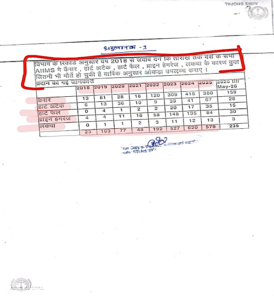
AIIMS Bhopal releases mortality trends in response to RTI. Concerning rise in cancers, heart attacks, strokes and paralysis from 2018 to 2026
In response to an RTI, AIIMS Bhopal released trends of data related to cancer, heart attacks, brain haemorrhage and paralysis between the years 2018 to 2026. The figures show a rising trend particularly after rollout of the vaccines in 2021-2022
UHO recommends proper investigations for the causes as the data in isolation do not reveal much. It may be due to increase in footfalls of a newly established tertiary care centre or other causes.
It must be recalled that the UHO has been suggesting such as investigation into increasing trends of all cause mortality and sudden deaths for the past three years. In a column in a national newspaper the Chairperson and Secretary of the UHO has published data showing the global rise in sudden deaths and called for proper investigation.
Doctors set bad example, Pizza and Golgappa Party in NICU
The Haryana Health Department has ordered an inquiry after a video showing hospital staff celebrating inside the Special Newborn Care Unit (SNCU) at the Civil Hospital in Bahadurgarh, Haryana, circulated widely on social media.
According to reports, the gathering was held to mark the promotion of a doctor and included pizza and golgappas being served inside the neonatal unit. The 54-second video appears to show nearly 20 doctors and nursing staff participating in the celebration while another staff member records the event.
In response, the Chief Medical Officer of Jhajjar constituted an inquiry committee under the supervision of the Principal Medical Officer of Bahadurgarh to examine the circumstances surrounding the event and determine whether hospital protocols were breached.
Hospital authorities stated that no newborns were admitted to the SNCU when the gathering took place. However, the Chief Medical Officer emphasized that celebrations inside any patient-care area are inappropriate and inconsistent with established hospital practices, even when the unit is temporarily vacant.
Following the incident, hospital staff have reportedly been instructed that celebrations and similar social gatherings must not be conducted inside patient-treatment areas. The inquiry committee is expected to review the incident and recommend further action if any violations of hospital policy are identified.
UHO feels that such frivolities not only endangers patient care but sets a bad example of promoting fast foods like pizzas and golgappas.
This type of irresponsible behavior by medical staff is reminiscent of such dancing inside Covid-19 hospitals during the pandemic, the explanation for which was that it cheered the patients and the staff. What a paradox – life outside was dreary with lockdowns and business closures and inside hospital it was fun and cheer.
The weekly newsletters bring the updates on the science, battered and bruised during the pandemic, legal updates and impact of activism for a just society, across the world. These are small steps to promote Transparency, Empowerment and Accountability – the ethos of the UHO.
Announcement: Membership & endorsements to the UHO invited: https://uho.org.in/member.php
Also Read:
Universal Health Organisation (UHO) Weekly Newsletter – 03 JULY 2026