


In recent years, there has been a lot of buzz about an operating system backed by none other than Bill Gates, co-founder of Microsoft.
Bill Gates, in collaboration with the Government of India, has been working on developing a revolutionary operating system specifically designed for the Indian market. This operating system aims to address the needs and challenges unique to India, taking into account infrastructure limitations, varying regional languages, and accessibility issues.
March 4, 1997: Bill Gates: Technology investments will make India an economic and software superpower
On the occasion of his first ever visit, Bill Gates, Chairman & CEO of Microsoft Corporation, called on India to harness the power and potential of personal computers to lead the country into the twenty first century. In a series of meetings in New Delhi and Mumbai with business leaders, opinion leaders, educators, personal computer users, media and policy makers, Gates outlined a number of imperatives that will enable India to make the necessary transition to the global networked economy.
“To be a leader in the digital economy of the twenty first century, India must invest in basic infrastructure, education and information technology,” said Gates.
“These are the tools which will drive the country into the future and make India an economic and software superpower.”
“The country’s advantages are many. India has an excellent university system. Its computer scientists are among the leaders of companies worldwide. Its technology centres in Bangalore, Pune and other places are well respected,” Gates continued.
“India has what it takes to participate in, even to shape, the future if it makes the necessary investments now. It must build a national telecommunications infrastructure, develop a robust domestic software industry, provide Internet connectivity for the consumer and continue to invest in education.”
Sanjay Parthasarathy, Regional Director, Indian Subcontinent Region, Microsoft Corporation, said
“Microsoft is investing in the Indian IT industry as a whole, transferring skills, intellectual assets and a new business model to a country which we believe can have a tremendous impact on the world IT market. We are working with a whole range of partners such as hardware companies, software developers, schools, colleges and policymakers to help build a world class IT infrastructure in India.”
Gates delivered speeches to several forums in New Delhi and Mumbai during the course of his visit.
Related Article:
CLICK HERE [Note to editors: Transcripts of selected speeches made by Mr Gates will be available within few days following the event. Media Alerts are also available for each of the events. For all press information contact the Microsoft India Press Office at Text 100, details shown below.] New Delhi, 4th March 1997: Press conference: The Future is Now! Mr Gates addressed a press conference in the capital at which he outlined the steps India needs to take now in order to participate in the global networked world. Mr Gates spoke about the need for India to make the right investments in education, technology infrastructure and the Internet to make India a world software leader, and explained why India is one of the top three countries in the world for Microsoft’s investments in 1996-1997. He also outlined Microsoft’s product strategy explaining how the company has the best and most integrated software for desktop PCs, the Internet and corporate networks. Education Event: Investing in the Future, Now! Education was the theme of this event co-hosted with the Indian Institute of Technology (IIT), Delhi. Mr Gates discussed the importance of education as the engine of growth for the Indian IT industry and also highlighted the benefits of using computer technology for improving the quality and delivery of education at all levels. He outlined world-wide trends in the IT business, how education is core to the industry’s success and described what Microsoft is doing in India in four education segments: university level computer science education, training for IT professionals, computer education in schools and career-oriented education. Mr Gates demonstrated the company’s commitment to education by launching Microsoft India’s ‘University Advanced Technology Labs Programme’ (UATL) at five Universities. The UATL at each of the institutions will include the establishment of an Advanced Technology Lab for research and projects, access to Microsoft® Windows NT® source code to the Universities for research purposes, establishment of an instruction development center and an on-line training resource centre. Mr Gates said that Microsoft’s investment in the UATL programme would have a market value of up to INR 35 million over a three year period. Stressing that India can be the largest source of trained manpower for the global IT industry, Mr Gates made an award to the 1000 th Microsoft Certified Professional (MCP) in India. He also awarded prizes to the eight winners of ‘Microsoft Imagine the Magic’ contest. The contest, run in association with Compaq, Living Media and United Airlines, sought to uncover the most creative and imaginative minds in India by asking children aged 8 to 18 what the most amazing computer could do. The contest focused on the power of the computer to help people create new things – new businesses, new products, new ideas, new ways for people to work together. Confederation of Indian Industry Address In an address to over one thousand business leaders and policy makers at a meeting of the Confederation of Indian Industry (CII), Mr Gates highlighted two ways in which information technology in India can increase employment and boost economic growth: by increased organisational efficiency and by building a successful domestic IT industry. Mr Gates stressed that information technology is a basic infrastructure. Computer technology, and now Internet technology, allows businesses to compete effectively anywhere in the world, as India’s software industry is already beginning to show. IT reduces costs and lowers barriers to entry into markets. He said that organisations around the world deploying advanced technology are more able to compete and win in local and global marketplaces. This grows businesses and produces jobs. Mr Gates called on CII to take the lead in connecting up its offices worldwide and encouraged the its members to connect to the CII network. Mr Gates also called for the establishment of a group within the organisation to focus on IT issues and drive the establishment of an IT Excellence Centre and create programs to increase awareness of the effective use of IT in Indian companies. Mr Gates stressed that India needs to invest in and protect intellectual property if it is to develop a strong local packaged software industry, by ensuring that local software developers get enough return on investment to continue to grow. Mumbai, 5th March 1997: Bharatiya Vidya Bhavan Address: Social Impact of Computing Addressing the Bharatiya Vidya Bhavan (BVB) at the Tata Memorial Hall in Mumbai, Mr Gates, in the audience of the Prime Minister H.D. Deve Gowda, business leaders and senior government officials, described the positive role that computer technology can play in society. During his speech, Mr Gates spoke about the ways in which IT has made a positive impact on the basic quality of life and how computers can add to the fabric of society. Mr Gates said that the Internet and the personal computer are tools which can be used to bring a wide variety of information, on subjects ranging from advanced farming techniques, to precise weather patterns, to improved medical information enabling healthcare for the masses. He stressed that from the standpoint of social services, IT makes it possible to provide services more quickly and easily and at lower cost. It allows the same number of people to provide more services. This is important to government, since most public institutions worldwide are expected to deliver more services. And governments will be among the leaders in deploying Internet-based solutions to provide better “customer” (citizen) services. This was a prime topic at the recent World Economic Forum in Davos, Switzerland, attended by India’s Prime Minister as well as 100 other top leaders in the world. Mr Gates said that private industry and government both have a role to play in ensuring that the social benefits of personal computers reach the most needy sections of society and urged industry to take the lead in ensuring that IT can be used to create new jobs and enable the unemployed to get these new jobs. He announced that Microsoft will contribute software valued at INR 5 million to BVB for its computer education and training centers . Microsoft’s donation to the BVB computer education centre is intended to enhance the success of BVB’s already successful efforts to equip unemployed people with the skills needed to find jobs. Industry Leadership Summit Mr Gates made the keynote address at the Industry Leadership Summit co-hosted with NASSCOM (National Association of Software and Service Companies). The summit addressed issues facing India’s estimated 160,000 software developers. During his speech, Mr Gates described the technology changes that will impact Indian software developers over the coming years, stressed the importance of the Internet, and suggested a course of action for software companies to compete and win on the world stage. He Gates showed how the Microsoft® Windows® platform has evolved over the years and will remain the best and most versatile platform for developers building applications for the PC, networks, multimedia and the Internet. Mr Gates issued a call to action to the Indian software industry: make the transition from project oriented development to packaged products; develop applications for the local market and local needs; invest in research and development (R & D) and developing Intellectual Property; use the Internet to market globally; and prepare for intense competition. RAMCO Marshall 3.0 launch Mr Gates addressed a press conference to mark the launch of the RAMCO Marshall 3.0 application. Marshall, a business computing applications suite built around the Microsoft® Windows NT Mr Gates pointed out that RAMCO is a prime example of Microsoft’s business model with software developers, based on building strong relationships with local partners. He stated that strengthening partnerships, in particular, helping Indian companies such as RAMCO to build world class software applications, is a key strategy for Microsoft in India. The Enterprise Tomorrow, Today This forum, co-hosted with Microland, examined the computing issues facing large organisations and was attended by Chief Information Officers and Chief Executives of Indian organisations. Mr Gates spoke about a number of trends in corporate computing and how Microsoft’s vision has allowed the company to stay ahead of the competition. Mr Gates explained the concept of the ‘PC Success Loop’ where the reduction in prices of personal computers leads to volume sales which in turn promotes software development and innovation, further driving prices down and functionality upwards. The same ‘Success Loop’ is now happening at the server level, due to innovative software such as Microsoft® Windows NT® and Microsoft® BackOffice Mr Gates said two focus areas for Microsoft are the Intranet and reducing the cost of ownership of IT systems for corporate users. Mr Gates talked about how the Microsoft® Windows NT® Server network operating system has emerged as the world’s best-selling server operating system. With its ease of use, ability to run server applications and its built-in Web server, Internet Information Server (IIS), Windows NT Server is the leading platform for Intranets and the Internet. Microsoft Corporation India Private Ltd is a subsidiary of Microsoft Corporation USA. It has had a presence in India since 1987 and currently has offices in New Delhi, Bangalore and Mumbai. Founded in 1975, Microsoft (NASDAQ “MSFT”) is the world-wide leader in software for personal computers. The company offers a wide range of products and services for business and personal use, each designed with the mission of making it easier and more enjoyable for people to take advantage of the full power of personal computing every day. For further press information please contact : Microsoft India Press Office Text 100 India Tel: 011 336 6880, 011 336 7080, 011 336 7088 Email: textind@giasdl01.vsnl.net.in Note to editors: If you are interested in viewing additional information on Microsoft, please visit the Microsoft home page at http://www.microsoft.com/presspass/ ( https://news.microsoft.com/en-us/news/default.aspx ) With a global battle shaping up between the proprietary Microsoft Windows operating system and freely available Linux, another battle is on for the hearts and minds of India’s half million software programmers . Microsoft Chairman Bill Gates is making his third trip to India in two years, with the aim of wooing the programmers to write their codes for Windows. His visit comes in the midst of reports of an official “Linux India Initiative.” The New York Times says the initiative is meant “to promote Linux as a viable alternative to proprietary-based software for use in government departments, state governments and corporations.” The report adds: “While in India, Mr. Gates is widely expected to pledge a large donation to public health projects through the Bill & Melinda Gates Foundation. But Microsoft India’s executives hasten to note that the foundation’s activities are distinct from those of the corporation.” – “THIS COUNTRY HAS AN ESTIMATED HALF-MILLION INDIVIDUAL SOFTWARE “MR. GATES IS SCHEDULED TO VISIT NEW DELHI, BANGALORE, BOMBAY “RECENT ACTIONS BY THE GOVERNMENT, HOWEVER, HAVE BEEN LESS THAN When Richard M. Stallman’s visit to India coincided with Bill Gates’ trip here in early November, there naturally were some fireworks. Although the big story was the money Gates pledged to donate to India, ideals from the Free/Libre and open-source software world have had an impact. During his trip, Stallman maintained a low profile and took a largely volunteer-supported visit of India, even while the ideas he spends a lifetime to uphold kept getting bounced back and forth across this vast country. During his trip, Gates downplayed the challenge Microsoft faces from GNU/Linux. But one thing seems clear: the Microsoft emphasis on education and localization is aimed at taking on fields where GNU/Linux campaigners have been working already, areas where they have accumulated appreciable interest. In India, the Microsoft Corporation chairman outlined a long list of monetary handouts. In New Delhi, however, the Microsoft chief also unveiled an ambitious plan to invest $400 million in India for education, software localization and development. The $400 million donation will be invested over the next three years, Gates announced at a function to launch the Tablet PC. Contending that it is important to localize software in India, Gates announced plans to market Microsoft XP and Office 11–code name: cash cow–in such Indian languages as Hindi, Bengali and Malayalam. Future plans include extended the localization efforts to nine more Indian languages in 2003. Work on this project is underway at Microsoft’s development centre in Hyderabad. That Gates’ approach is clearly linked to the growing GNU/Linux campaigns in India is more than clear. Rajesh Mahapatra, writing for the Associated Press, commented, “Hoping to stave off a rise in the popularity of free, open-source software, Microsoft Corp. chairman Bill Gates has announced a $400-million-US investment in India.” He went on to say, “The three-year initiative–part philanthropy, part business boost–seeks to entrench products of the world’s dominant software company in schools and among India’s multitude of talented programmers.” Continue Reading: https://www.linuxjournal.com/article/6452 Microsoft chairman Bill Gates Tuesday committed $1 million for India’s Media Lab Asia project and another $20 million for a special project to “train the trainers” in IT. At an hour-long meeting with Communications and IT Minister Pramod Mahajan, Gates committed $20 million for the e-learning project “Shiksha” to “train the trainers”. The money would be spread over 3 to 5 years, said Microsoft officials. The project seeks to train some 80,000 teachers along with 3.5 million students in IT, over a period of five years. Gates promised $1 million for Media Lab Asia, coming up in India’s commercial capital Mumbai, which aims to connect every Indian to each other and the world. Media Lab Asia, an ambitious project expected to cost over Rs 40 billion over the next 10 years, aims to use technology to make the lives of the common man less harried in countries such as India. Based on the Media Lab set up by the Massachusetts Institute of Technology, Media Lab Asia proposes to include a digital village that uses digital technology to “re-visit” the Gandhian idea of the village economy. It also showcases Tomorrow’s Tools (digital, bio- and nano-technologies to transform traditional crafts), Bits for All (connecting every device and appliance, and connecting “every Indian”), and a World Computer that can be used to network the world-at-large. While explaining the project to Gates, Mahajan expressed the hope that with Microsoft extending assistance, more international funds would pour in. Gates and Mahajan also discussed the growth of telecom in the country in the last two years and the government’s efforts in tackling the digital divide between the cyber haves and have-nots. India, with a population of one billion, a dozen official languages and hundreds of regional dialects, has a yawning digital divide. There are fewer than five computers for every 1,000 people. Abishek Kumarasubramanian, an Indian Institute of Technology-Madras student, has become an instant star amongst the techie community. He will be working with Microsoft czar Bill Gates himself on futuristic technologies at the IT giant’s Redmond headquarters for a year. Microsoft Corporation India Pvt Ltd on Thursday announced that Abishek has been selected for a one-year internship with Bill Gates and will work directly with his technical assistants’ team in the United States after winning the Microsoft Code4Bill contest. The Microsoft tech team comprises the world’s best technologists who formulate and drive Microsoft’s technical strategy. Abishek was selected after seven months of rigorous competition under an initiative named Code4Bill, which was announced by Bill Gates during his last visit to India. Over 20,000 students registered for the contest, which included three online technical challenges, and two rounds of one-to-one interviews. The last of these nineteen students also interned with Microsoft India for a period of two months. “Today technology touches the lives of billions of people around the world, and it’s amazing to think that I will be working with Microsoft, where I have an opportunity impact each of these lives,” Abishek Kumarasubramanian said in a Microsoft media release. “Participating in Code4Bill has been an exhilarating experience. The competition has been tough and challenging and has provided me an insight into cutting edge product development and innovation. Even though it will take some time for me to completely believe that I have been chosen to work with Bill Gates himself, I think that this is an unmatched opportunity, and am really excited about it,” he said, commenting on his win. The final nineteen students who interned at Microsoft India are from India’s from premier technical institutes including IIT-Madras; IIT-Roorkee; Netaji Subhas Institute of Technology, New Delhi; and Army Institute of Technology, Pune. During their internship, the students worked on next-generation technologies to develop solutions that address current day challenges — an application developed by Udayan Khurana from Institute of Engineering and Technology, Patiala that helps in the search for geographically-tagged information and a Web application developed by Pratik Stephen from Army Institute of Technology, Pune that builds on MSN Virtual Earth and allows users to zoom in and see minute details of a particular area. “India is very clearly a global innovator in the field of IT, and the Indian student community has also made a significant contribution in this area. Through Code4Bill, we have met some of the most promising technologists in the world, and are looking forward to one of them joining us to infuse creativity and a fresh perspective into our future technology strategy,” said Alexander Gounares, corporate vice president, corporate strategy, Microsoft. Gounares has been the technical assistant to Bill Gates for three years, and was in Hyderabad to conduct the final round of selection. In the first stage of the contest, participants were given three online technical challenges. The top 10 per cent based on the cumulative scores at the end of this round then moved to the next stage. In stage two, the students underwent a round of one-to-one interviews with a technical interview panel. The next round required the nineteen selected students to intern with Microsoft Research, Bangalore and Microsoft India Development Centre, Hyderabad. In the last round, the top five participants faced a series of challenges administered by Bill Gates’ former technical assistant. Code4Bill was initiated as recognition of India’s leadership in nurturing world class technical talent and was aimed at pre-final and final year students pursuing various technical streams across India. India is the first country where students have got this opportunity. The registrations for the contest opened in January 2006 and more than 24,000 students from remote locations like Guwahati, Dhanbad, and Warangal registered into it. Over the last seven months, the Code4Bill site (www.code4bill.com) has received more than 800,000 page views. The Indian student developer community is of strategic importance in India’s emergence as the world’s IT capital, and Microsoft has a comprehensive programme to provide them access to next-generation technologies, build on their software skills, and showcase these to a global audience, the Microsoft statement said. Besides Code4Bill, Microsoft runs a sustained University relations program, under which it partners with technical institutes and colleges, conducts the Academic Projects Program — to help university students complete their annual projects, and hosts the Imagine Cup — a premier global competition for technology students. A week before he retired, Bill Gates met with Microsoft’s legal team about open source software. It was a meeting that would change the future of the company he helped found. THE MEETING TOOK place a week before Bill Gates retired from Microsoft, and the topic was open source software. It was the summer of 2008, and for years, the open-source community had viewed Microsoft as public enemy number one. Seven years earlier, CEO Steve Ballmer had referred to Linux as a “malignant cancer,” and as recently as the previous summer, Microsoft general counsel Brad Smith and licensing chief Horacio Gutierrez had told Fortune Magazine that Linux violated 235 of its patents, implying that it would soon demand royalties from any big business using the open source OS.
“Unleashing creativity at all levels will be the mark of the future use of computers,”
said Mr Gates. The winners, chosen from over 40,000 entries, displayed a tremendous level of creativity, energy and vision.
“It is as important to a country’s development in the Information Age as electricity has been in the twentieth century. Properly deployed, IT increases jobs and helps the economy grow. In the US, the fastest growing industry, and the greatest job creator, for the last ten years has been in the computer industry. Businesses in other industries that have adopted advanced technologies, along with solid training, have seen productivity improvements and a greater ability to compete.”
“Far from alienating people, computer technology is becoming an efficient mechanism for bringing communities around the world closer together by allowing people to share intellectual resources,”
Mr Gates added.
™Server operating system and Microsoft® SQL
™
Server database, is a client-server system which can be used to build solutions for functional areas of a business such as accounting, sales, inventory and production.
™
and dramatic improvements in hardware from companies like Compaq and Intel.November 11, 2002: Bill Gates to Tour India Amid Global Software Debate
DEVELOPERS, MANY OF THEM WRITING PROGRAMS FOR SOME OF THE WORLD’S
LARGEST CORPORATIONS. MR. GATES’S VISIT, HIS THIRD TO INDIA, COMES
AS PROGRAMMERS AROUND THE WORLD ARE BEING LURED TO JOIN THE
SO-CALLED OPEN-SOURCE COMPUTING MOVEMENT, WHICH FAVORS THE LINUX
OPERATING SYSTEM–AVAILABLE FREE OR IN LOW-COST SOFTWARE
PACKAGES–OVER PROPRIETARY SYSTEMS LIKE MICROSOFT WINDOWS…
AND HYDERABAD. IF PREVIOUS VISITS ARE INDICATIVE, HIS TRIP WILL
ATTRACT A FAWNING GROUP OF STATE CHIEF MINISTERS AND FEDERAL
POLITICAL LEADERS LINING UP OUTSIDE HIS HOTEL SUITES, WAITING FOR A
CHANCE TO MEET WITH THE WORLD’S RICHEST MAN.
ADULATORY. JUST WEEKS BEFORE MR. GATES’S IMPENDING ARRIVAL,
OFFICIALS IN INDIA’S DEPARTMENT OF INFORMATION TECHNOLOGY IN NEW
DELHI LEAKED DETAILS OF AN EFFORT CALLED THE LINUX INDIA
INITIATIVE. IT IS MEANT TO PROMOTE LINUX AS A VIABLE ALTERNATIVE TO
PROPRIETARY-BASED SOFTWARE FOR USE IN GOVERNMENT DEPARTMENTS, STATE
GOVERNMENTS AND CORPORATIONS…”November 19, 2002: Bill Gates Pumps Money into India, Education, Localization
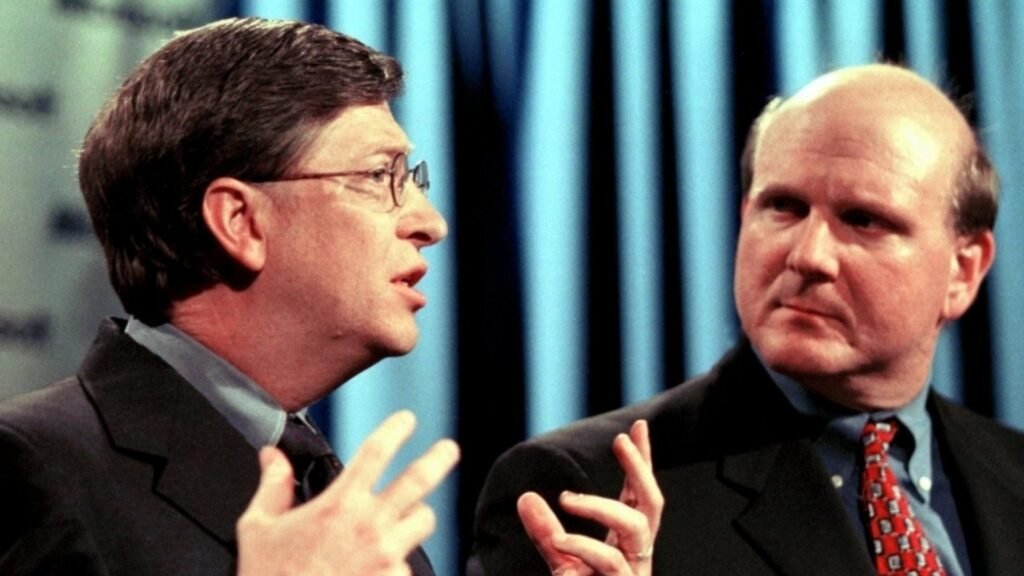
Linked with GNU/Linux Challenge
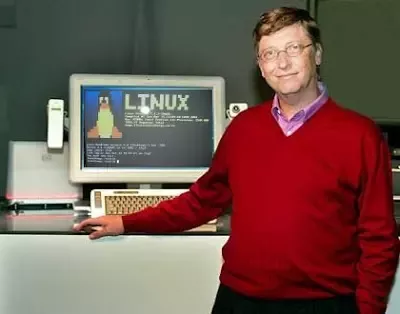
12 November 2002: Gates commits $20 M for Shiksha project
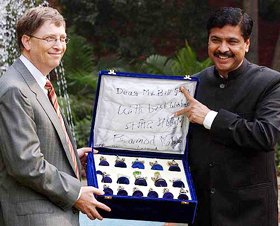
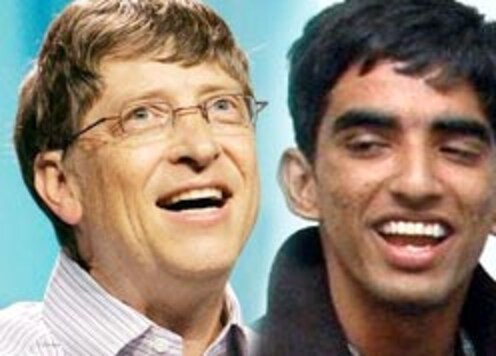
August 03, 2006: IIT student to assist Bill Gates in tech future

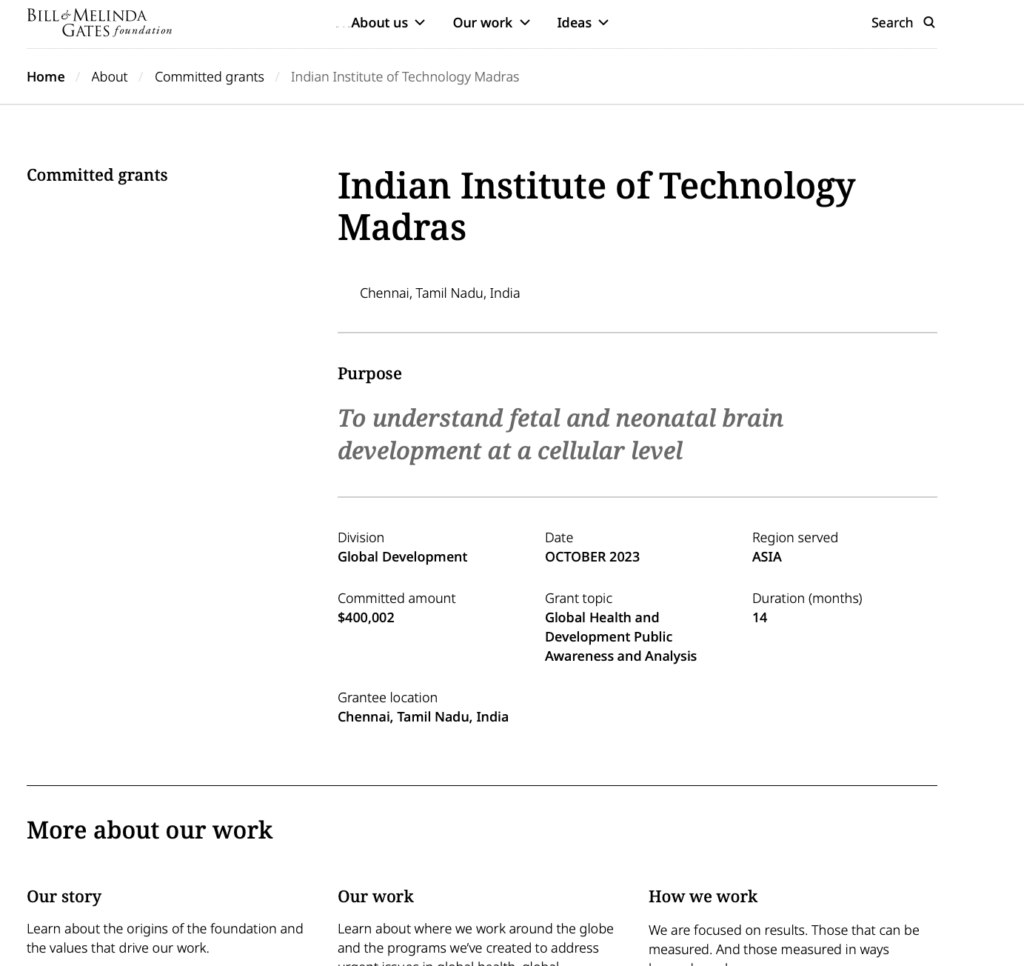
JAN 30, 2012: Bill Gates, the Man Who Changed Open Source Software


But at the same time, Microsoft realized how powerful the free software movement could be, and the company was exploring ways it could make nice with the ever-growing community of developers who used open source. For two years, Sam Ramji had served as head of open source strategy at Microsoft, and every three months, he met with Bill Gates and other execs to show off various open source technologies put together by a small team of Microsoft engineers.
But that afternoon was different. At the invitation of the company’s chief legal minds — Smith and Gutierrez — Ramji sat down with Gates, chief software architect Ray Ozzie, and a few others to discuss whether Microsoft could actually start using open source software. Ramji and Ozzie were on one side of the argument, insisting that Microsoft embrace open source, and Gutierrez offered a legal framework that could make that possible. But other top executives strongly challenged the idea.
Then Bill Gates stood up.
He walked to the whiteboard and drew a diagram of how the system could work, from copyrights to code contribution to patents, and he said — in no uncertain terms — that the company had to make the move.
Continue Reading: https://www.wired.com/2012/01/meet-bill-gates/
Summary of the visit made by Bill Gates to India (2000-2005)
December 9, 2005:
Gates launches talent hunt in India (http://in.rediff.com/money/2005/dec/09gates4.htm)
Microsoft plans centres in small Indian cities (http://in.rediff.com/money/2005/dec/09gates3.htm)
Gates awed by Tamil Nadu’s wealth of talent (http://in.rediff.com/money/2005/dec/09gates2.htm)
Microsoft picks Polaris as ally ( http://in.rediff.com/money/2005/dec/09gates1.htm)
Gates meets Microsoft officials ( http://in.rediff.com/money/gates05.htm)
India plans to cut PC prices (http://in.rediff.com/money/2005/dec/09pc.htm)
December 8, 2005:
The Bill Gates interview ( http://in.rediff.com/money/2005/dec/08binter.htm )
Gates to promote adventure tourism ( http://in.rediff.com/money/2005/dec/08gates1.htm )
The Bill Gates-Narayana Murthy jugalbandi ( http://in.rediff.com/money/2005/dec/08gates2.htm )
Bill Gates visits Chennai ( http://in.rediff.com/money/2005/dec/08gates.htm)
December 7, 2005:
Bill Gates to invest $1.7 billion in India( http://in.rediff.com/money/2005/dec/07gates1.htm)
Microsoft to hire 3,000 more in India: Gates (http://in.rediff.com/money/2005/dec/07gates.htm)
Google, a big competitor: Gates (http://in.rediff.com/money/2005/dec/07gates2.htm)
‘I am very optimistic about India’ (http://in.rediff.com/money/2005/dec/07gates4.htm)
Gates meets Anil Ambani, discusses IPTV (http://in.rediff.com/money/2005/dec/07gates3.htm)
December 6, 2005:
Gates arrives in India (http://in.rediff.com/money/2005/dec/06gates.htm)
Microsoft steps up India focus (http://in.rediff.com/money/2005/dec/06gates1.htm)
Bill Gates to help develop vaccines ( http://in.rediff.com/money/2005/dec/06gates2.htm)
First Look: Gates meets Maran ( http://in.rediff.com/money/2005/dec/06look.htm)
Bill Gates comes visiting: Slide show (http://specials.rediff.com/money/2005/dec/06sld1.htm)
December 5, 2005:
Gates may increase investment in India (http://in.rediff.com/money/2005/dec/05gates.htm)
December 1, 2005:
Bill Gates to visit India from Dec 6 to 9 (http://in.rediff.com/money/2005/dec/01gates.htm)
November 16, 2002:
‘He came, he saw, he got some cheap labour’ (http://in.rediff.com/money/2002/nov/16mess.htm)
‘It’s not fair to attribute motives to his generosity’ ( http://in.rediff.com/money/2002/nov/16mess1.htm)
November 15, 2002:
Interview: ‘Reputation is the key asset of Indian IT firms’ (http://in.rediff.com/money/2002/nov/15bizint.htm)
‘It was 70% generosity and the rest business’ (http://in.rediff.com/money/2002/nov/15mess.htm)
‘This altruistic attempt should be appreciated’ (http://in.rediff.com/money/2002/nov/15mess1.htm)
Gates finds third trip to India very exciting (http://in.rediff.com/money/2002/nov/15gates.htm)
November 14, 2002:
India emerging leader in e-governance: Gates (http://in.rediff.com/money/2002/nov/14gates6.htm)
Gates visits Satyam Technology Centre ( http://in.rediff.com/money/2002/nov/14gates4.htm)
Gates to invest Rs 500 cr in India development center (http://in.rediff.com/money/2002/nov/14gates5.htm)
Naidu briefs Gates on AP’s healthcare initiatives (http://in.rediff.com/money/2002/nov/14gates3.htm)
‘Gates Foundation has nothing to do with Microsoft activities’ (http://in.rediff.com/money/2002/nov/14gates2.htm)
Wipro-Microsoft combine can take on IBM: Bill Gates (http://in.rediff.com/money/2002/nov/14gates1.htm)
November 13, 2002:
Slide Show: Bill Gates in India (http://specials.rediff.com/money/2002/nov/13sld1.htm)
Gates’ dream: Empower kids with Tablet PC (http://in.rediff.com/money/2002/nov/13gates6.htm)
Tata, Ambani, bankers meet Gates (http://in.rediff.com/money/2002/nov/13gates8.htm)
Gates woos techies, dismisses Linux threat (http://in.rediff.com/money/2002/nov/13gates5.htm)
When Bill went down memory lane! (http://in.rediff.com/money/2002/nov/13gates4.htm)
India can be manufacturing hub too, says Gates (http://in.rediff.com/money/2002/nov/13gates9.htm)
Gates urges IT, education, telecom funds (http://in.rediff.com/money/2002/nov/13gates3.htm)
India will be global hub for mission critical work: Gates (http://in.rediff.com/money/2002/nov/13gates1.htm)
November 12, 2005:
Bill Gates commits $21 mn on two IT projects (http://in.rediff.com/money/2002/nov/12gates.htm)
Microsoft to invest $400 million in 3 years in India (http://in.rediff.com/money/2002/nov/12gates1.htm)
Tablet PC to be launched in India in Dec: Gates (http://in.rediff.com/money/2002/nov/12gates2.htm)
November 11, 2002:
Gates announces $100-million support to fight AIDS (http://in.rediff.com/money/2002/nov/11gates.htm)
September 14, 2000:
Gates joins hands with IT ministry (http://in.rediff.com/money/2000/sep/14pramod.htm)
Bill Gates launches msn.co.in (http://in.rediff.com/money/2000/sep/14bill.htm)
Microsoft to spend $50 million more in India-paper (http://in.rediff.com/money/2000/sep/14micro.htm)
Slide Show: The Gates Visit (http://specials.rediff.com/money/2000/sep/14pic1.htm)
September 13, 2000:
India readies to welcome, woo Bill Gates ( https://in.rediff.com/money/2000/sep/13gates.html)
September 12, 2000:
Bill Gates keen to invest in India (http://in.rediff.com/money/2000/sep/12micro.htm)
Source: Linuxtoday, YaleGlobal, Linuxjournal, Siliconindia, Rediff, Gates foundation, Twitter, Image-Inc., MICROLE, Reditt,