

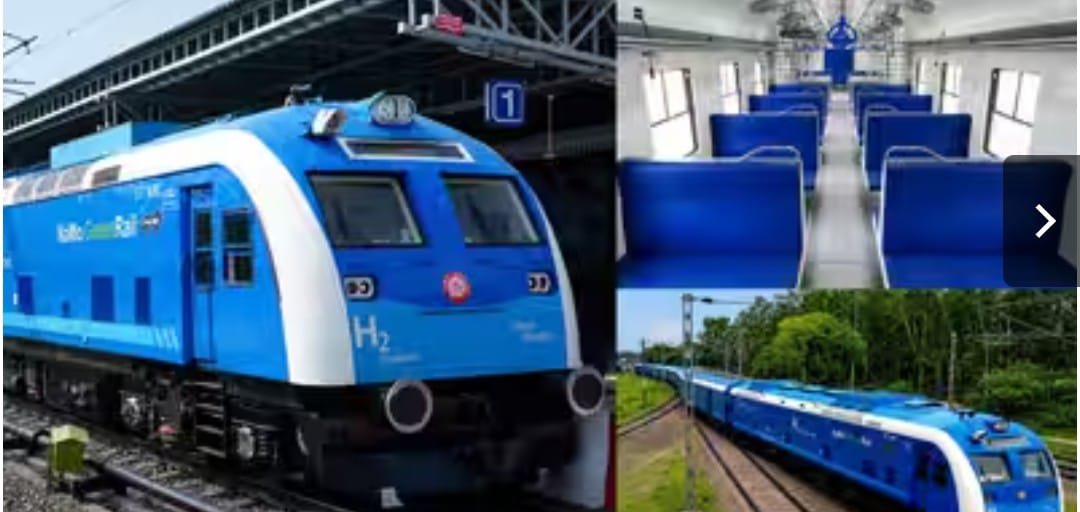
Indian Railways is about to create history. The country’s first hydrogen-powered train is about to launch between Jind and Sonipat in Haryana. Built entirely on indigenous technology, this train is also very unique in terms of technology. In fact, it will run on the tracks not with diesel or electricity, but with the help of highly advanced hydrogen fuel cell technology.
This technology converts hydrogen into electricity. A significant environmental advantage of this technology is that it emits water vapor instead of smoke. This is completely different from conventional engines. It has a hydrogen tank and fuel cell installed on top of or inside the train.
When hydrogen from the tank reaches the fuel cell, electricity is generated through an electrochemical process. This electricity is what propels the train.
The unique feature of the hydrogen train is that it uses liquid or compressed hydrogen gas as fuel instead of traditional diesel.
This train operates on hydrogen fuel cell technology. When hydrogen gas from the tank reaches this cell, it draws oxygen from the outside air and causes an electrochemical reaction between the two.
This process generates electricity, which powers the train’s electric motor. The train will be equipped with a hydrogen storage cylinder and fuel cell, as well as lithium-ion batteries. Excess electricity generated by the fuel cells will be stored in these lithium-ion batteries.
The power stored in the batteries is used when the train needs to climb at high speeds.
The most significant feature of this hydrogen-cell fueled train is that it does not use fuels like coal, diesel, or petrol. Consequently, the train will emit no smoke or greenhouse gases.
This train will have a total of 10 coaches, including two hydrogen driving power cars (engine cars) and eight trailer coaches (passenger seating cars).
After the reaction of hydrogen and oxygen, only water vapor is emitted as a by-product. Additionally, unlike conventional trains, they don’t require the expense of expensive electrical wiring.
Hydrogen fuel cell engines are much quieter than conventional engines. They produce minimal noise, allowing passengers to travel comfortably.
To refuel this train, the country’s largest railway hydrogen refueling station, similar to a petrol pump or CNG station, has been built in Jind, Haryana.
This hydrogen plant uses electricity to separate hydrogen and oxygen from water. The hydrogen is then stored in secure tanks.
Two dispensers have been installed at this station, which can simultaneously refuel the front and rear engines of the train. It’s worth noting that approximately 3,000 kilograms of hydrogen can be stored at this station.
There are concerns about hydrogen gas that it has no color, smell, or odor, and because it is highly flammable, extreme caution must be exercised with it. This is why the entire project has been designed to detect even the smallest leaks immediately.
The train and gas fueling plant are equipped with advanced equipment that can detect hydrogen leaks, abnormal heat, fire, or smoke within seconds.
If any leak or malfunction is detected, the system immediately blocks the hydrogen supply before any human action is taken.
The Jind hydrogen plant also has leak detectors and flame detectors installed. In addition, several safety measures have been implemented, including an automatic shutdown system, water spray to control fires, and fire alarms.