

Will relations improve if anti-India Balen Shah becomes PM? Why is India important for Nepal?
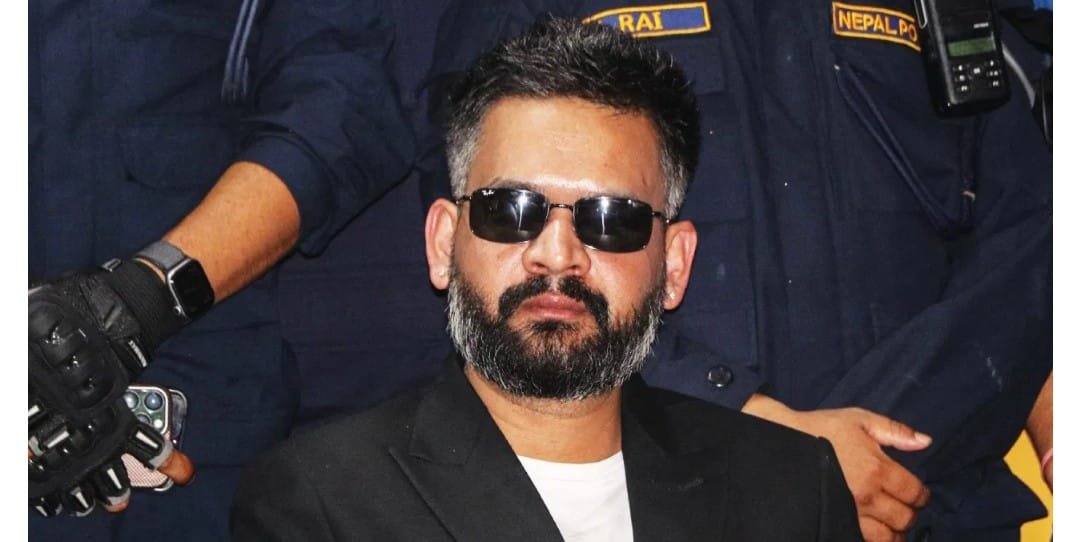
Rapper-turned-politician Balen (Balendra) Shah is on his way to becoming Nepal’s Prime Minister. His Rashtriya Swatantra Party (RSP) has defeated the old parties by winning 100 out of 129 seats. Through Instagram and YouTube, hip-hop artist Balen captured the hearts and became a household name among Nepal’s youth. His songs resonated with anti-corruption sentiments. In 2022, he won the Kathmandu mayoral election as an independent candidate. While it was a small election, his victory was seen as a vote of opposition to the establishment and traditional politics. In 2025, the Gen-Z movement of Nepal’s anti-corruption youth cleared his path to leading Nepal.
Balendra Shah has become a mature politician in a short time. His future moves were well-planned. Instead of leading an interim government, he decided to wait for the elections and contested against ousted Prime Minister K.P. Oli. Balen’s massive wave swept across Nepal, not just in his constituency, but across Nepal, uprooting the tents of prominent opposition leaders. Balen’s Rashtriya Swatantra Party is poised for a landslide victory. There is natural curiosity in India about Nepal’s elections and the new government. What are Balen’s thoughts on India-Nepal relations so far?
Balen, who arrived in Nepal after earning an M.Tech. degree from Visvesvaraya Technical University in Karnataka, established his place among Nepal’s youth through his songs as a rapper. Instead of joining a traditional political party, he decided to run as an independent candidate to become the mayor of Kathmandu in 2022. This position was not a significant enough position to establish national recognition. However, through his popularity as a rapper and his anti-corruption songs and speeches, he quickly became a vocal young voice of opposition to the establishment in Nepal. The ongoing political instability in Nepal also contributed to Balen’s success.
Since the implementation of the new constitution in 2015, governments have been formed and dissolved rapidly. Corruption has risen sharply. Public suffering has increased. Youth have become angry. There was a search for an alternative. A face that could offer promise of change.
Monarchy ended in Nepal in 2008. Democracy was established. People gained the right to choose a government of their choice, but no party could secure a clear majority in the elections. Fourteen governments were formed within seventeen years during the era of coalition governments. These governments failed to provide stability to the country. The situation worsened amid the frequent formation and collapse of governments. Corruption, inflation, and unemployment became uncontrollable. Nepal became entangled in a vortex of problems. This culminated in the widespread violence of the 2025 Gen-Z movement, which devastated much of Nepal. The interim government led by Sushila Karki, which came into being after the dismissal of the Oli government, held elections on time as promised. The results indicate that the public anger against Nepal’s old parties and leaders during the protests persists.
It is highly likely that Balen Shah will lead the new government in Nepal. Riding on the wave of change, voters have high expectations from Balen Shah. Balen, who had rejected the leadership of the interim government in the name of participating in the elections, said that toppling a government through protests is a victory for the protesters. But this victory also brings challenges.
The new government faces the challenge of turning the failures of the ousted government into successes. It is responsible for turning the dreams that brought people to the streets into reality. Immediately coming to power makes it more difficult to restore the system that was destroyed during the protests.
The time spent under the interim government has served as a safety valve for Balen, but the challenges ahead are also daunting. Whatever Balen accomplishes in Nepal tomorrow, he will need India’s support. The question is, what will his stance be toward India? What has Balen thought and said about India so far in his short but dynamic political career?
Balen has repeatedly stated that Nepal should pursue a policy independent of the influence of major powers. He has frequently criticized India on political platforms. In a 2025 Facebook post, he expressed displeasure with major powers, including India, China, and the United States. His supporters promoted an expanded map of Nepal, which also shows Indian territories. As mayor, he even hung it in his office.
He was also among those who raised their voices against the Sugauli Treaty of 1806. India and Nepal have a close relationship. Hindus are the majority of the population there. Both countries have a centuries-old history of shared religious-cultural unity. Despite being a Madhesi, Balen does not like this shared identity.
Balen was offended by a dialogue in the Bollywood film Adipurush that described Sita as India’s daughter, and he even demanded a ban on the screening of Indian films in Nepal. In reality, India’s perceived role as a “big brother” in India-Nepal relations remains a topic of debate in Nepal. Forces fueling anti-India sentiment in Nepal have been spreading the notion that India interferes in Nepal’s internal affairs. Balen Shah has been inciting anti-India sentiments to both oppose the establishment and enhance his nationalist image.
Anti-India statements have become a means of gaining popularity in Nepal’s domestic politics. For some time now, Nepal’s communist governments have prioritized China. In such a situation, will Balen’s anti-India stance turn them towards China? It would be premature to form an opinion on this issue, as many Nepali leaders have attempted to gain popularity by making anti-India statements in Nepal’s domestic politics. Balen may also be doing so solely for the sake of popularity, as Balen is of Madhesi background and studied in India.
Nepal has also pursued a policy of balance between India and China. However, the priorities of the new generation coming to power there have so far been issues such as anti-corruption, employment opportunities, and administrative reforms. Foreign policy has remained low on their agenda.
To understand the new Nepali government’s stance on India, it is important to remember that India cannot be sidelined in Nepal’s economy, trade, and employment. No stable government there would want a confrontation with India.
It’s possible that Balen will publicly make strong statements to enhance his nationalist image, but in practice, he will intensify efforts to promote trade with India. He may also pursue a policy of balancing the China-India relationship. Since the abolition of the monarchy, Nepal has experienced a period of constant instability. First, through the Gen-Z movement and then through elections, the people have rejected the old leaders and parties. Voters have given the new generation a chance to move forward with the hope that a stable and dynamic government will lead Nepal on the path of development in an environment of peace and harmony. India can certainly be a significant help in this. Balen is not unaware of this ground reality. In such a situation, Balen as a rapper may be completely different from Balen as Prime Minister. He can contribute to Nepal’s progress by maintaining good relations with India.