

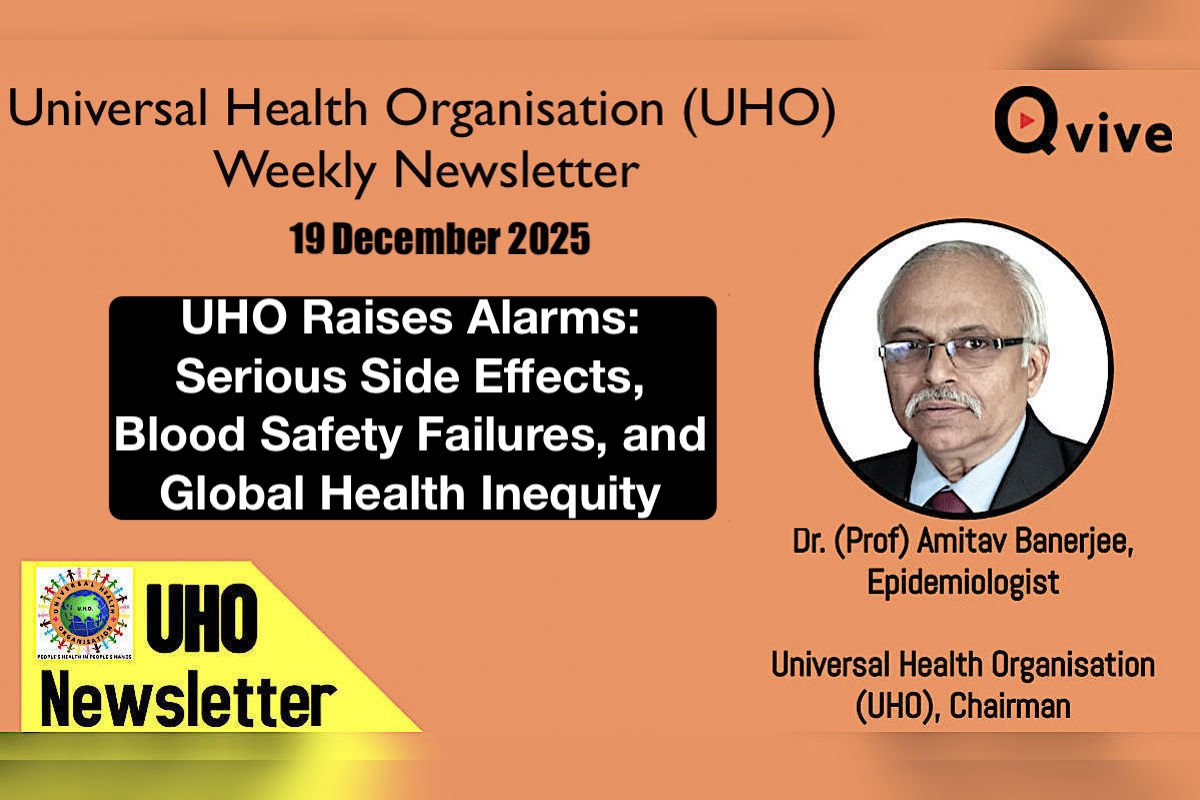
Highlights:
- Lawsuits Claiming Serous adverse effects such as blindness of anti-obesity drugs, piling up in the USA
- National Blood Transfusion Bill 2025 introduced in the Parliament
- Kenya’s Civil Society stands up to their government, forces Court to stay MOU with the USA
Website: https://uho.org.in
Download: https://uho.org.in/nl/2025-12-19-newsletter.pdf (copy and paste the link)
Dr. Amitav Banerjee, Chairperson of the Universal Health Organisation (UHO), addressed four crucial health-related topics at a meeting on December 19th. The discussions centered around anti-obesity medications, serious health concerns within government health services, the introduction of the National Blood Safety Bill, and a notable Memorandum of Understanding involving Kenya.
1. Anti-Obesity Medications
The discussion commenced with the alarming rise of anti-obesity medications like Mounjaro, which reportedly generated sales exceeding ₹100 crore in India, making it the top-selling drug recently. However, serious side effects have been reported within just one to two years of its market entry. Notably, blindness has emerged as a critical side effect linked to these medications, particularly in lawsuits filed in the USA against manufacturers Eli Lilly and Novo Nordisk. Currently, around 80 lawsuits are connected to severe side effects, and approximately 3,000 additional complaints involve issues like gastroparesis.
Key Concerns:
- Market Dynamics: India’s burgeoning market for obesity drugs, estimated to grow from $150 million to $150 billion by 2030, is attracting foreign pharmaceutical companies.
- Regulatory Scrutiny: Dr. Amitav emphasized the need for cautious monitoring of these medications, especially concerning the WHO’s rapid endorsement for inclusion on the essential drugs list without comprehensive safety studies.
2. Blood Safety and Infections
Dr. Amitav later addressed the critical issue of blood safety in government health services, highlighting two recent incidents where children with thalassemia contracted HIV from government blood banks in Jharkhand and Madhya Pradesh. Each incident involved notable lapses in safety protocols and oversight, raising profound concerns over the quality of blood products and the efficacy of existing safety regulations.
Notable Points:
- Institutional Failures: The repeated pattern of unsafe blood transfusions suggests systemic failures within government health systems that need urgent reform.
- Economic Burden: The lifelong cost of treatment for HIV-infected children adds a significant burden to families already struggling with thalassemia.
3. National Blood Safety Bill
In response to the identified deficiencies in blood safety, the government has introduced a National Blood Safety Bill, aimed at establishing stricter regulations and potential penalties for violations. However, questions remain about its timing and whether it adequately addresses existing shortfalls in the safety protocols currently governed by the Central Drugs Standard Control Organization (CDSCO).
Implications:
- Improvement or Delay?: While the Bill is a positive step, Dr. Amitav expressed concerns about enforcement and whether it was merely a reaction to recent scandals rather than a proactive measure for public health.
4. International Health Agreements and Kenya Case
The final topic pertained to a recent Memorandum of Understanding (MOU) signed between the Kenyan government and the USA regarding public health initiatives. Kenyan civil society effectively challenged the transparency and equity of this agreement, leading to the High Court issuing a stay order for further scrutiny.
Reflection on India:
- Transparency in MOUs: Dr. Amitav emphasized the need for similar scrutiny in India concerning international agreements, particularly those that might compromise national sovereignty, such as the upcoming WHO pandemic treaty. He urged for greater public debate and awareness on these topics.
Dr. Amitav’s updates highlight critical challenges in India’s healthcare landscape, including the safety of anti-obesity medications, blood safety in public health services, and the implications of international healthcare agreements. As a watchdog organisation, the UHO stresses the vital need for vigilant regulation, transparency in health policies, and improved safety measures to protect public health interests.
Also Read: