

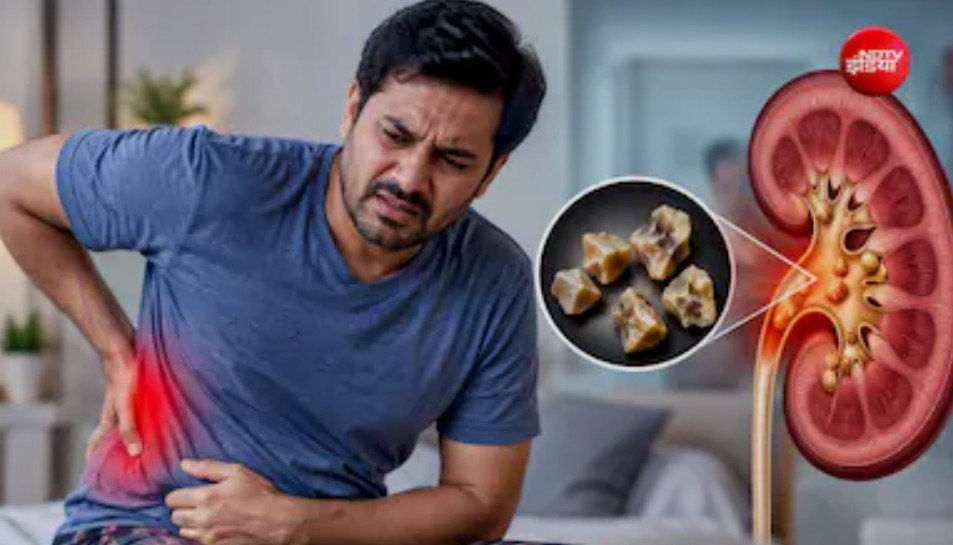
After developing kidney stones once, many people experience recurrent kidney stones. People often attribute this to insufficient water intake or dietary errors. However, repeated kidney stones can also be caused by metabolic changes in the body, genetic factors, certain diseases, or an imbalance of stone-forming minerals in the urine. In such cases, simply removing the kidney stones is not sufficient; it is important to determine the cause.
According to Dr. Ashwin Mallya, Senior Urologist at Sir Ganga Ram Hospital, Delhi, “If a person is experiencing recurrent kidney stones, it should not be dismissed as a coincidence. In patients with recurrent kidney stones, it is important to understand the type of stone and the levels of elements such as calcium, oxalate, uric acid, or citrate in the urine. Based on this, strategies can be developed to reduce the risk of future stone formation.
Insufficient water intake is one of the most common causes.
Dehydration makes urine more concentrated. This can increase the likelihood of calcium, oxalate, uric acid, and other mineral crystals forming. Hot weather, excessive sweating, and insufficient water intake can also increase this risk.
However, dehydration is not always the cause. According to guidelines from the American Urological Association, metabolic testing should be considered in patients with recurrent kidney stones. This includes a 24-hour urine test to measure urine volume, pH, calcium, oxalate, uric acid, and other minerals. Several parameters, such as citrate, can be evaluated.
In some cases, recurrent stone formation may be due to other health problems. For example, hyperparathyroidism, gout, type 2 diabetes, certain intestinal diseases, and frequent urinary tract infections may be associated with an increased risk of stone formation. In rare cases, problems with calcium or oxalate metabolism in the body may also be responsible.
Dr. Mallya says, “If stones have started at a young age, there is a history of stone formation in many family members, stones are present in both kidneys, or stones are forming frequently, a detailed evaluation of the patient becomes more important. The focus should be on identifying the cause rather than just treating the stones immediately.”
Diet also plays a role. Excessive salt intake, excessive animal protein, insufficient fluid intake, and, in some people, excessive consumption of oxalate-rich foods can increase the risk of kidney stones. However, the same diet plan is not suitable for every patient. Dietary adjustments should be made based on the type of stone and metabolic testing.
Follow-up is essential even after the stone is removed.
Many patients assume the problem is over after the stone is removed. However, for those who recur, prevention is also an important part of treatment. Doctors may recommend increasing water intake, reducing salt, dietary changes, or, in some patients, medication.
Dr. Ashwin Mallya says that kidney stone treatment should not be limited to removing the stone. In patients with recurrent stone formation, it is equally important to identify the cause and reduce the risk of future stone formation. If a person is developing recurrent stones, he or she should definitely discuss metabolic evaluation with a urologist.